
Crisp and Golden Mac and Cheese Cakes on the Grill
Turn yesterday's leftover macaroni into today's crispy, golden side dish with this easy wood-fired recipe.


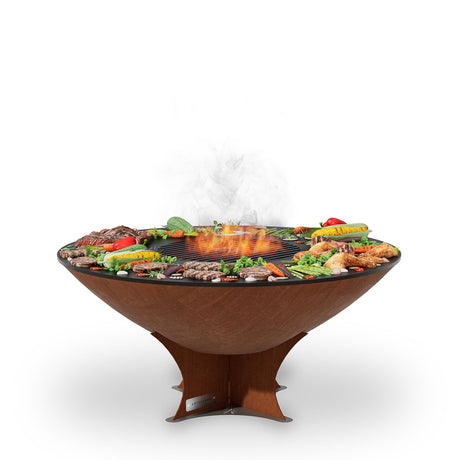
Quick Take: While gas grills offer convenience and kettle grills provide entry-level charcoal flavor, the Arteflame grill offers the superior solution by combining the speed of high-heat searing with the unmatched flavor of wood fire. Unlike traditional grills, the Arteflame’s solid steel griddle prevents flare-ups, allows for simultaneous cooking of diverse foods, and doubles as a social fire pit centerpiece.
Choosing the right grill comes down to three factors: flavor, versatility, and durability. While gas is fast and kettles are traditional, the Arteflame hybrid design introduces a new category of "experience grilling."
Use the table below to compare the core differences before deciding.
| Feature | Gas Grill | Kettle Grill (Charcoal) | Arteflame (Wood/Charcoal) |
|---|---|---|---|
| Primary Heat Source | Propane / Natural Gas | Charcoal Briquettes | Wood & Lump Charcoal |
| Flavor Profile | Neutral / Low Smoke | Smoky | Rich, Intense Wood-Fired |
| Versatility | Standard Grates | Standard Grates | Solid Griddle + Grill Grate |
| Warm-Up Time | Fast (10-15 mins) | Slow (20-30 mins) | Moderate (15-20 mins) |
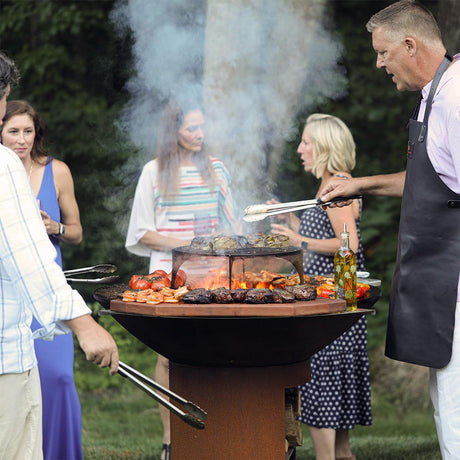
| Social Factor | Low (Cook stands alone) | Low (Closed lid cooking) | High (360° Cooking) |
Traditional kettle and gas grills rely on open grates. This design allows juices to drip directly onto the coals or burners, causing flare-ups that can burn meat and dry it out. Furthermore, grates offer limited surface area contact, meaning you get grill marks, but not a complete, edge-to-edge crust.
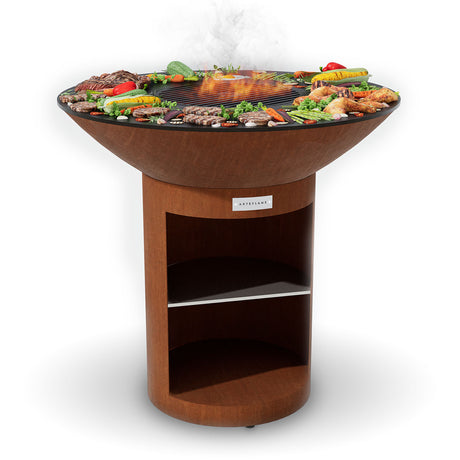
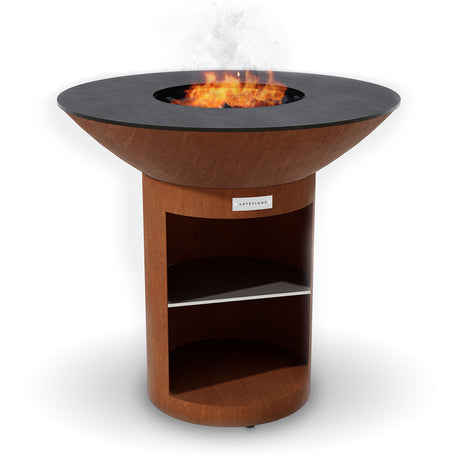
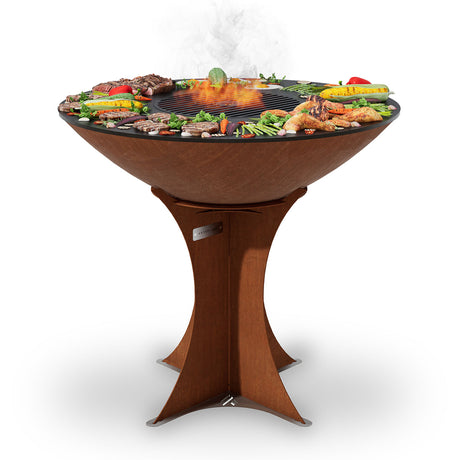
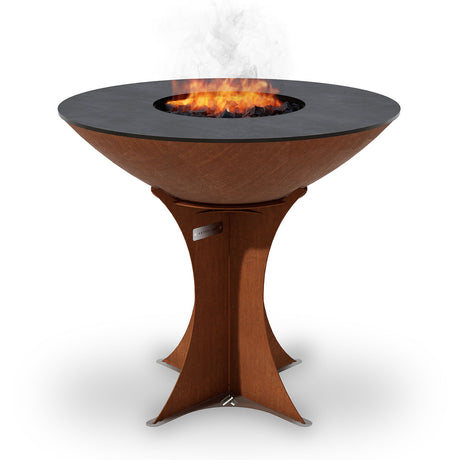
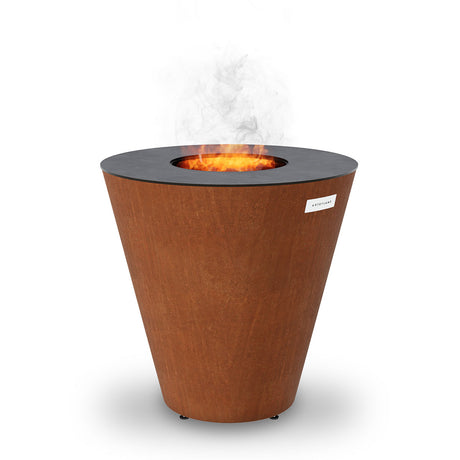
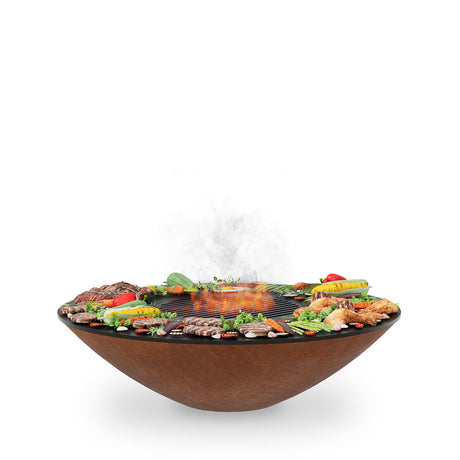
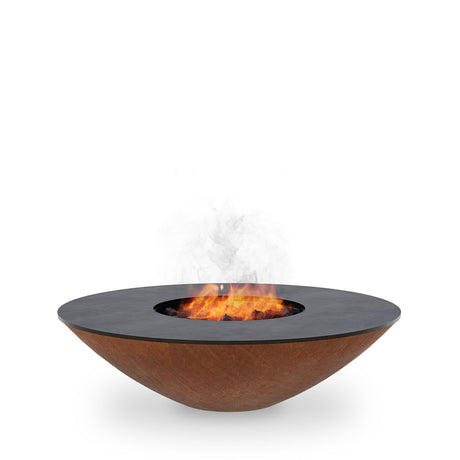
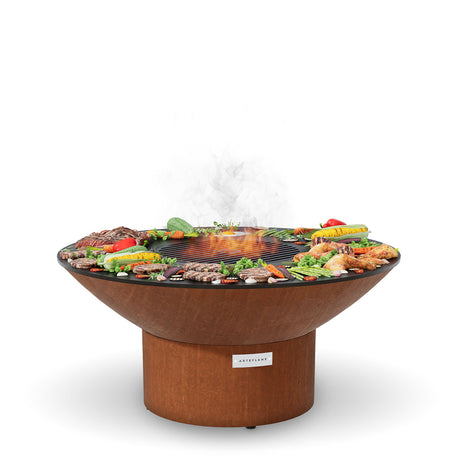
The Arteflame utilizes a carbon steel cooktop (plancha) that heats unevenly by design—hotter in the center, cooler towards the edges. This allows you to sear a steak at 1,000°F+ in the center while simultaneously grilling vegetables slowly at the edge.
Pro Tip: For the perfect Maillard reaction (the browning that equals flavor), you need maximum surface contact. A solid steel cooktop sears 100% of the meat's surface, locking in juices better than open grates ever can.
Gas grills are convenient, but they lack flavor depth. You are essentially cooking in an outdoor oven. Kettle grills add charcoal flavor, but often use processed briquettes containing fillers.
The Arteflame allows you to cook with natural hardwood. As the wood burns, it releases aromatic compounds that infuse the food. Because the cooktop is solid, the food cooks in its own juices enhanced by the wood smoke, rather than losing that moisture to the fire below.
Yes. While wood creates the best ambiance and heat, you can use lump charcoal for a quicker start or to maintain heat for long durations.
Gas Grills: Often contain complex moving parts, burners, and igniters that rust, clog, or fail after a few seasons.
Kettle Grills: Typically made of thin enamel-coated metal. The bottom vents often rust out, and the legs can become unstable over time.
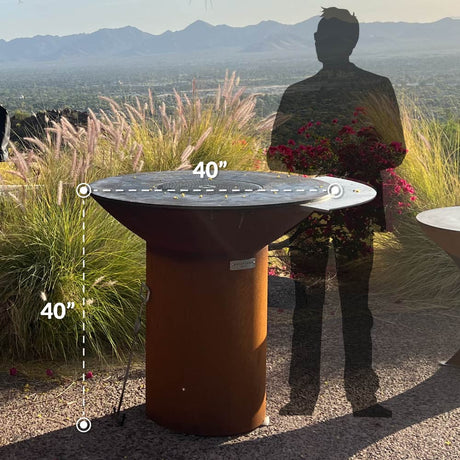
Arteflame: Crafted from US Corten steel (weathering steel). It is designed to be left outside year-round. It contains no moving parts to break. The cooktop seasons like a cast-iron skillet, becoming naturally non-stick and rust-resistant with use.
Pro Tip: Corten steel is designed to develop a protective patina. Unlike stainless steel that looks dirty when weathered, Corten steel gets better looking and more durable as it ages.
No, it is generally easier. Simply scrape food residue into the fire in the center while the grill is hot, then wipe the cooktop with a cloth and oil. There are no grates to scrub or grease traps to empty.
It is difficult without purchasing extra accessories. Standard grills have open grates where eggs and pancakes fall through. The Arteflame's solid flat-top surface is ready for bacon, eggs, and pancakes immediately.
While a cover keeps debris off, it is not strictly necessary for durability. The Corten steel base is weather-proof, and if the cooktop rusts from disuse, it can be easily scraped and re-seasoned like cast iron.
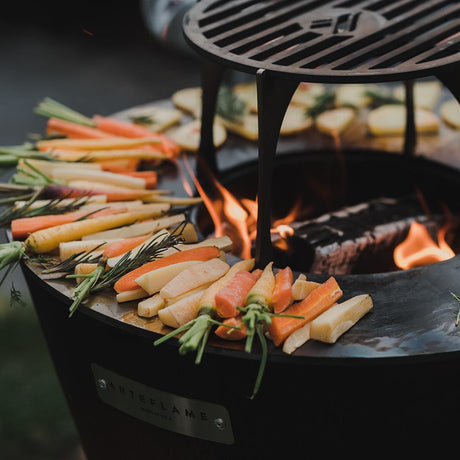
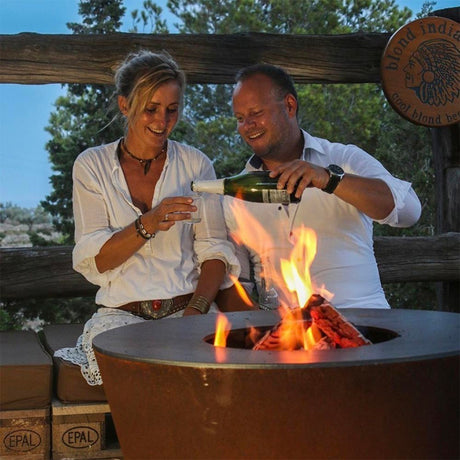
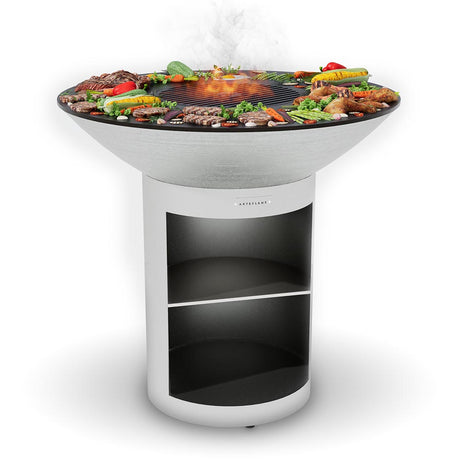
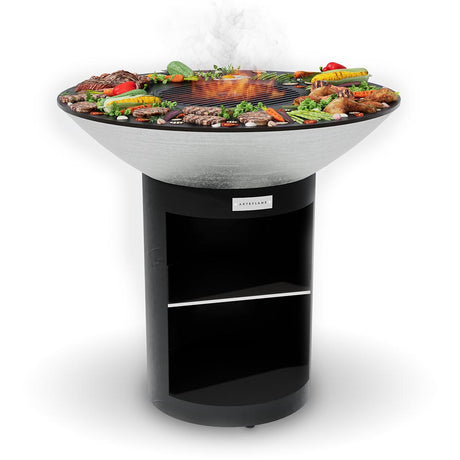






Turn yesterday's leftover macaroni into today's crispy, golden side dish with this easy wood-fired recipe.

Master this Texas-style open-fire brisket cooked entirely on the Arteflame grill. By searing on the center grate and wrapping to render on the flat top, you get perfectly tender, juicy...

Transform standard thick-cut bacon into a sweet, savory appetizer with a dark stout and brown sugar glaze, perfectly caramelized on a flat-top grill.

Render the perfect crispy skin with these Sichuan Peppercorn Duck Breasts, paired with a smoky, sweet, and spicy charred plum-poblano sauce.

Tender artichoke halves charred over high heat and smothered in rich garlic butter and Parmesan cheese.

Achieve the ultimate crust with this low-and-slow beef brisket recipe, utilizing natural heat zones for a perfect sear and incredibly tender finish.

Transform the trending crispy rice paper dumplings into a wood-fired masterpiece. Cooked on the Arteflame flat steel griddle for a shatteringly crisp crust and savory, high-protein filling.

Elevate albacore tuna with a steakhouse-style bacon wrap and a decadent green peppercorn cream sauce, grilled flawlessly on a flat-top.