
Crisp and Golden Mac and Cheese Cakes on the Grill
Turn yesterday's leftover macaroni into today's crispy, golden side dish with this easy wood-fired recipe.


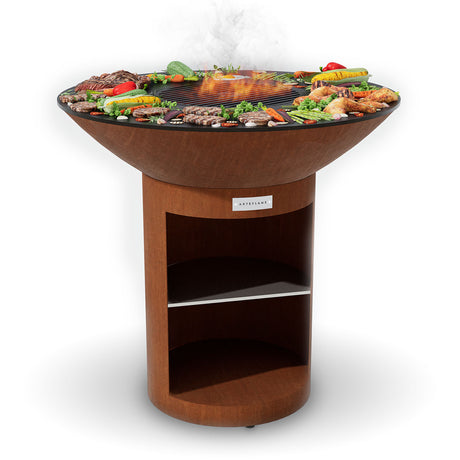
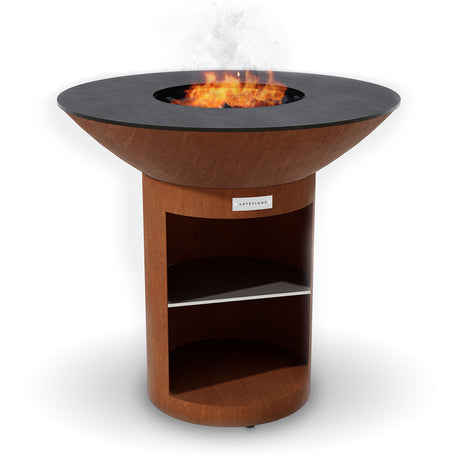
High-end wood grills outperform gas grills in flavor complexity and searing capabilities, while gas grills offer superior speed and push-button convenience. If your priority is achieving restaurant-quality flavor and creating a social gathering point, a wood-fired flat top grill is the better investment; if you strictly need 10-minute weeknight meals, gas is the practical choice.
Before diving into the mechanics, review this snapshot comparison to understand which grill fits your lifestyle.
| Feature | High-End Gas Grill | Arteflame Wood Grill |
|---|---|---|
| Primary Flavor Profile | Neutral (Taste the fuel/metal) | Smoky, Wood-Fired, Rich |
| Maximum Heat | 500°F - 700°F (Direct) | 1,000°F+ (Center Grate) |
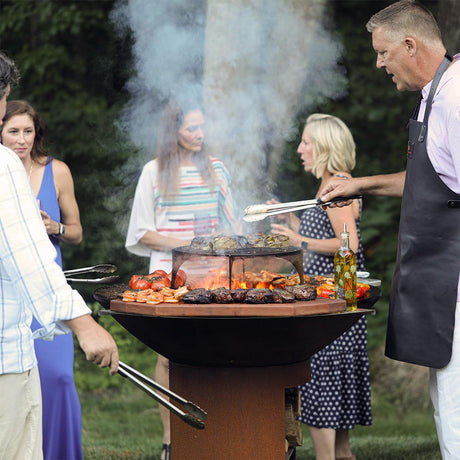
| Social Experience | Cook faces away from guests | 360° Cooking / Fire Pit Mode |
| Maintenance | Grease trap cleaning, burner checks | Simple scrape & oil seasoning |
| Versatility | Grill grates (food falls through) | Solid Griddle (Eggs, Veggies, Steaks) |
The short answer is yes. Gas is odorless and tasteless, meaning it adds nothing to your food. In fact, many gas grills impart a metallic taste or the flavor of unburnt propane. Wood-fired grilling infuses food with natural aromatic compounds found in hardwoods like hickory, oak, or maple.
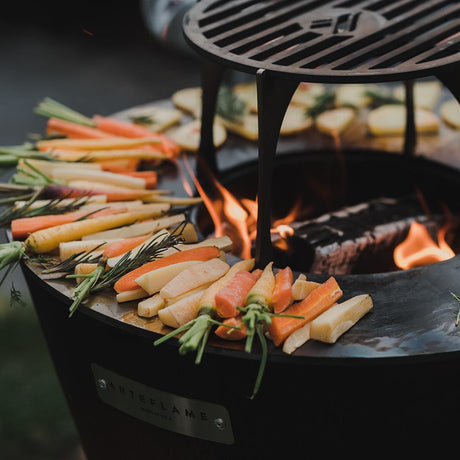
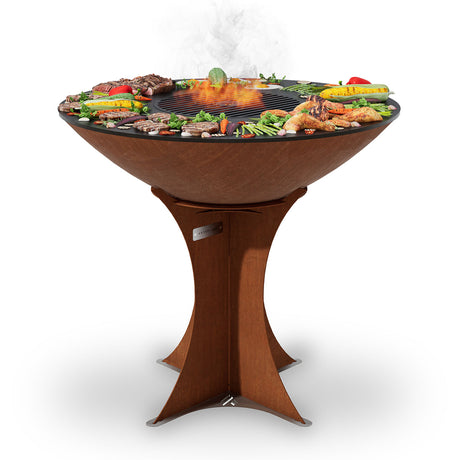
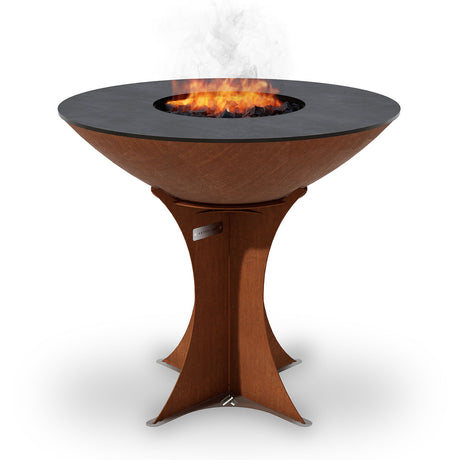
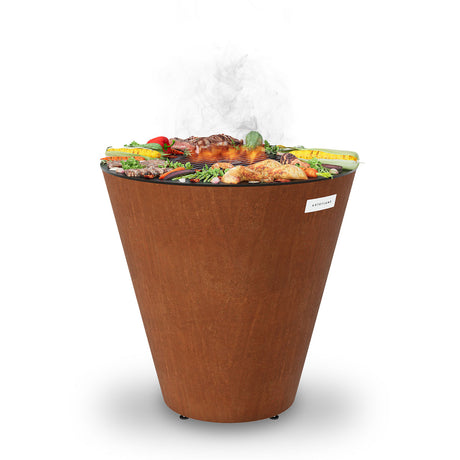
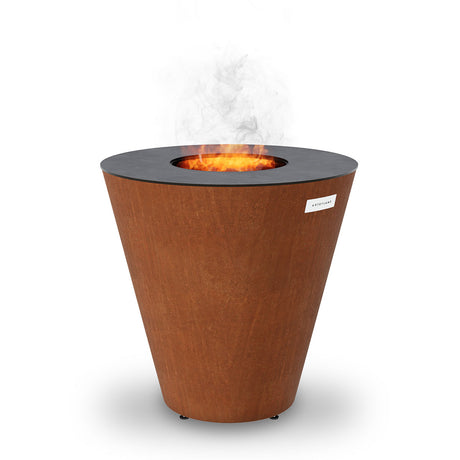
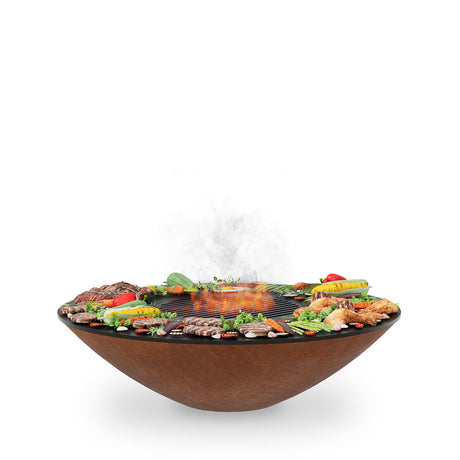
Furthermore, the design of a grill like the Arteflame amplifies this. Unlike gas grills with open grates where juices drip onto burners and cause flare-ups (which can deposit soot), a solid carbon steel cooktop vaporizes juices instantly. This creates a flavor fog that bastes the meat in its own essence.
Pro Tip: When using a wood-fired flat top, push your food closer to the center fire opening for a "reverse sear." The intense heat (over 1,000°F) creates a Maillard reaction—that crispy brown crust—that standard gas burners simply cannot replicate without overcooking the inside.
Traditional gas grills segregate the chef. You stand against a wall or rail, back turned to your guests, flipping burgers while everyone else socializes. This utilitarian approach treats grilling as a chore rather than an event.
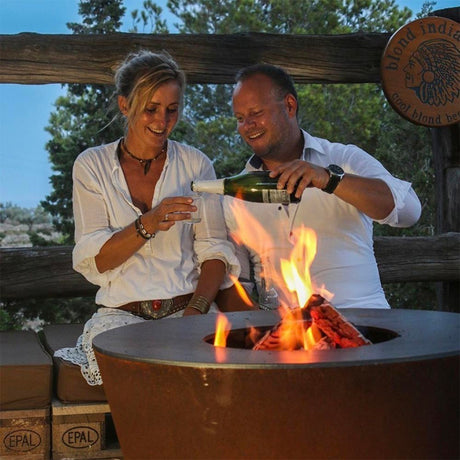
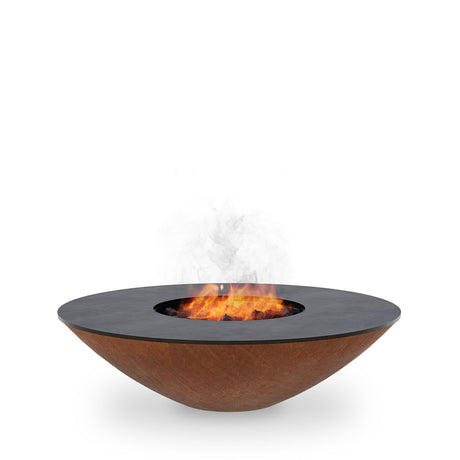
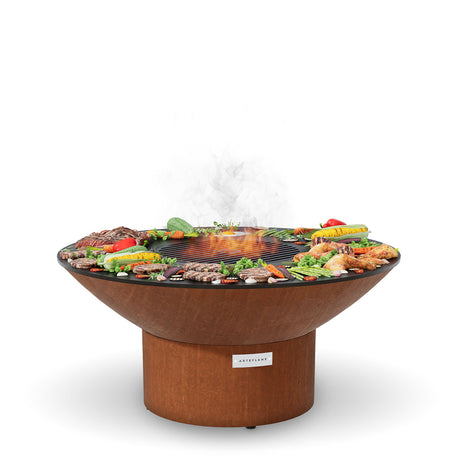
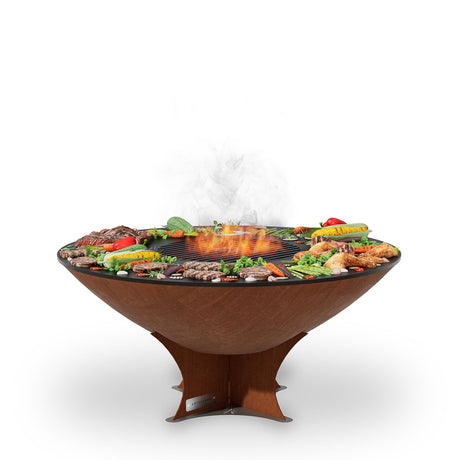
A circular wood-fired grill changes the dynamic entirely. It functions as a fire pit and a hibachi-style grill simultaneously. Guests can gather around the fire, watch the food cook, or even cook their own appetizers on the edge of the plancha. It transforms meal prep into a communal activity.
A common misconception is that wood grills require messy charcoal cleanups. However, flat-top wood grills are often easier to maintain than complex gas systems. High-end gas grills have multiple failure points: clogged burners, rusted heat tents, and grease trays that require deep cleaning to prevent fires.
Maintenance Steps for Arteflame:
Pro Tip: Never use soap on a carbon steel cooktop. Similar to a cast-iron skillet, the surface builds up a non-stick "seasoning" layer over time. Soap strips this layer. A simple oil wipe while the grill is still warm keeps it rust-free and ready for the next cook.
Yes, you can use charcoal in an Arteflame grill to establish a consistent bed of coals. However, adding hardwood logs is recommended to achieve higher temperatures and that distinct wood-fired flavor profile.
A gas grill typically heats up in 10-15 minutes. A wood-fired grill like the Arteflame takes about 20-30 minutes to reach optimal searing temperature, but the heat retention of the heavy steel allows for hours of consistent cooking.
Generally, yes. Cooking on a solid surface prevents carcinogenic flare-ups caused by fat dripping onto open flames. It also allows you to cook with less oil once the cooktop is properly seasoned.

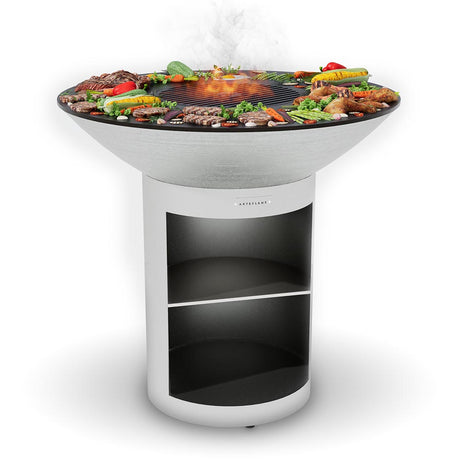
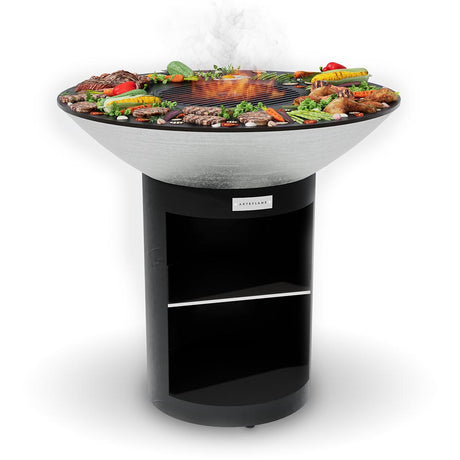






Turn yesterday's leftover macaroni into today's crispy, golden side dish with this easy wood-fired recipe.

Master this Texas-style open-fire brisket cooked entirely on the Arteflame grill. By searing on the center grate and wrapping to render on the flat top, you get perfectly tender, juicy...

Transform standard thick-cut bacon into a sweet, savory appetizer with a dark stout and brown sugar glaze, perfectly caramelized on a flat-top grill.

Render the perfect crispy skin with these Sichuan Peppercorn Duck Breasts, paired with a smoky, sweet, and spicy charred plum-poblano sauce.

Tender artichoke halves charred over high heat and smothered in rich garlic butter and Parmesan cheese.

Achieve the ultimate crust with this low-and-slow beef brisket recipe, utilizing natural heat zones for a perfect sear and incredibly tender finish.

Transform the trending crispy rice paper dumplings into a wood-fired masterpiece. Cooked on the Arteflame flat steel griddle for a shatteringly crisp crust and savory, high-protein filling.

Elevate albacore tuna with a steakhouse-style bacon wrap and a decadent green peppercorn cream sauce, grilled flawlessly on a flat-top.