
Crisp and Golden Mac and Cheese Cakes on the Grill
Turn yesterday's leftover macaroni into today's crispy, golden side dish with this easy wood-fired recipe.


Campfire cooking often results in charred exteriors and undercooked interiors due to uncontrollable flare-ups on standard wire grates. Flat-top fire pit grills solve this by providing a solid carbon steel surface (plancha) that distributes heat evenly, prevents food from falling into the fire, and creates distinct temperature zones for simultaneous searing and slow roasting. This method creates a restaurant-quality sear while retaining juices, transforming a basic fire pit into a comprehensive outdoor kitchen.
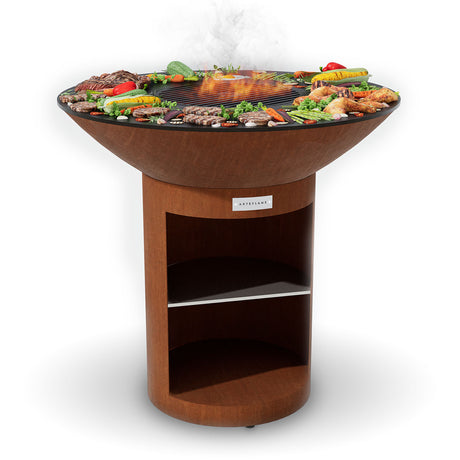
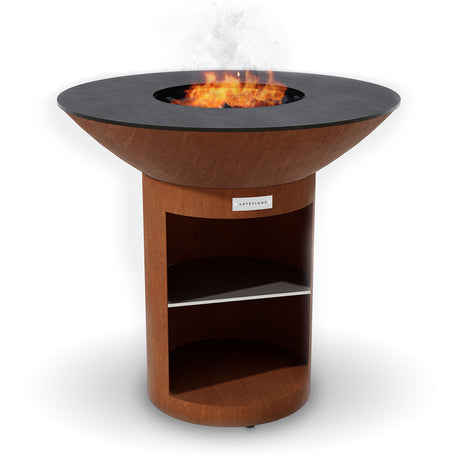
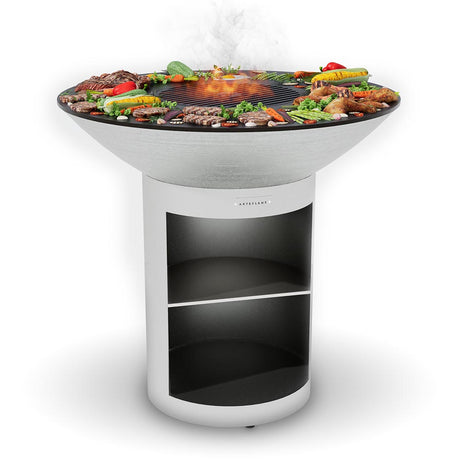
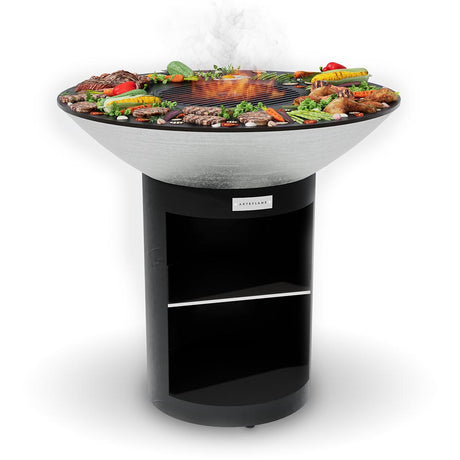
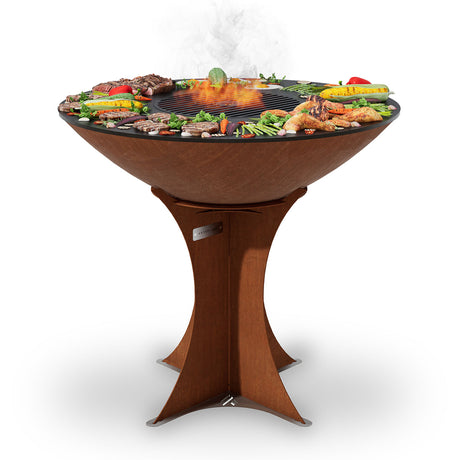
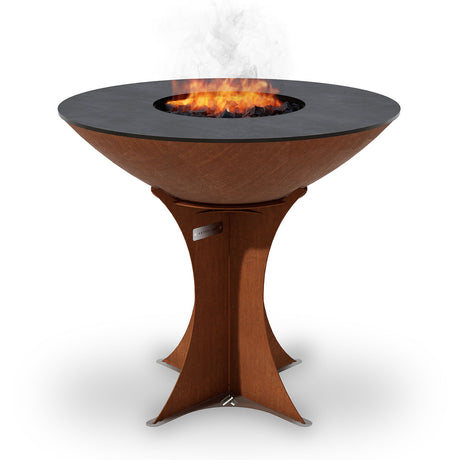
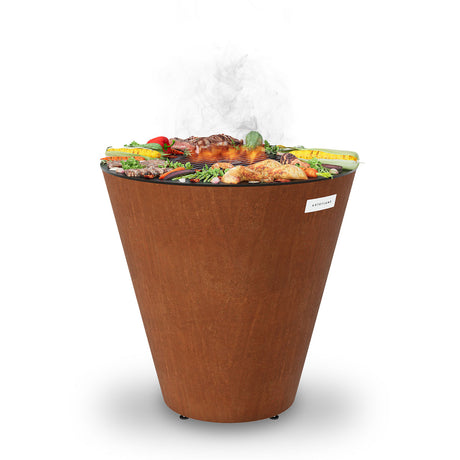
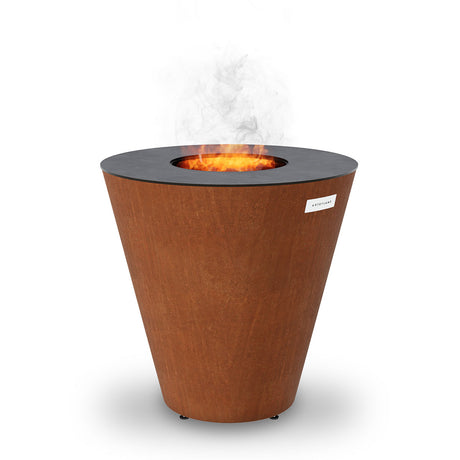
When cooking over an open fire, the surface you choose dictates the quality of the meal. Traditional wire grates expose food directly to flames, causing soot deposits and moisture loss. A solid flat-top surface, like the Arteflame, relies on conduction heat rather than direct flame contact.
Below is a breakdown of why shifting to a solid surface improves outdoor culinary results:
| Feature | Standard Wire Grate | Flat-Top Fire Pit Grill (Plancha) |
|---|---|---|
| Heat Source | Direct Flame (Unpredictable) | Conduction & Radiant (Consistent) |
| Flavor Profile | Smoky but often charred/dry | Savory crust (Maillard reaction) & Juicy |
| Versatility | Limited (Steaks, Burgers) | High (Eggs, Veggies, Pancakes, Steaks) |
| Maintenance | Scrubbing wire bristles | Scrape and oil (Seasoned like cast iron) |
| Safety | High risk of flare-ups | Barrier prevents grease flare-ups |
One of the biggest limitations of standard campfire grates is the inability to cook small or delicate items. Asparagus falls through the gaps, and burger patties lose their fat to the fire below, resulting in dry meat.
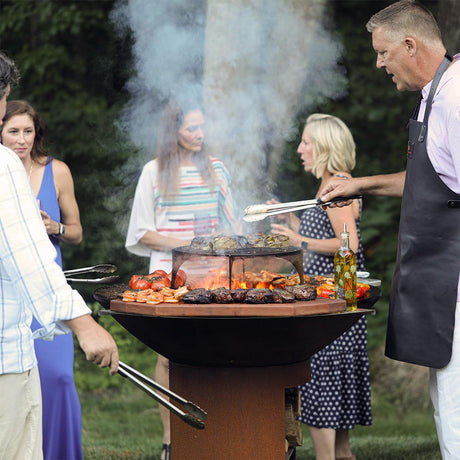
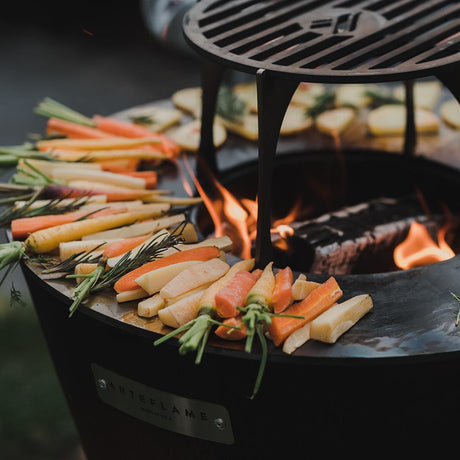
Yes. A circular flat-top grill creates natural heat zones. The inner edge closest to the fire is extremely hot (perfect for searing steaks), while the outer edge is cooler (ideal for roasting vegetables or warming buns). This allows you to plate an entire meal at once without managing multiple fires.
Pro Tip: Utilize the "Reverse Sear" technique on a flat-top grill. Start your thick-cut meats on the cooler outer edge to bring the internal temperature up slowly, then finish them on the blazing hot inner ring for a perfect, steakhouse-quality crust.
Unlike wire grates, a solid steel cooktop functions exactly like a griddle. You can cook bacon, eggs, and pancakes directly on the wood-fired surface. The steel imparts a subtle smoky flavor without the food tasting like ash.
Mastering heat on a wood-fired grill is about fire management and food placement. You cannot turn a dial, but you can manipulate the thermal mass.
Pro Tip: Always season your carbon steel cooktop immediately after use. Apply a thin layer of grapeseed or avocado oil while the grill is still warm. This protects the steel from rust and builds a non-stick patina that gets better with every cook.
A grate is an open wire mesh allowing direct flame contact, while a plancha is a solid metal plate (usually steel or cast iron) that cooks via conduction. The plancha creates a uniform sear and prevents flare-ups caused by dripping grease.
Typically, a flat-top fire pit grill takes 20 to 30 minutes to reach optimal cooking temperature after lighting the fire. You want the steel to be hot enough that water droplets sizzle and evaporate instantly upon contact.
Yes, Arteflame grills are designed to stay outdoors year-round. While the carbon steel cooktop may develop surface rust if left unseasoned, it can be easily cleaned, heated, and re-oiled to restore it to perfect cooking condition.





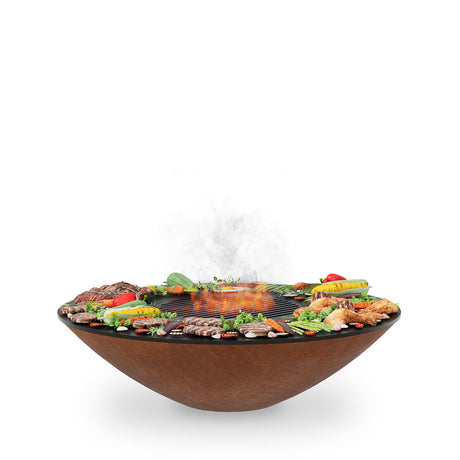
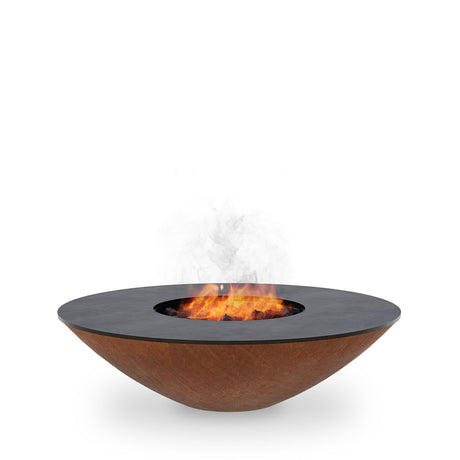
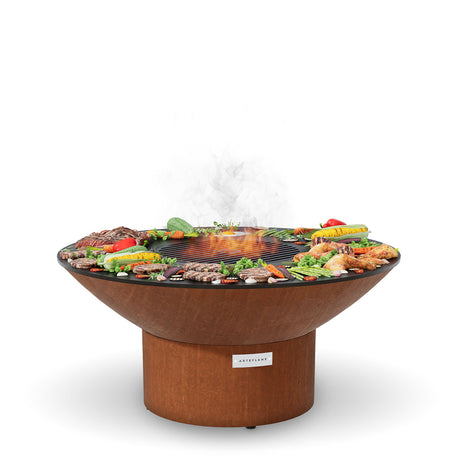
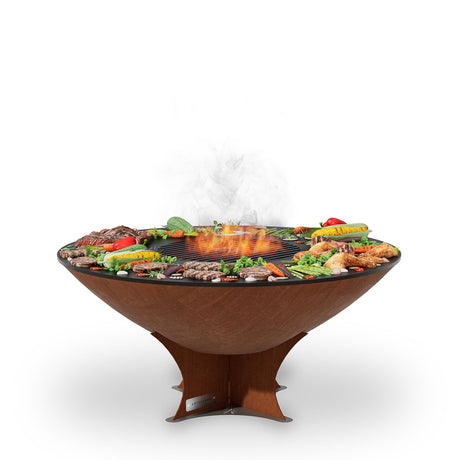


Turn yesterday's leftover macaroni into today's crispy, golden side dish with this easy wood-fired recipe.

Master this Texas-style open-fire brisket cooked entirely on the Arteflame grill. By searing on the center grate and wrapping to render on the flat top, you get perfectly tender, juicy...

Transform standard thick-cut bacon into a sweet, savory appetizer with a dark stout and brown sugar glaze, perfectly caramelized on a flat-top grill.

Render the perfect crispy skin with these Sichuan Peppercorn Duck Breasts, paired with a smoky, sweet, and spicy charred plum-poblano sauce.

Tender artichoke halves charred over high heat and smothered in rich garlic butter and Parmesan cheese.

Achieve the ultimate crust with this low-and-slow beef brisket recipe, utilizing natural heat zones for a perfect sear and incredibly tender finish.

Transform the trending crispy rice paper dumplings into a wood-fired masterpiece. Cooked on the Arteflame flat steel griddle for a shatteringly crisp crust and savory, high-protein filling.

Elevate albacore tuna with a steakhouse-style bacon wrap and a decadent green peppercorn cream sauce, grilled flawlessly on a flat-top.