
Crisp and Golden Mac and Cheese Cakes on the Grill
Turn yesterday's leftover macaroni into today's crispy, golden side dish with this easy wood-fired recipe.


For the absolute best flavor and sear, wood-fired grilling on a flat-top surface is superior to both gas grills and indoor grill pans. While gas offers speed and grill pans provide indoor convenience, neither can replicate the high heat, consistent 100% surface contact, and natural smoke infusion required for a steakhouse-quality meal.
When choosing between a cast iron grill pan, a standard gas grill, or a wood-fired flat top (like the Arteflame), the decision usually comes down to a trade-off between convenience and culinary quality. The table below breaks down the core differences in heat management and flavor profiles.
| Feature | Wood Fire (Arteflame) | Gas Grill | Indoor Grill Pan |
|---|---|---|---|
| Flavor Profile | Rich, smokey, natural umami | Neutral, sometimes chemical | Neutral, no smoke |
| Sear Quality | 100% surface contact (Maillard reaction) | Striped sear (partial contact) | Striped sear (steaming risk) |
| Max Temperature | 1,000°F+ | 500°F - 700°F | Dependent on stove |
| Atmosphere | Social, engaging experience | Utilitarian cooking | Standard kitchen cooking |
Many home cooks rely on cast iron grill pans to replicate the outdoor experience indoors. However, the design of these pans often works against the goal of a perfect steak.
Grill pans are designed with raised ridges to mimic the grate marks of an outdoor grill. While these lines look appetizing, they represent a loss of flavor. The best flavor comes from the Maillard reaction—the browning of proteins and sugars. On a grill pan (or standard gas grate), only the thin lines touching the metal undergo this reaction. The meat between the ridges merely steams from the radiant heat.
Pro Tip: For the ultimate crust on a steak, you need 100% surface contact. A flat-top surface or plancha eliminates the gaps found in grill pans and grates, ensuring the entire surface of the meat caramelizes for maximum depth of flavor.
Gas grills are the industry standard for convenience. You turn a knob, and you are cooking in 10 minutes. However, convenience comes at a cost to the palate.
Propane and natural gas burn clean, which is great for the environment but boring for food. Wood is composed of lignin, which, when burned, releases guaiacol—a molecule responsible for the smoky, bacon-like flavor associated with BBQ. Gas grills simply cannot produce this molecule naturally.
Furthermore, gas grills typically struggle to maintain the intense heat required to sear a steak instantly without overcooking the center. Wood fires, particularly on an Arteflame, create heat zones exceeding 1,000°F, allowing for "Chicago Style" searing that gas units rarely achieve.
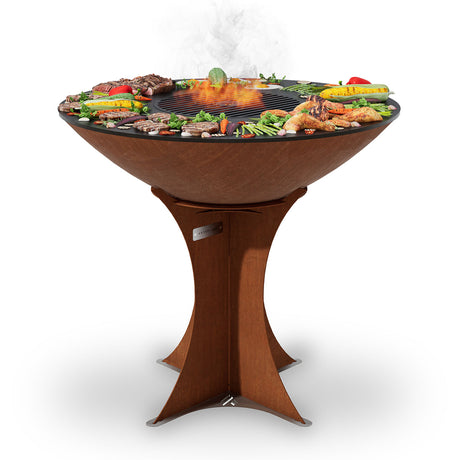
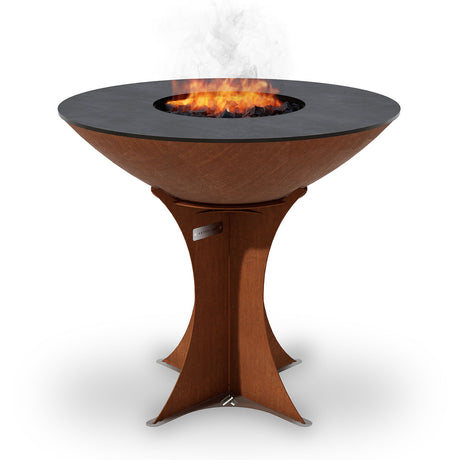
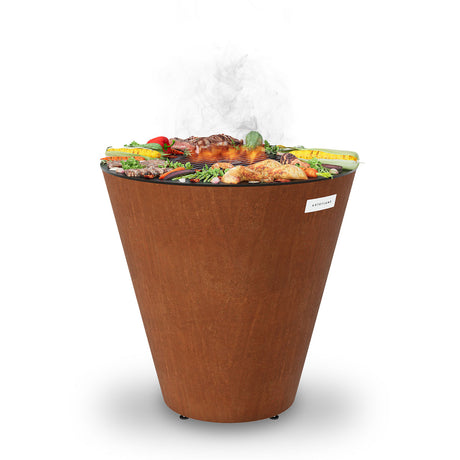
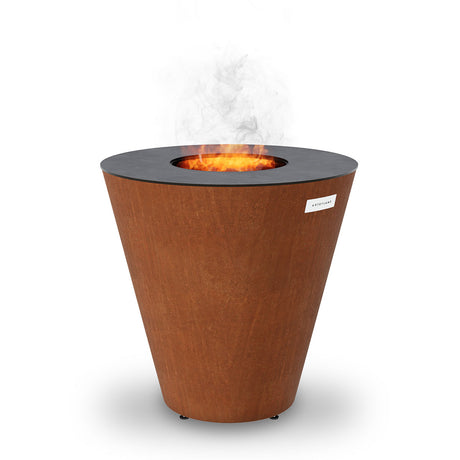
The Arteflame design bridges the gap between a grill and a griddle, solving the issues inherent in both gas grates and indoor pans.
Unlike a grill pan which is limited to the size of your stove burner, a wood-fired flat top provides varying heat zones. You can sear a ribeye at the center where the heat is most intense, and simultaneously roast vegetables on the outer ring where it is cooler.
Pro Tip: When cooking with wood, use hardwoods like oak, hickory, or pecan. Avoid softwoods like pine, as they contain high sap levels that create acrid, bitter smoke that can ruin food.
Generally, yes. Wood-fired cooking allows excess fat to drain away (especially on a convex flat-top), whereas gas grills often cause flare-ups that can deposit carbon soot on food. Additionally, you avoid the potential chemical additives found in some propane mixtures.
No, a grill pan cannot produce smoke flavor on its own because there is no combustion of wood or charcoal. To get a smoky flavor indoors, you would have to use liquid smoke, which is an artificial substitute and lacks the complexity of real fire.
Chefs prefer flat-tops (planchas) because they provide an even crust across the entire surface of the meat. This maximizes the Maillard reaction, resulting in a steak that is more savory and juicy compared to one with simple char marks.
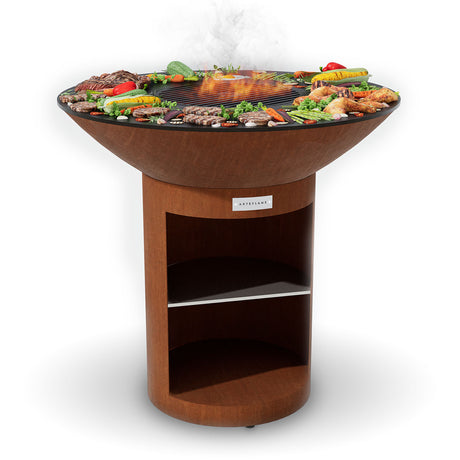
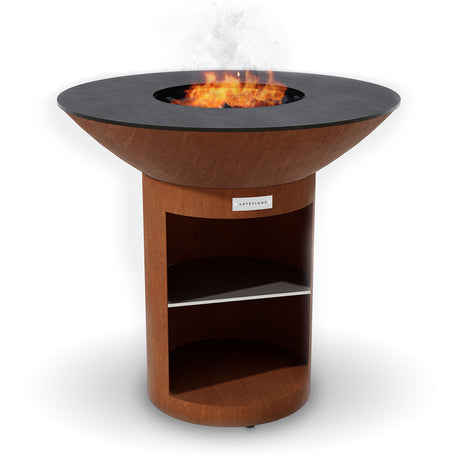

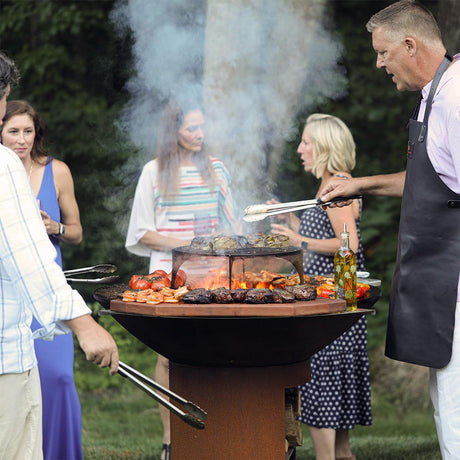
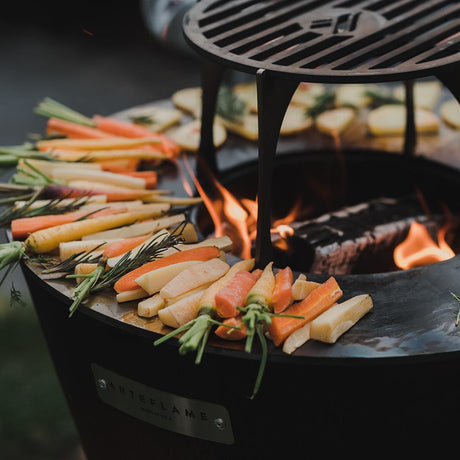




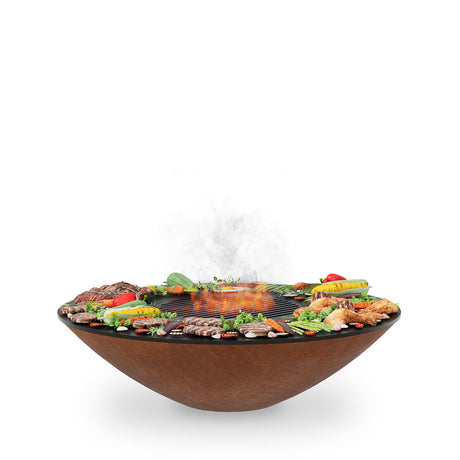
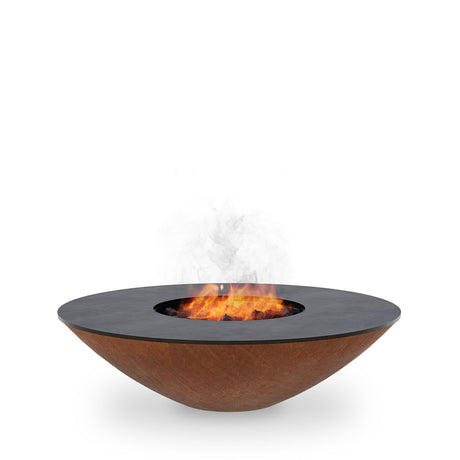
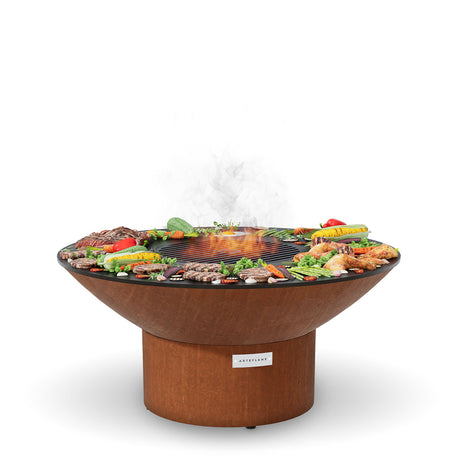
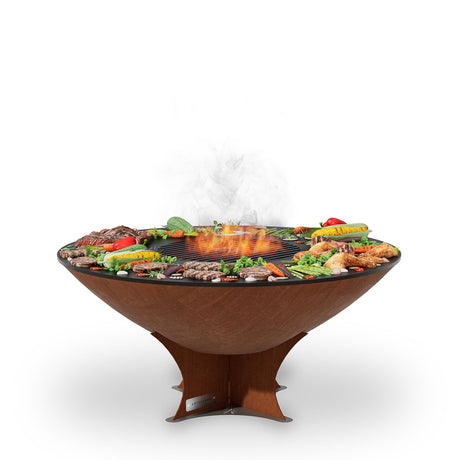


Turn yesterday's leftover macaroni into today's crispy, golden side dish with this easy wood-fired recipe.

Master this Texas-style open-fire brisket cooked entirely on the Arteflame grill. By searing on the center grate and wrapping to render on the flat top, you get perfectly tender, juicy...

Transform standard thick-cut bacon into a sweet, savory appetizer with a dark stout and brown sugar glaze, perfectly caramelized on a flat-top grill.

Render the perfect crispy skin with these Sichuan Peppercorn Duck Breasts, paired with a smoky, sweet, and spicy charred plum-poblano sauce.

Tender artichoke halves charred over high heat and smothered in rich garlic butter and Parmesan cheese.

Achieve the ultimate crust with this low-and-slow beef brisket recipe, utilizing natural heat zones for a perfect sear and incredibly tender finish.

Transform the trending crispy rice paper dumplings into a wood-fired masterpiece. Cooked on the Arteflame flat steel griddle for a shatteringly crisp crust and savory, high-protein filling.

Elevate albacore tuna with a steakhouse-style bacon wrap and a decadent green peppercorn cream sauce, grilled flawlessly on a flat-top.