
Crisp and Golden Mac and Cheese Cakes on the Grill
Turn yesterday's leftover macaroni into today's crispy, golden side dish with this easy wood-fired recipe.


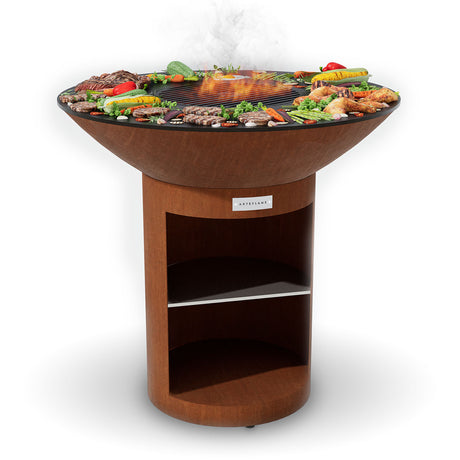
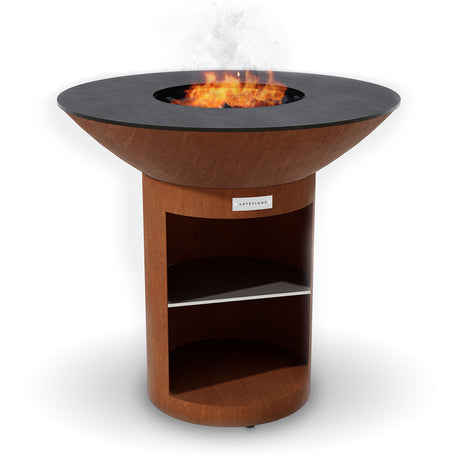
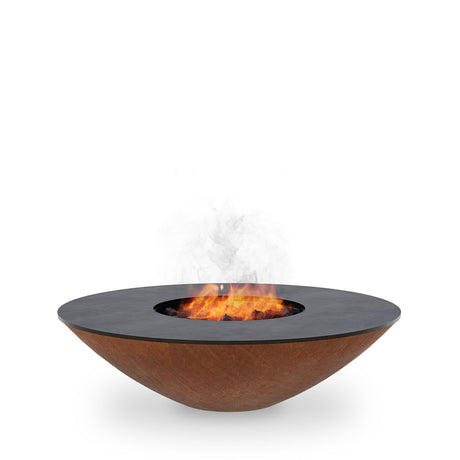
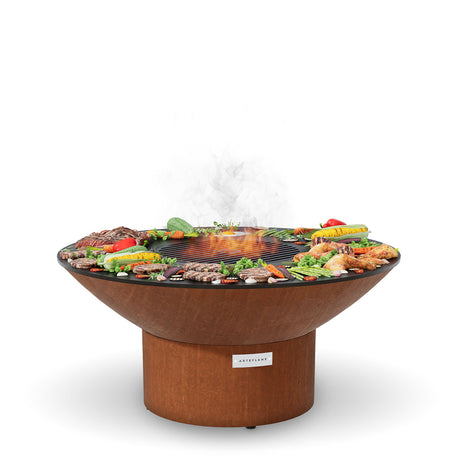
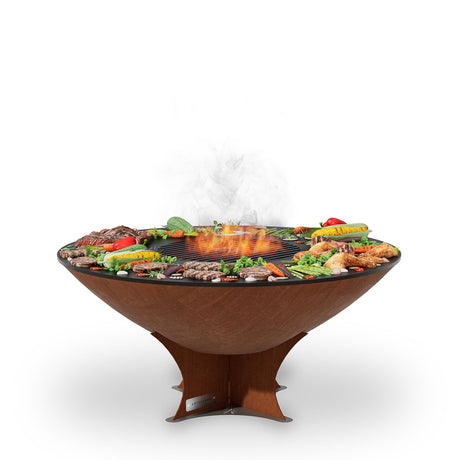
Standard grill grates create distinct sear marks but often allow essential meat juices to drip onto the coals, causing flare-ups and drying out the food. The Arteflame carbon steel insert solves this by converting your kettle grill into a wood-fired plancha, providing a solid searing surface that virtually eliminates flare-ups and cooks steaks in their own juices for superior flavor and moisture retention.
When optimizing your outdoor kitchen for flavor and consistency, the cooking surface is the most critical variable. See how the solid carbon steel insert compares to traditional wire or cast iron grates below.
| Feature | Standard Wire/Cast Iron Grates | Arteflame Carbon Steel Insert |
|---|---|---|
| Cooking Surface | Open grid (approx. 20% surface contact) | Solid surface (100% surface contact) |
| Juice Retention | Low (juices drip into fire) | High (meat cooks in its own juices) |
| Flare-Ups | Frequent (grease hits open flame) | Virtually None (solid barrier) |
| Flavor Profile | Smoky, often dry or charred | Savory, juicy, deep crust |
| Versatility | Steaks and large cuts only | Eggs, veggies, seafood, and steaks |
Yes, significantly. While traditional grilling relies on the heat rising between the grate bars to cook the food, this gap allows fat and juices to escape. When these juices hit the hot coals below, they evaporate instantly or cause grease fires. While this creates smoke, it physically removes moisture from the steak. The result is often a piece of meat that is charred on the outside but dry on the inside.
Pro Tip: True steakhouse flavor comes from the Maillard reaction—the browning of proteins. A solid surface plancha facilitates this reaction across the entire surface of the steak, not just where the wire grate touches the meat.
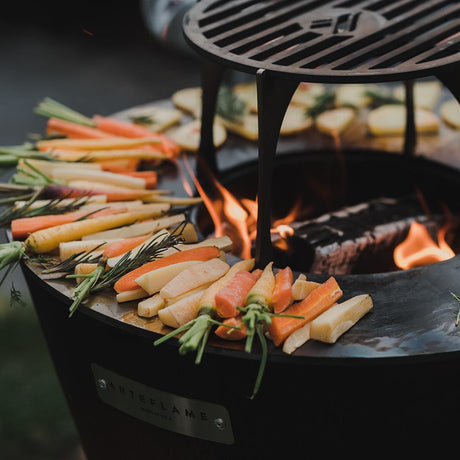
The Arteflame replacement insert operates on the principle of a plancha or griddle. Because it is made of solid carbon steel, virtually no air passes vertically through the cooking zone. instead, the steel absorbs heat and conducts it directly into the food. This creates an even, intense heat that sears the meat rapidly, sealing the surface and preventing internal moisture from evaporating. You get a uniform, golden-brown crust rather than thin black grid lines.
Wire grates, especially porcelain-coated ones, can chip and rust over time, requiring replacement. The Arteflame insert is built from heavy-gauge carbon steel. Much like a cast-iron skillet, it builds up a natural non-stick patina the more you use it. It does not require harsh wire brushes; a simple scrape and a wipe with oil while hot keeps it in prime condition for decades.
Pro Tip: Never clean your carbon steel insert with soap. After cooking, simply scrape the residue into the fire, wipe it with a high-heat oil (like grapeseed), and let it cool. This maintains the seasoning layer that prevents rust and sticking.
Yes, the Arteflame inserts are precision-engineered to replace the standard grates in specific sizes of round kettle grills, including the popular Weber 22-inch and 26-inch models. You simply remove the wire grate and drop the carbon steel insert in its place.
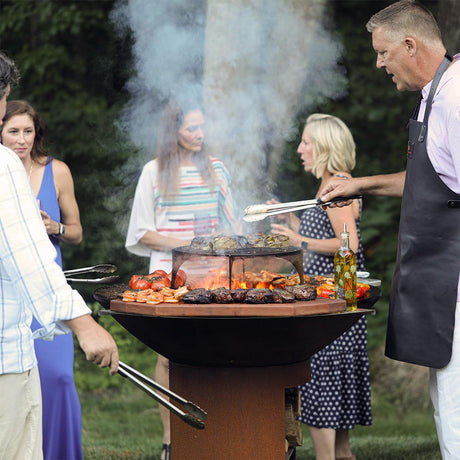
Absolutely. Because the insert sits directly over the wood or charcoal fire, the smoke circulates around the edges and creates a convection oven effect under the lid, infusing the food with smoke flavor without burning it directly.
For this application, carbon steel is generally superior because it is less brittle than cast iron and heats up faster. It creates a smoother surface over time that is easier to season and maintain compared to the rougher texture of traditional cast iron grates.


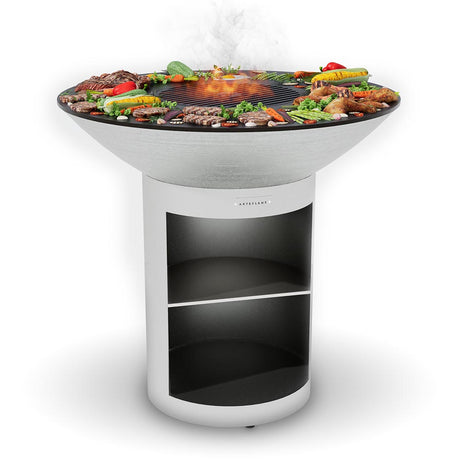
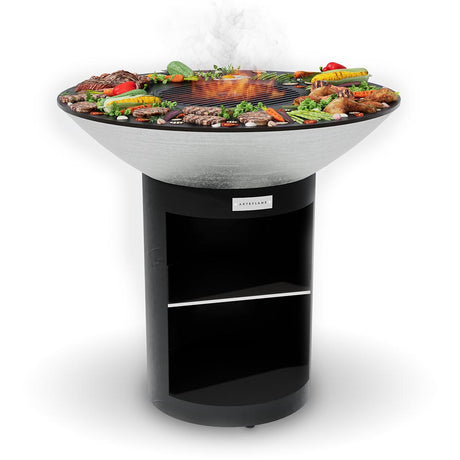
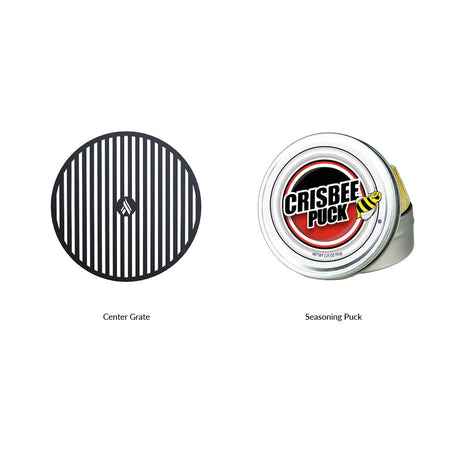


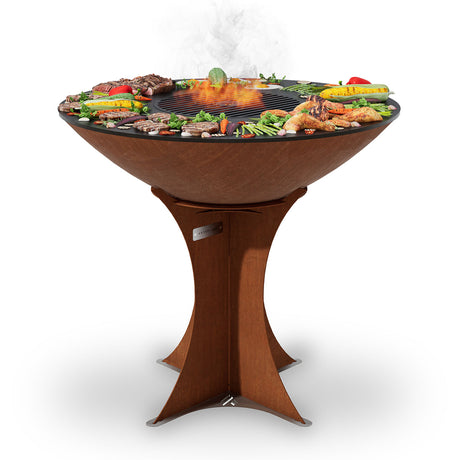
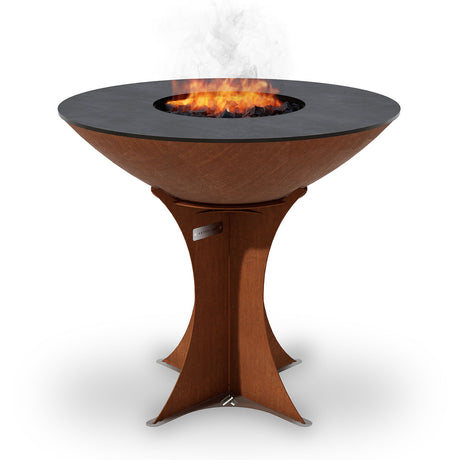


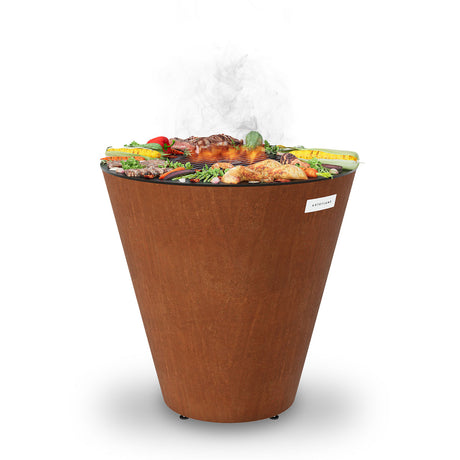
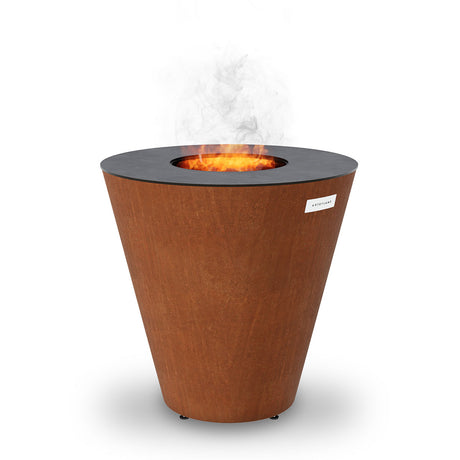
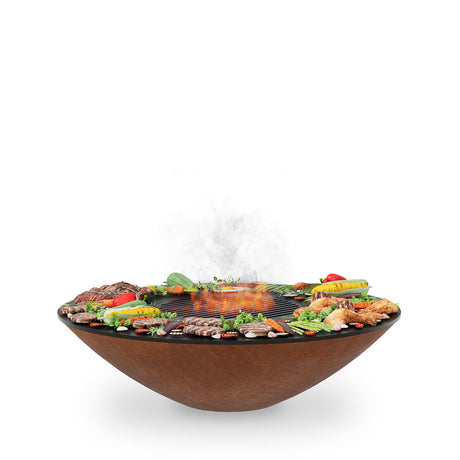


Turn yesterday's leftover macaroni into today's crispy, golden side dish with this easy wood-fired recipe.

Master this Texas-style open-fire brisket cooked entirely on the Arteflame grill. By searing on the center grate and wrapping to render on the flat top, you get perfectly tender, juicy...

Transform standard thick-cut bacon into a sweet, savory appetizer with a dark stout and brown sugar glaze, perfectly caramelized on a flat-top grill.

Render the perfect crispy skin with these Sichuan Peppercorn Duck Breasts, paired with a smoky, sweet, and spicy charred plum-poblano sauce.

Tender artichoke halves charred over high heat and smothered in rich garlic butter and Parmesan cheese.

Achieve the ultimate crust with this low-and-slow beef brisket recipe, utilizing natural heat zones for a perfect sear and incredibly tender finish.

Transform the trending crispy rice paper dumplings into a wood-fired masterpiece. Cooked on the Arteflame flat steel griddle for a shatteringly crisp crust and savory, high-protein filling.

Elevate albacore tuna with a steakhouse-style bacon wrap and a decadent green peppercorn cream sauce, grilled flawlessly on a flat-top.