
Crisp and Golden Mac and Cheese Cakes on the Grill
Turn yesterday's leftover macaroni into today's crispy, golden side dish with this easy wood-fired recipe.


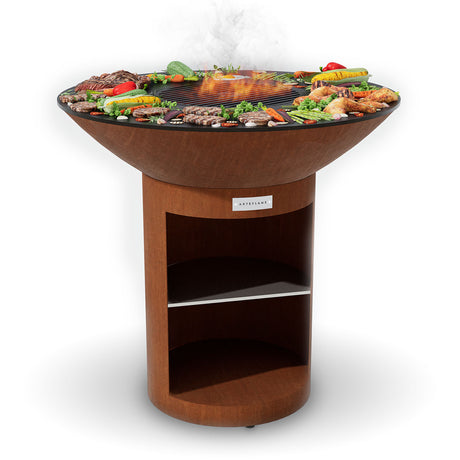
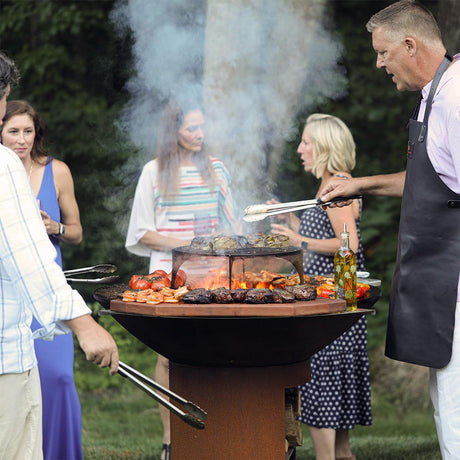
Switching from traditional open grates to a solid carbon steel cooktop fundamentally changes how heat interacts with your food. Unlike grates that allow juices to drip onto coals creating bitter smoke and flare-ups, a solid surface (or plancha) instantly vaporizes drippings into a flavorful mist that infuses back into the meat. This method provides 100% surface contact for a superior Maillard reaction, locking in moisture without the risk of burning your meal.
The primary advantage of grilling beyond the grates is the elimination of the "drying effect." On standard gas or charcoal grills, airflow constantly moves around the food, dehydrating it. A solid carbon steel surface blocks this airflow, cooking food in its own juices.
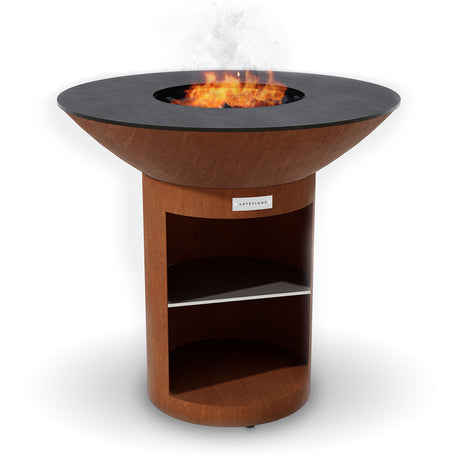
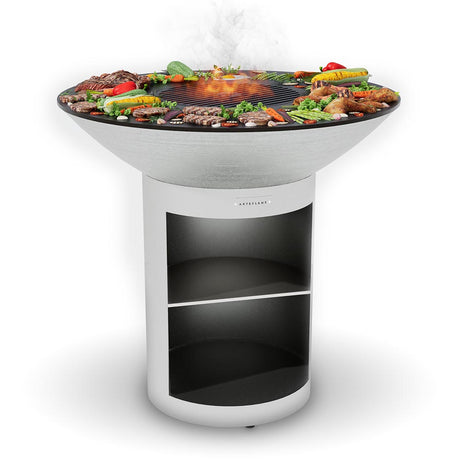
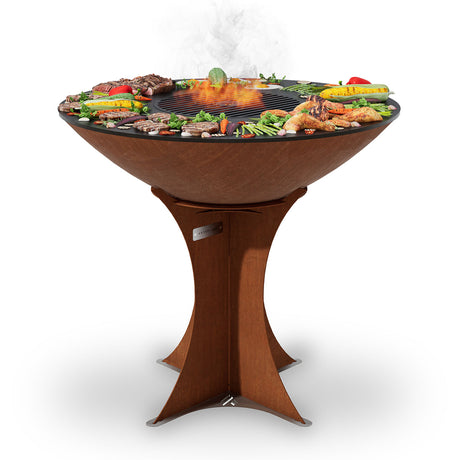
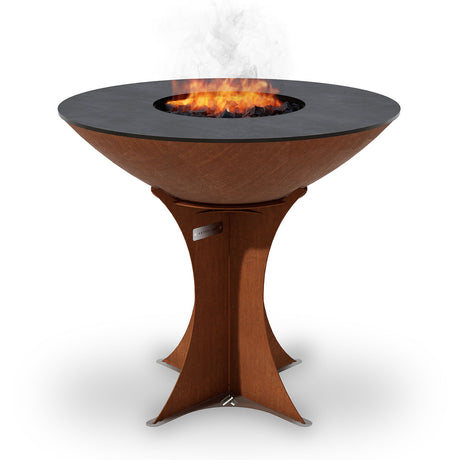
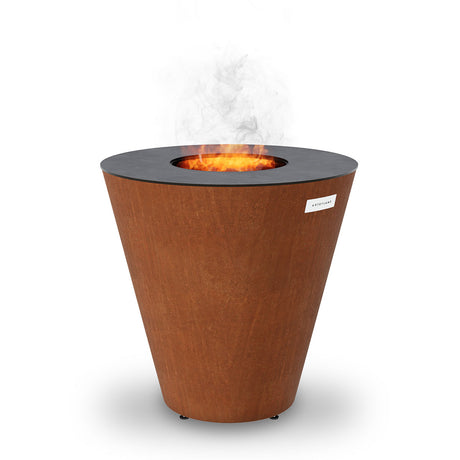
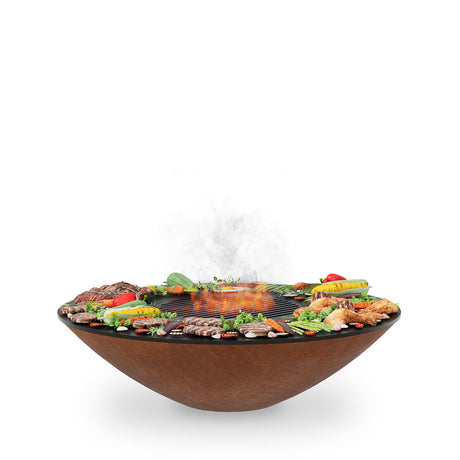
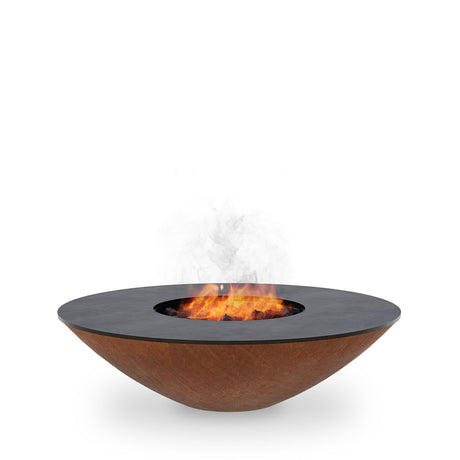
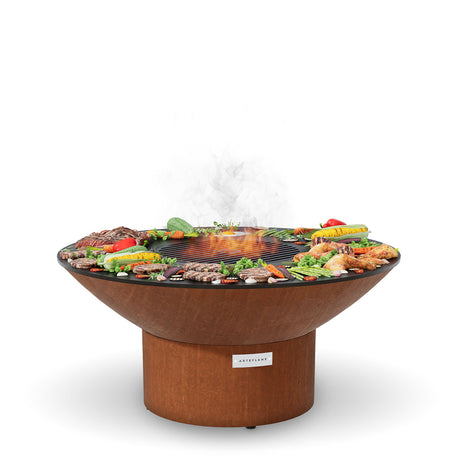
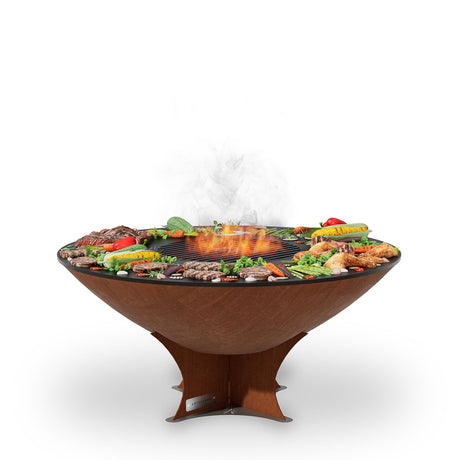
Furthermore, the structural design of an Arteflame creates distinct heat zones. The center is virtually blistering hot for searing, while the outer edges are cooler, allowing you to manage timing perfectly without juggling multiple appliances.
| Feature | Traditional Grates | Carbon Steel Plancha |
|---|---|---|
| Sear Quality | Grill marks (partial sear) | Edge-to-edge crust (full sear) |
| Moisture Retention | Low (juices drip away) | High (juices bathe the food) |
| Flare-Ups | Frequent and uncontrollable | Zero flare-ups |
| Versatility | Limited (small items fall) | Unlimited (eggs, veg, batters) |
Flavor in grilled meat comes largely from the Maillard reaction—the browning of proteins and sugars. Traditional grates only sear the meat where the metal touches, leaving the rest of the surface gray and steamed.
A solid cooktop ensures every millimeter of your steak or burger makes contact with the heat. This results in a deeper, more savory crust often found in high-end steakhouses. Because the surface is solid, you can use fats like butter or tallow directly on the grill without them fueling a fire below.
Pro Tip: Utilize the "Slide Technique" for temperature control. Instead of lifting food off the heat to check doneness, slide the food from the center (high heat) to the outer rim (medium/low heat). This maintains the sear without overcooking the interior.
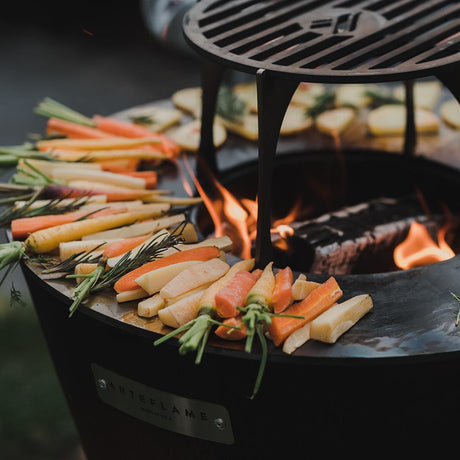
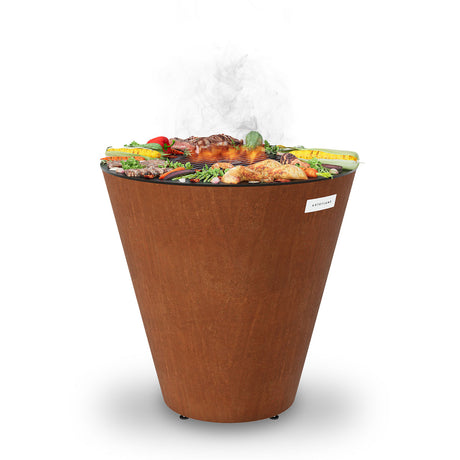
The most practical benefit of leaving the grates behind is menu expansion. Standard grills limit you to large cuts of meat that won't fall through the bars. A solid surface turns your grill into an outdoor kitchen capable of handling delicate ingredients.
Pro Tip: Treat your carbon steel cooktop like a cast iron skillet. The more you cook on it, the better the seasoning becomes. Avoid stripping it down to bare metal; that black patina is your non-stick flavor layer.
Once properly seasoned with oil and heat, the carbon steel cooktop becomes naturally non-stick, similar to a well-used cast iron skillet. The more you cook, the slicker the surface becomes.
Scrape any food residue into the fire in the center while the grill is still warm, then wipe it down with a cloth and a light layer of oil. No soap or wire brushes are required.
Yes, it is often considered cleaner and more savory. Instead of harsh smoke from burning fat flare-ups, you get a subtle wood smoke profile combined with the vaporized essence of the food's own juices.








Turn yesterday's leftover macaroni into today's crispy, golden side dish with this easy wood-fired recipe.

Master this Texas-style open-fire brisket cooked entirely on the Arteflame grill. By searing on the center grate and wrapping to render on the flat top, you get perfectly tender, juicy...

Transform standard thick-cut bacon into a sweet, savory appetizer with a dark stout and brown sugar glaze, perfectly caramelized on a flat-top grill.

Render the perfect crispy skin with these Sichuan Peppercorn Duck Breasts, paired with a smoky, sweet, and spicy charred plum-poblano sauce.

Tender artichoke halves charred over high heat and smothered in rich garlic butter and Parmesan cheese.

Achieve the ultimate crust with this low-and-slow beef brisket recipe, utilizing natural heat zones for a perfect sear and incredibly tender finish.

Transform the trending crispy rice paper dumplings into a wood-fired masterpiece. Cooked on the Arteflame flat steel griddle for a shatteringly crisp crust and savory, high-protein filling.

Elevate albacore tuna with a steakhouse-style bacon wrap and a decadent green peppercorn cream sauce, grilled flawlessly on a flat-top.