
Crisp and Golden Mac and Cheese Cakes on the Grill
Turn yesterday's leftover macaroni into today's crispy, golden side dish with this easy wood-fired recipe.


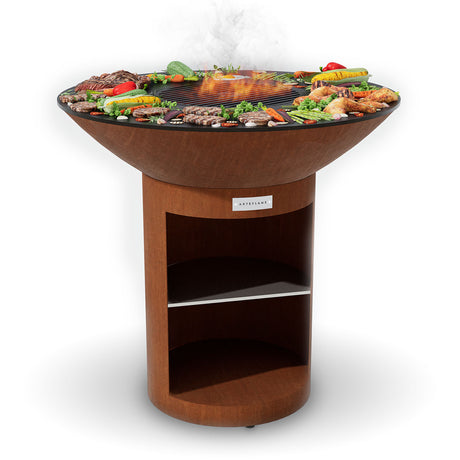
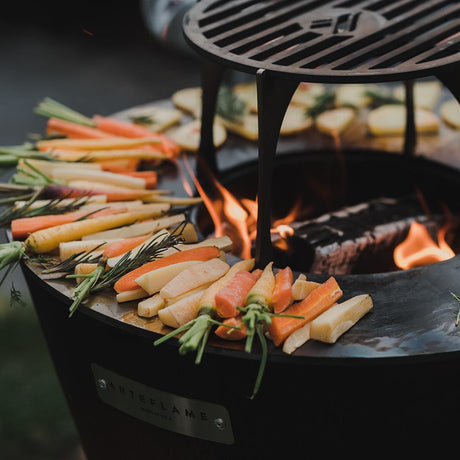
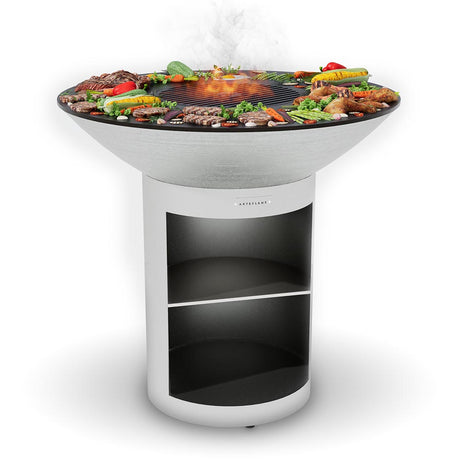
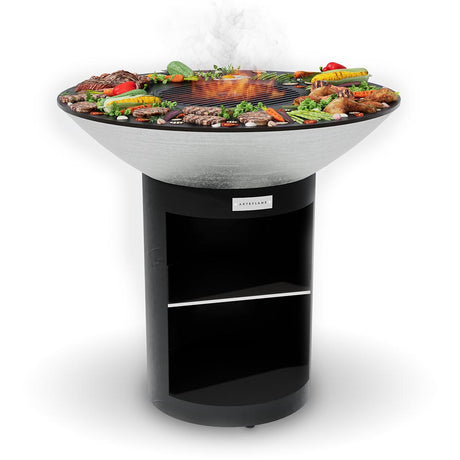
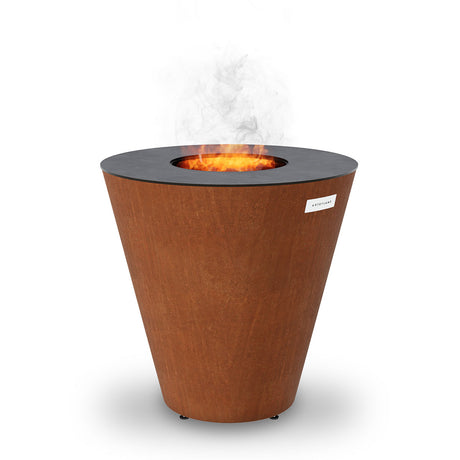
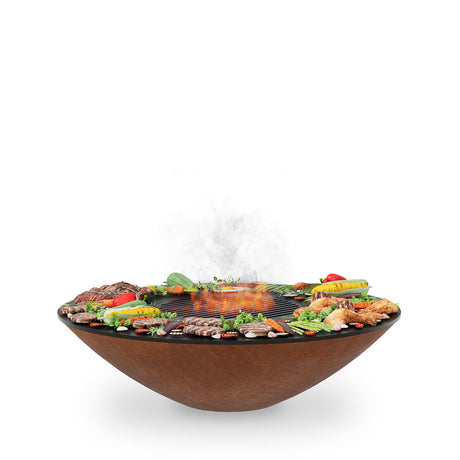
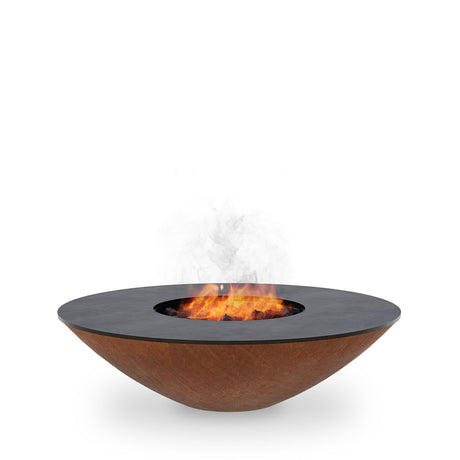
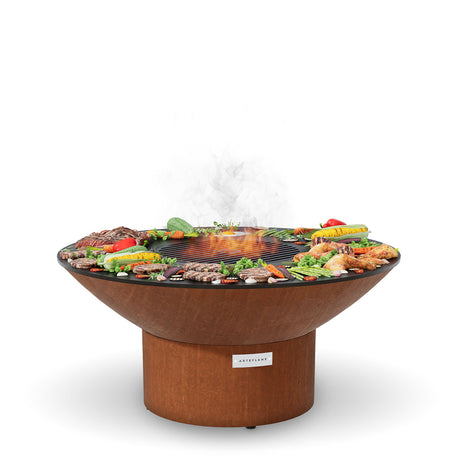
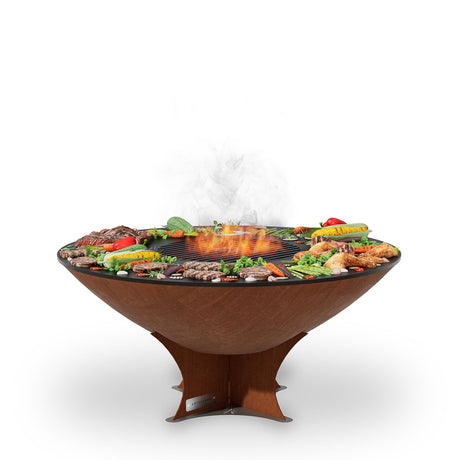
Traditional grill grates limit what you can cook and often lead to burnt food due to uncontrolled flare-ups. The Arteflame upgrades your experience by replacing standard grates with a solid carbon steel cooktop (plancha). This design eliminates flare-ups, creates distinct heat zones for simultaneous searing and slow cooking, and allows you to prepare complete meals—including eggs and vegetables—without food falling through the gaps.
Before diving into the details, compare how a solid carbon steel cooktop stacks up against standard wire grates found on most gas and charcoal grills. This data highlights why the "beyond the grate" approach is superior for flavor and versatility.
| Feature | Traditional Wire Grates | Arteflame Carbon Steel Plancha |
|---|---|---|
| Flare-Ups | Frequent; fat drips directly onto fire | Zero flare-ups; solid surface blocks flames |
| Cooking Surface | Limited; small items fall through | 100% Usable; cooks eggs, batter, & veggies |
| Heat Control | Usually one uniform temperature | Multi-zone; sear in center, warm on edges |
| Maintenance | Requires wire brushing; prone to rust | Season like cast iron; gets better with use |
| Flavor Profile | Char marks only | All-over sear (Maillard reaction) + wood smoke |
The most significant limitation of a standard grill grate is uniform heat. Usually, the entire surface is the same temperature, making it difficult to cook a steak and delicate asparagus at the same time without burning one or undercooking the other.
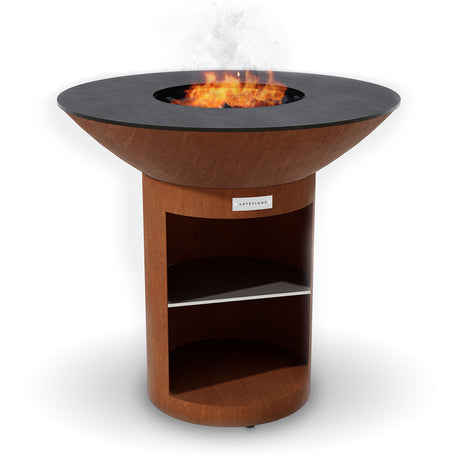
An Arteflame cooktop functions differently. Because the fire is built in the center, the heat radiates outward. The center ring reaches temperatures over 1,000°F for steakhouse-quality searing, while the outer edges stay closer to 200°F.
Pro Tip: Treat the cooktop like a clock face. Use the inner ring (closest to the fire) for proteins that need a hard sear, and slide them to the outer 3-inch perimeter to finish cooking internally without burning the crust.
Wire grates only provide heat contact on thin strips of metal. While "grill marks" look appealing, they actually represent missed opportunities for flavor. The spaces between the grates produce no searing.
By upgrading to a solid surface, you maximize the Maillard reaction. This is the chemical reaction between amino acids and reducing sugars that gives browned food its distinctive flavor. With a plancha grill, the meat sears across its entire surface area, locking in juices and creating a deeper, savory crust that wire grates cannot replicate.
The concept of "grilling beyond the grate" is about removing the boundaries between your indoor kitchen and your outdoor grill. Traditional grates force you to run back inside to cook side dishes like sautéed onions, bacon, or eggs.
With a seasoned carbon steel cooktop, you can prepare an entire breakfast, lunch, or dinner outdoors. The solid surface handles liquid batters (pancakes), small grains (fried rice), and delicate seafood (scallops) seamlessly.
Pro Tip: To cook eggs or pancakes on your Arteflame, ensure the surface is well-oiled and sufficiently heated. Drop a few drops of water on the steel; if they sizzle and evaporate instantly, the surface is ready for non-stick cooking.
Many grillers fear rust, but carbon steel is surprisingly easy to maintain—similar to a cast-iron skillet. Unlike wire grates that degrade and need replacement, a carbon steel cooktop improves over time.
To maintain it, simply scrape food residue into the fire after cooking and wipe the surface with a thin layer of cooking oil (like grapeseed or avocado oil) while it is still warm. This builds up the seasoning layer, turning the steel a deep black color and making it naturally non-stick.
The combination of heat and oil creates a polymer layer known as "seasoning." Once the carbon steel turns black from repeated oiling and heating, it becomes naturally non-stick, much like a well-used cast-iron skillet.
Yes. Using charcoal helps establish a consistent base of heat quickly, while adding hardwood provides the aromatic smoke flavor and visual appeal of an open fire. Both fuels work excellently with the Arteflame design.
Cleaning is simple: scrape all food residue directly into the center fire pit using a grill scraper. Wipe the cooktop down with a paper towel and a small amount of oil to protect the steel until your next cook.






Turn yesterday's leftover macaroni into today's crispy, golden side dish with this easy wood-fired recipe.

Master this Texas-style open-fire brisket cooked entirely on the Arteflame grill. By searing on the center grate and wrapping to render on the flat top, you get perfectly tender, juicy...

Transform standard thick-cut bacon into a sweet, savory appetizer with a dark stout and brown sugar glaze, perfectly caramelized on a flat-top grill.

Render the perfect crispy skin with these Sichuan Peppercorn Duck Breasts, paired with a smoky, sweet, and spicy charred plum-poblano sauce.

Tender artichoke halves charred over high heat and smothered in rich garlic butter and Parmesan cheese.

Achieve the ultimate crust with this low-and-slow beef brisket recipe, utilizing natural heat zones for a perfect sear and incredibly tender finish.

Transform the trending crispy rice paper dumplings into a wood-fired masterpiece. Cooked on the Arteflame flat steel griddle for a shatteringly crisp crust and savory, high-protein filling.

Elevate albacore tuna with a steakhouse-style bacon wrap and a decadent green peppercorn cream sauce, grilled flawlessly on a flat-top.