
Crisp and Golden Mac and Cheese Cakes on the Grill
Turn yesterday's leftover macaroni into today's crispy, golden side dish with this easy wood-fired recipe.


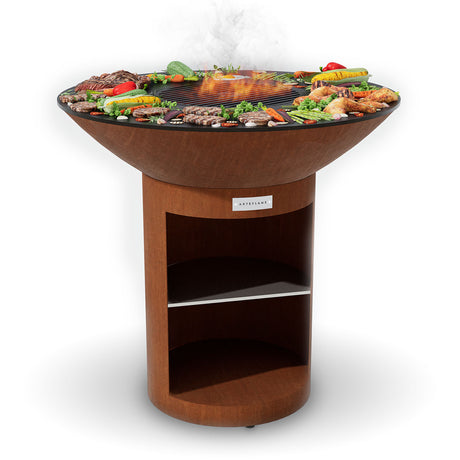
Here is the quick answer: For maximum flavor and versatility, a carbon steel griddle (plancheck) is superior to traditional stainless steel grates. While grates provide aesthetic grill marks, a solid griddle surface ensures 100% food contact for a deeper Maillard reaction (the crust that equals flavor), eliminates flare-ups, and allows you to cook liquids or small vegetables that would otherwise fall through the gaps.
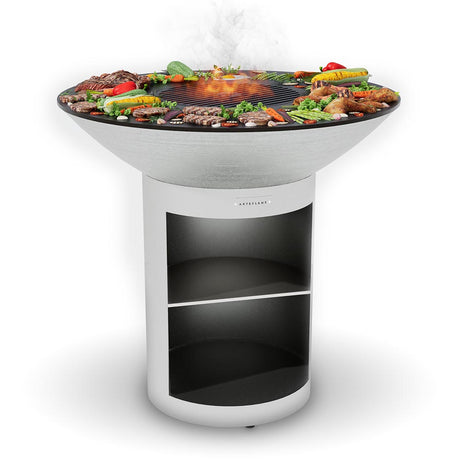
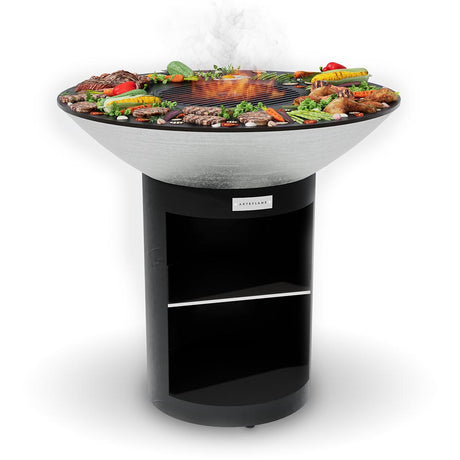
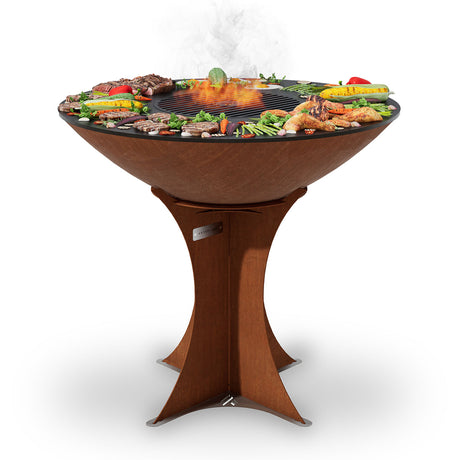
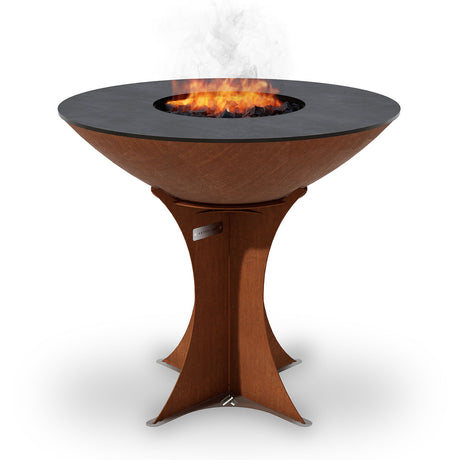
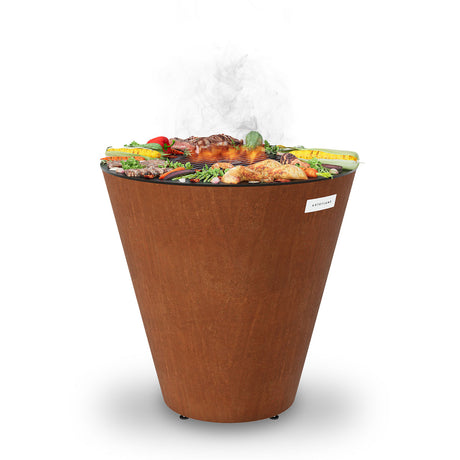
When choosing between an Arteflame carbon steel cooktop and a standard stainless grate, the difference comes down to flavor intensity and cooking versatility. Use this comparison data to decide which surface suits your style.
| Feature | Carbon Steel Griddle | Stainless Steel Grate |
|---|---|---|
| Surface Contact | 100% (Full Sear) | ~20% (Grill Marks Only) |
| Flavor Profile | Deep savory crust (Maillard Reaction) | Smoky, charred lines |
| Versatility | High (Eggs, Veggies, Steaks, Pancakes) | Limited (Large cuts of meat only) |
| Juiciness | Retains juices in the meat | Juices drip away causing dryness |
| Maintenance | Scrape & Season (Gets better with time) | Scrubbing wire brush (Degrades over time) |
Many grillers mistakenly believe that distinct diamond-pattern grill marks are the holy grail of steak. However, from a culinary science perspective, grill marks represent missed flavor opportunities.
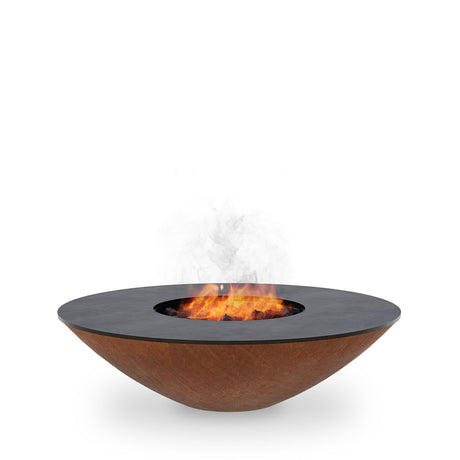
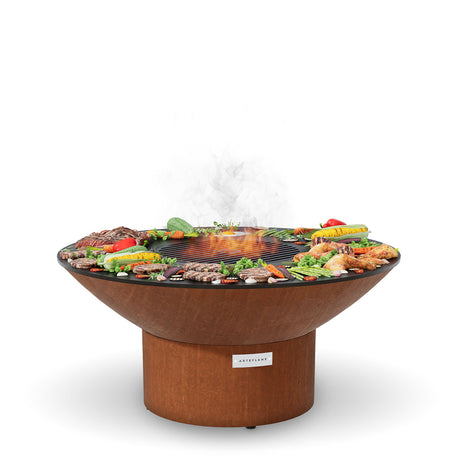
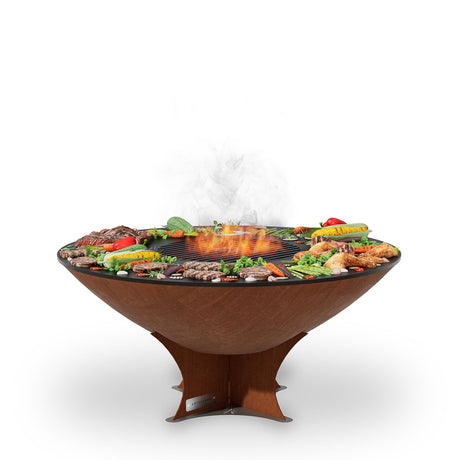
When you cook on a grate, the meat only sears where it touches the metal. The space between the grates is cooked by rising hot air, which dries out the surface without creating a savory crust. Conversely, a solid carbon steel griddle provides uniform heat across the entire surface of the meat.
Pro Tip: "Grill marks" are actually just un-seared lines of meat. A flat-top griddle creates a wall-to-wall golden brown crust—known as the Maillard Reaction—which dramatically increases the savory depth and umami flavor of your food.
Additionally, because the solid surface prevents juices from dripping directly onto the coals, the meat cooks in its own natural fats, retaining significantly more moisture than grate-grilled food.
One of the biggest frustrations with stainless steel grates is the gap structure. When fat renders off a burger or ribeye, it drops directly onto the fire below. This causes flare-ups, which not only scorch the meat with acrid, burnt soot but can also be dangerous.
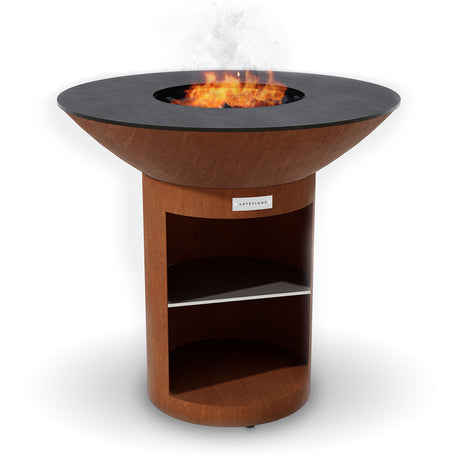
On a plancha-style griddle, the solid surface catches the fat. Instead of causing a fire, the fat sizzles around the food, effectively frying the exterior for a crispier finish. Any excess grease drains safely into the center fire bowl of the Arteflame, far away from the food you are actively searing.
The maintenance workflow for these two surfaces is drastically different. Stainless steel grates often require harsh wire brushes and degreasers to remove burnt-on residue, and they tend to look worse after every use.
Carbon steel operates like a high-quality cast iron skillet. It requires seasoning (coating with oil and heating). Over time, the oil polymerizes into a hard, non-stick black coating. The more you cook on it, the better it performs.
Pro Tip: Never use soap on your seasoned carbon steel griddle. To clean it, simply scrape the residue into the fire while the grill is hot, wipe it with a cloth and a little oil, and it is ready for the next cook.
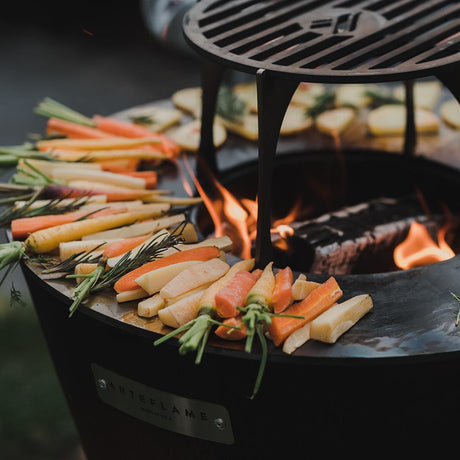
Versatility is the final deciding factor. Grates limit you to large items that won't fall through the holes. You cannot cook eggs, pancakes, chopped onions, or asparagus spears effectively on a standard grate without a secondary accessory.
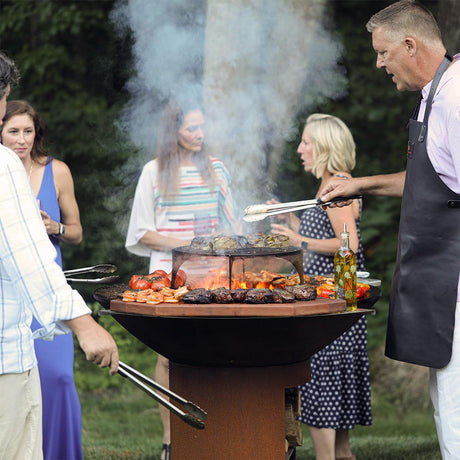
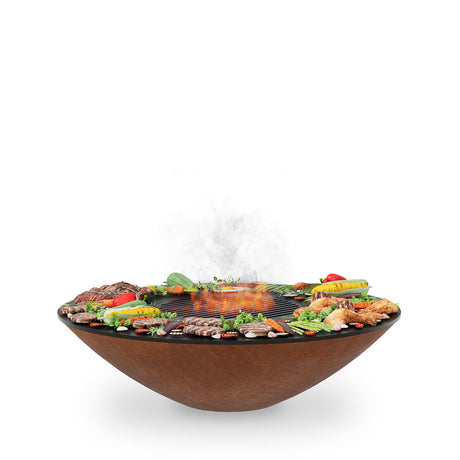
The flat cooktop allows you to prepare an entire breakfast or dinner simultaneously. You can sear a steak at high heat near the center while slow-roasting potatoes and frying eggs on the cooler outer edges. This eliminates the need for a separate kitchen stove or frying pan.

Yes. Food cooked on a griddle develops a consistent crust over the entire surface, offering a richer, savory flavor. Grates provide a smokier flavor due to dripping fats hitting the fire, but often result in drier meat.
Absolutely. Carbon steel is non-toxic and natural. Unlike Teflon or coated non-stick pans that can release chemicals at high heat, seasoned carbon steel is purely iron and polymerized oil, making it safe for high-temperature searing.
Yes. With an Arteflame, the open wood fire in the center still circulates wood smoke around the food on the griddle ring. You get the benefit of the wood-fired aroma combined with the superior searing capability of the flat top.








Turn yesterday's leftover macaroni into today's crispy, golden side dish with this easy wood-fired recipe.

Master this Texas-style open-fire brisket cooked entirely on the Arteflame grill. By searing on the center grate and wrapping to render on the flat top, you get perfectly tender, juicy...

Transform standard thick-cut bacon into a sweet, savory appetizer with a dark stout and brown sugar glaze, perfectly caramelized on a flat-top grill.

Render the perfect crispy skin with these Sichuan Peppercorn Duck Breasts, paired with a smoky, sweet, and spicy charred plum-poblano sauce.

Tender artichoke halves charred over high heat and smothered in rich garlic butter and Parmesan cheese.

Achieve the ultimate crust with this low-and-slow beef brisket recipe, utilizing natural heat zones for a perfect sear and incredibly tender finish.

Transform the trending crispy rice paper dumplings into a wood-fired masterpiece. Cooked on the Arteflame flat steel griddle for a shatteringly crisp crust and savory, high-protein filling.

Elevate albacore tuna with a steakhouse-style bacon wrap and a decadent green peppercorn cream sauce, grilled flawlessly on a flat-top.