
Crisp and Golden Mac and Cheese Cakes on the Grill
Turn yesterday's leftover macaroni into today's crispy, golden side dish with this easy wood-fired recipe.


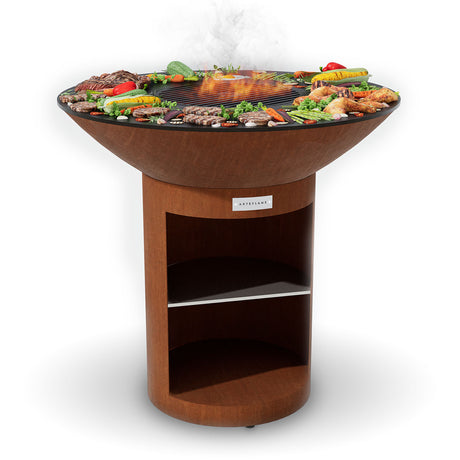
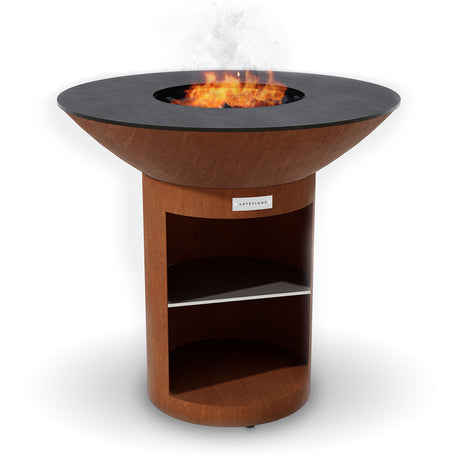
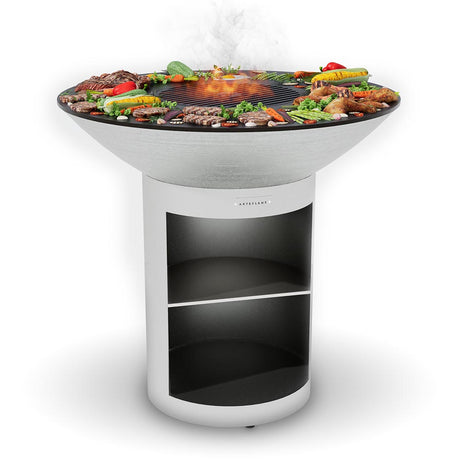
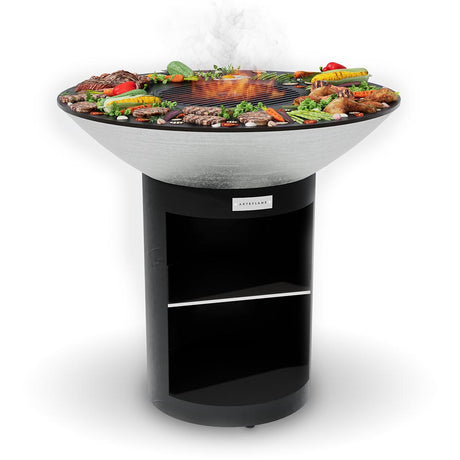
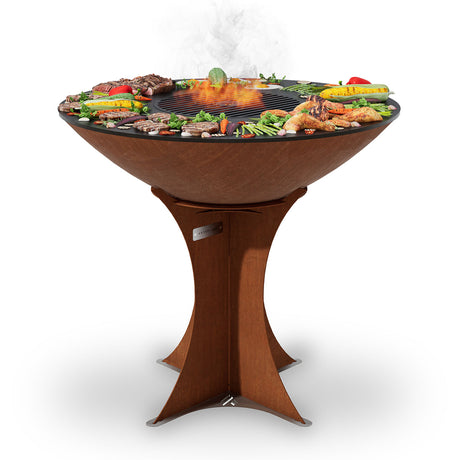
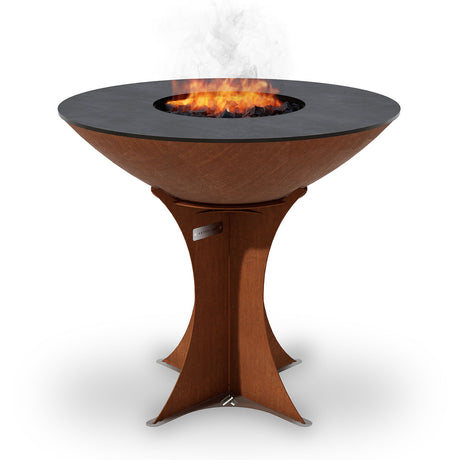
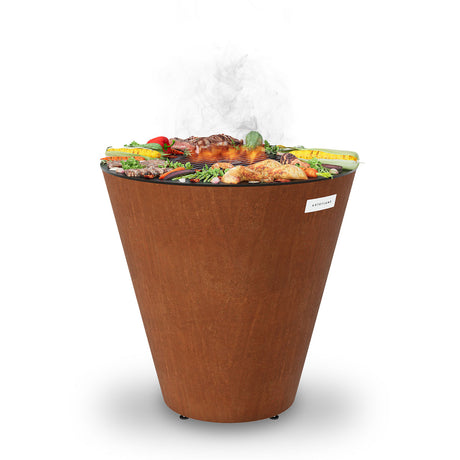
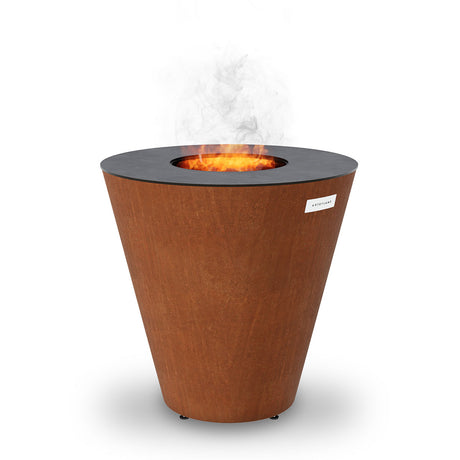
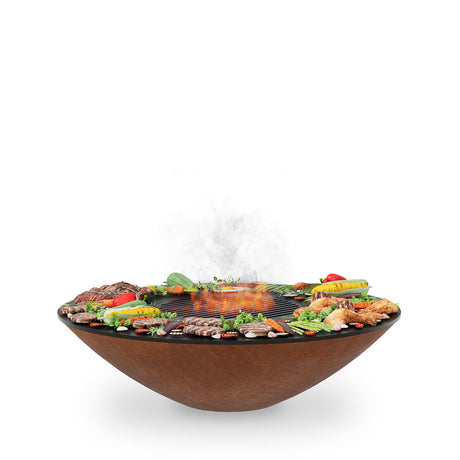
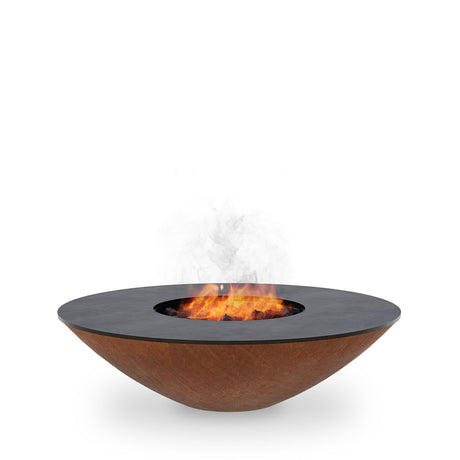
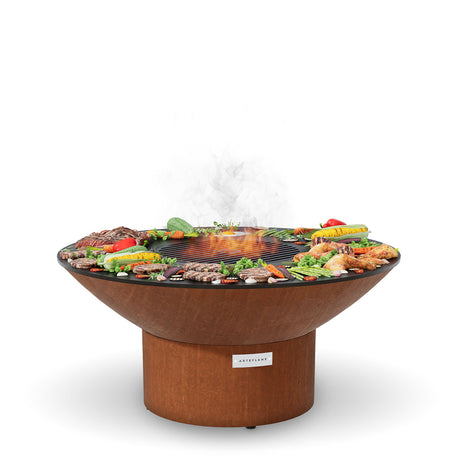
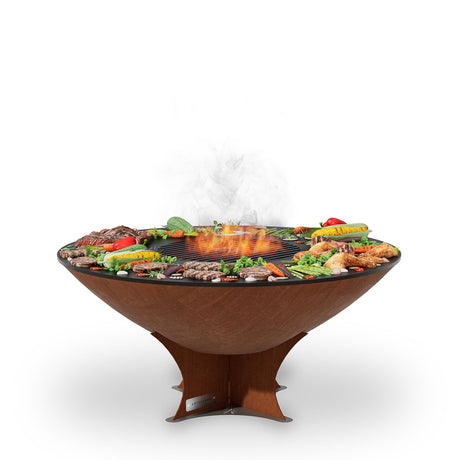
The ultimate outdoor cooking upgrade is a carbon steel griddle grill combo. Unlike traditional grates that lose juices to the fire, a solid circular cooktop combined with a center grill grate allows you to sear steaks at over 1,000°F while simultaneously roasting vegetables at lower temperatures. This setup eliminates flare-ups, maximizes flavor through the Maillard reaction, and enables you to cook breakfast, lunch, and dinner on a single unit.
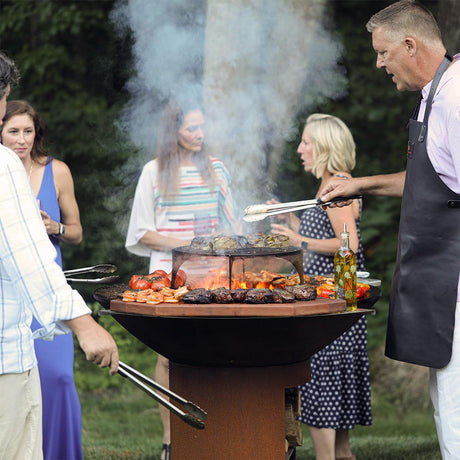
Most backyard chefs are forced to choose between a gas grill, a charcoal smoker, or a flat-top griddle. A combo unit consolidates these tools into one. Below is a breakdown of why a fire bowl style griddle is the superior choice for performance and versatility.
| Feature | Standard Gas Grill | Charcoal Kettle | Arteflame Griddle Combo |
|---|---|---|---|
| Temperature Range | 400°F - 600°F | 400°F - 700°F | 200°F - 1,000°F+ |
| Cooking Surface | Open Grates | Open Grates | Solid Carbon Steel + Grates |
| Flavor Profile | Minimal Smoke | Smoky | Smokey + Maillard Sear |
| Versatility | Grill Only | Grill & Smoke | Grill, Sear, Fry, Roast |
| Cleaning Time | High (Grease Traps) | Moderate (Ash) | Low (Scrape & Wipe) |
When upgrading your outdoor kitchen, the material of the cooking surface matters as much as the heat source. While cast iron is popular, it is brittle and prone to cracking. Stainless steel often lacks the heat retention needed for a perfect crust.
Carbon steel is the optimal material for a griddle grill combo. It heats up quickly and absorbs oil over time, creating a natural, non-stick patina that rivals Teflon but handles extreme heat. This allows for the perfect searing of steaks without the meat sticking or steaming in its own juices.
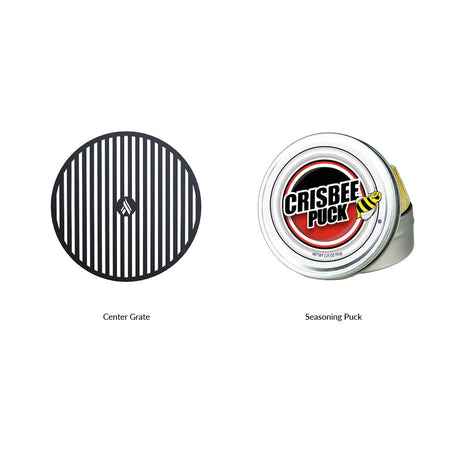
Pro Tip: Don't scrub your carbon steel griddle down to the bare metal after every use. The black layer remaining on the cooktop is seasoning (polymerized oil), which protects the steel from rust and adds savory depth to your food.
One of the biggest questions regarding wood-fired griddle grills is temperature control. Unlike gas grills with knobs, a circular fire bowl uses physics to create distinct heat zones.
This radial heat distribution allows you to cook a burger patty, fry an egg, and grill asparagus all at the same time, ensuring every element of the meal is ready simultaneously.
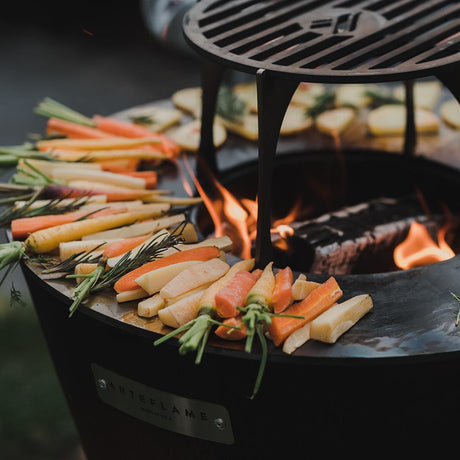
The primary advantage of a griddle grill combo upgrade is the removal of the "slats." On a traditional grill, small items like shrimp, asparagus, or diced onions fall through the cracks. A solid surface removes this limitation entirely.
Pro Tip: Use the "Reverse Sear" technique easily on a combo unit. Smoke your steak on the cool outer edge until it reaches internal temp, then finish it with a 60-second sear on the center grill grate for a professional crust.
No, it is generally easier. Because the surface is solid, grease does not drip into burners or tubes. You simply scrape the residue into the fire creates while the unit is hot, then wipe it down with a cloth and a thin layer of oil.
Yes, provided it is properly seasoned and covered. The oil seasoning creates a protective barrier against moisture. If minor surface rust appears after a long winter, it can easily be scrubbed off with steel wool and re-seasoned.
Never. A wood-fired griddle grill relies on natural lump charcoal or firewood. This imparts a subtle, wood-smoke flavor to the food that gas grills cannot replicate, without the harsh chemical taste of lighter fluids.







Turn yesterday's leftover macaroni into today's crispy, golden side dish with this easy wood-fired recipe.

Master this Texas-style open-fire brisket cooked entirely on the Arteflame grill. By searing on the center grate and wrapping to render on the flat top, you get perfectly tender, juicy...

Transform standard thick-cut bacon into a sweet, savory appetizer with a dark stout and brown sugar glaze, perfectly caramelized on a flat-top grill.

Render the perfect crispy skin with these Sichuan Peppercorn Duck Breasts, paired with a smoky, sweet, and spicy charred plum-poblano sauce.

Tender artichoke halves charred over high heat and smothered in rich garlic butter and Parmesan cheese.

Achieve the ultimate crust with this low-and-slow beef brisket recipe, utilizing natural heat zones for a perfect sear and incredibly tender finish.

Transform the trending crispy rice paper dumplings into a wood-fired masterpiece. Cooked on the Arteflame flat steel griddle for a shatteringly crisp crust and savory, high-protein filling.

Elevate albacore tuna with a steakhouse-style bacon wrap and a decadent green peppercorn cream sauce, grilled flawlessly on a flat-top.