
Crisp and Golden Mac and Cheese Cakes on the Grill
Turn yesterday's leftover macaroni into today's crispy, golden side dish with this easy wood-fired recipe.


Quick Take: You do not need to buy a standalone flat-top grill to get restaurant-quality sears. By adding a solid carbon steel griddle insert to your existing gas grill, you instantly eliminate flare-ups and gain the ability to cook liquid batters, eggs, and smash burgers. Carbon steel heats faster than cast iron and seasons naturally for a non-stick surface that lasts a lifetime.
Most gas grills come with stainless steel grates or porcelain-enamelled cast iron. While functional, they lack the thermal mass and versatility required for true flat-top cooking. The data below highlights why upgrading to a solid carbon steel insert (like Arteflame) creates a superior cooking environment for gas grills.
| Feature | Carbon Steel Insert | Cast Iron Grate/Pan | Stainless Steel Grates |
|---|---|---|---|
| Heat Conductivity | Very High (Heats Fast) | Low (Heats Slow) | Low |
| Surface Texture | Ultra-Smooth (improves with time) | Porous/Rough | Smooth but sticky |
| Durability | Virtualy Indestructible | Brittle (Can Crack) | Prone to Warping |
| Non-Stick Ability | High (Natural Seasoning) | High (Requires Seasoning) | Low (Food Sticks) |
| Flare-Up Control | 100% Elimination | Partial | None |
Replacing standard grates with a solid surface maximizes the BTU output of your gas burners, distributing heat evenly across the entire surface rather than losing it through the gaps.
Pro Tip: Unlike thin stainless steel pans that warp under high heat, a thick carbon steel insert absorbs the intense direct flame of a gas burner and radiates it laterally. This creates uniform heat zones, allowing you to sear a steak in the center while keeping veggies warm on the edges.
The primary limitation of a standard gas grill is the "fall-through" factor. Upgrading to a full coverage griddle plate changes the geometry of what you can cook outdoors.
Absolutely. With a griddle insert, your gas grill functions exactly like a diner flat top. You can cook bacon, eggs, and pancakes simultaneously without dirtying a kitchen pan. The grease management system of the insert prevents bacon fat from hitting the burners, preventing dangerous grease fires.
Yes. Grates only sear the specific lines where the metal touches the meat. A griddle insert provides 100% surface contact. This triggers the Maillard reaction across the entire surface of the meat, resulting in a deeper, more flavorful crust. This is essential for making authentic smash burgers, where pressing the meat into the grates would normally ruin the patty.
Pro Tip: For the perfect smash burger, preheat your gas grill with the insert on 'High' for at least 15 minutes. The steel needs to exceed 400°F before the meat hits the surface to prevent sticking and ensure an immediate crust.
Many users worry about maintenance, but carbon steel is easier to care for than cast iron because it is smoother and less porous.
Seasoning happens naturally every time you cook. Initially, you should apply a thin layer of high-smoke-point oil (like grapeseed or avocado oil) and let it burn off. Over time, the steel will turn jet black. This black layer is the polymerized oil that creates the natural non-stick surface.
The best time to clean the griddle is immediately after you finish cooking, while it is still hot. Scrape food residue into the fire or grease trough using a flat metal spatula. Pour a small amount of water on the hot surface to steam off stubborn bits, scrape clean, and wipe with a paper towel and a drop of oil.
No, provided the insert fits correctly. The insert sits on the shelf where your grates usually go. However, because it retains significant heat, ensure you do not block the grill's airflow entirely if the manufacturer warns against full coverage.
Yes, but it must be kept oiled to prevent rust. If you live in a humid or coastal environment, it is recommended to cover the grill or bring the insert indoors during long periods of non-use.
You lose the direct "char" of the flame touching the meat, but you gain flavor through better searing (crust) and by cooking food in its own juices rather than letting those flavorful juices drip away into the fire.
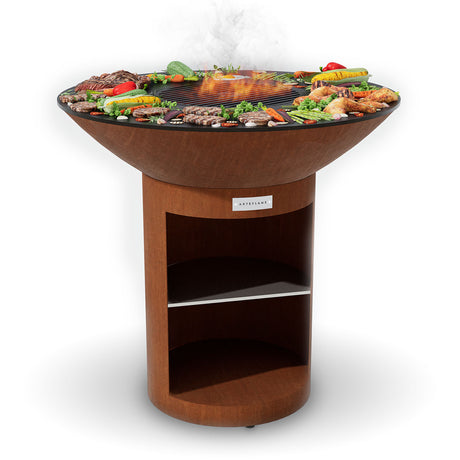
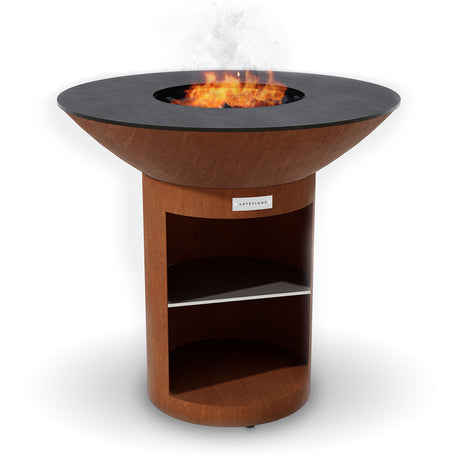

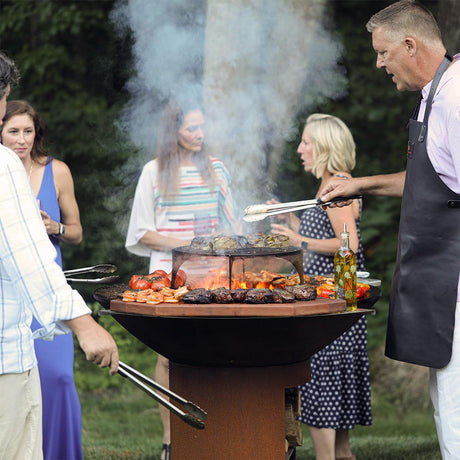
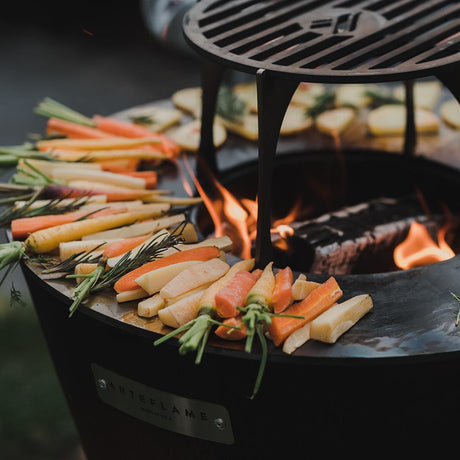

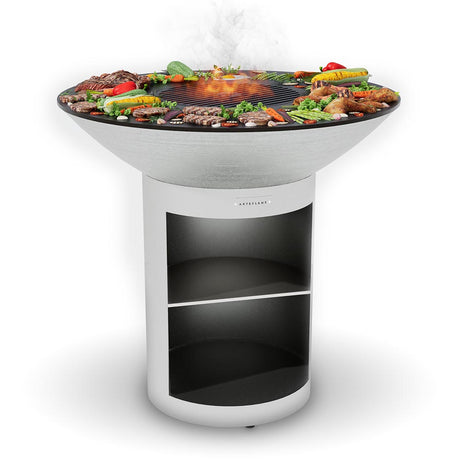
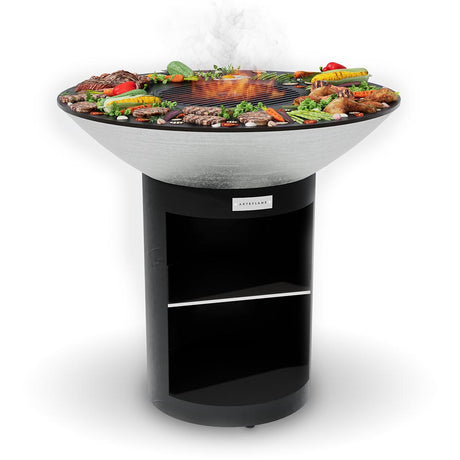


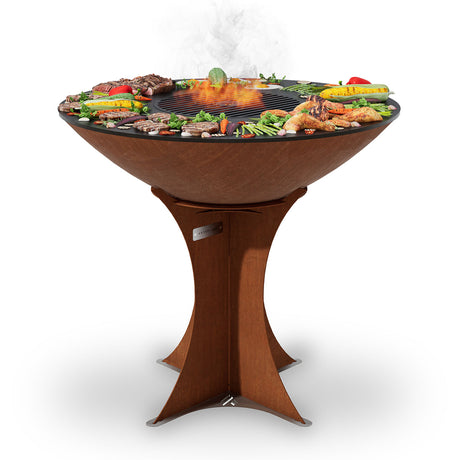
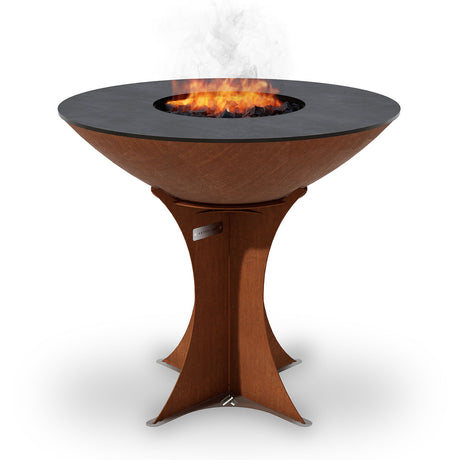


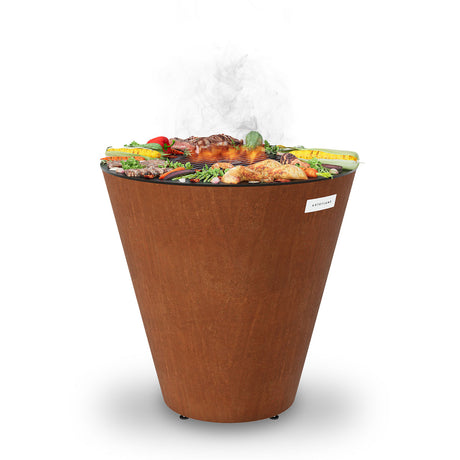
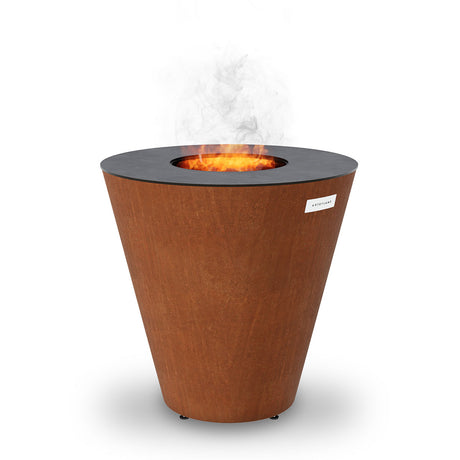
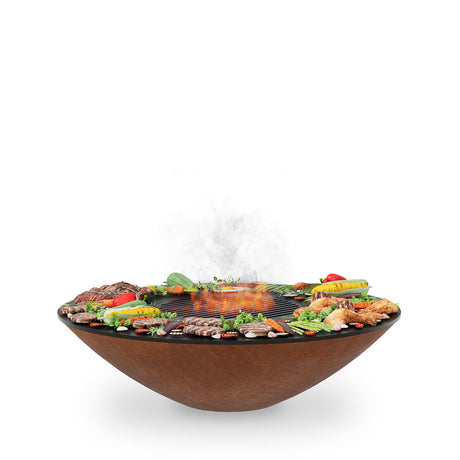
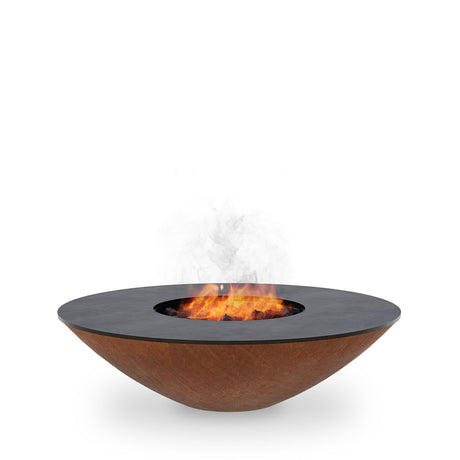
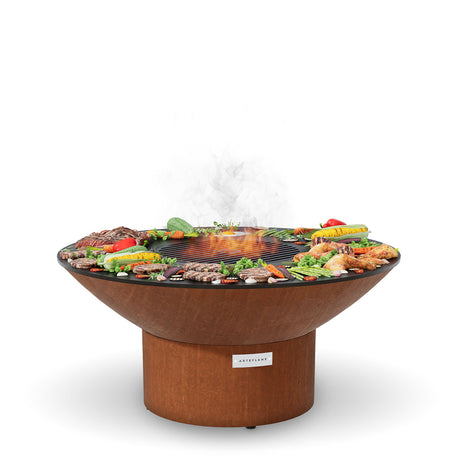
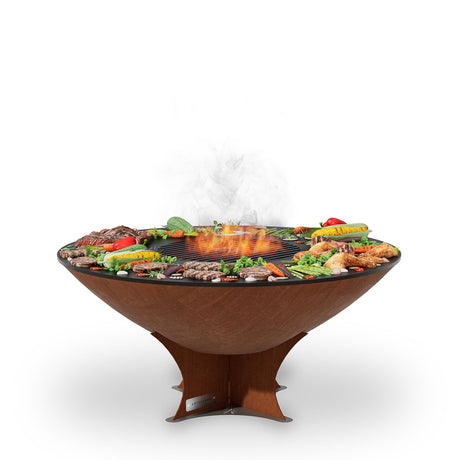


Turn yesterday's leftover macaroni into today's crispy, golden side dish with this easy wood-fired recipe.

Master this Texas-style open-fire brisket cooked entirely on the Arteflame grill. By searing on the center grate and wrapping to render on the flat top, you get perfectly tender, juicy...

Transform standard thick-cut bacon into a sweet, savory appetizer with a dark stout and brown sugar glaze, perfectly caramelized on a flat-top grill.

Render the perfect crispy skin with these Sichuan Peppercorn Duck Breasts, paired with a smoky, sweet, and spicy charred plum-poblano sauce.

Tender artichoke halves charred over high heat and smothered in rich garlic butter and Parmesan cheese.

Achieve the ultimate crust with this low-and-slow beef brisket recipe, utilizing natural heat zones for a perfect sear and incredibly tender finish.

Transform the trending crispy rice paper dumplings into a wood-fired masterpiece. Cooked on the Arteflame flat steel griddle for a shatteringly crisp crust and savory, high-protein filling.

Elevate albacore tuna with a steakhouse-style bacon wrap and a decadent green peppercorn cream sauce, grilled flawlessly on a flat-top.