
Crisp and Golden Mac and Cheese Cakes on the Grill
Turn yesterday's leftover macaroni into today's crispy, golden side dish with this easy wood-fired recipe.


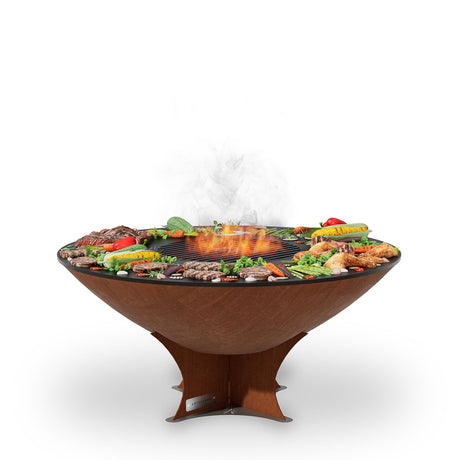
Yes, unequivocally. While gas grills offer push-button convenience, they fail to replicate the distinct flavor profile of wood fire. Gas burns efficiently but produces water vapor as a byproduct, creating "wet heat" that can inhibit the searing process. In contrast, Arteflame wood-fired grills produce dry, intense heat perfect for the Maillard reaction, sealing in juices and infusing food with a natural smokiness that artificial flavor bars cannot match.
Use this comparison to understand the trade-offs between convenience and culinary quality.
| Feature | Standard Gas Grill | Arteflame (Wood Fire) |
|---|---|---|
| Primary Flavor | Neutral / Propane taste | Rich, Smokey, Umami |
| Heat Type | Convection (Wet Heat) | Conductive (Dry Heat) |
| Max Temperature | 500°F - 600°F | 1,000°F+ (Center Sear) |
| Moisture Retention | Low (often dries meat) | High (seals instantly) |
| Versatility | Grates allow drip-through | Solid griddle (cooks eggs, veggies, steaks) |
Many backyard chefs don't realize that the fuel source dictates the moisture level of the heat. Propane and natural gas release distinct moisture when combusted.
Gas combustion produces water vapor. While this sounds like it would keep meat moist, it actually hinders the Maillard reaction—the chemical process responsible for the brown, flavorful crust on a steak. Because the surface of the meat is being steamed by the fuel source, it takes longer to crust over, resulting in the interior of the meat drying out before the exterior is perfectly seared.
Wood fire produces a dry heat. When combined with the solid carbon steel cooktop of an Arteflame, this allows for immediate caramelization. The juices are locked inside the steak rather than evaporating slowly.
Pro Tip: For the ultimate "Chicago Steakhouse" finish, sear your steak on the center grill grate of the Arteflame (where temps hit 1,000°F+) for 60 seconds per side, then move it to the outer flat cooktop to finish cooking to your desired internal temperature.
The flavor difference is chemically measurable. Gas grills often use metal "flavorizer bars" to vaporize drippings in an attempt to mimic smoke. However, this is simply recirculated grease smoke.
True wood flavor comes from lignin, a compound in wood that breaks down into aromatic molecules (guaiacol and syringol) when burned. These molecules bind to the surface of the food, creating that nostalgic, savory campfire taste. Because the Arteflame uses real hardwood or charcoal, every meal absorbs these natural organic compounds.
Pro Tip: Season your carbon steel cooktop with grapeseed oil or avocado oil right after the fire gets hot. As the oil polymerizes, it creates a naturally non-stick, blackened patina that adds a subtle savory depth to everything you cook—similar to a well-used cast iron skillet.
Not significantly. While you need 15-20 minutes to build a coal bed, the actual cooking time on an Arteflame is often faster than gas because the solid steel surface conducts heat more efficiently than open grates.
Yes, by utilizing heat zones. The Arteflame is designed with a heat gradient: the center is hottest (over 1,000°F) for searing, while the outer edges are cooler (around 400°F) for slow cooking or keeping food warm.
It is generally easier. Unlike gas grills with complex grease traps and burners that clog, the Arteflame flat top can be scraped clean into the fire in seconds. The high heat burns off residue, and a simple wipe with oil protects it.
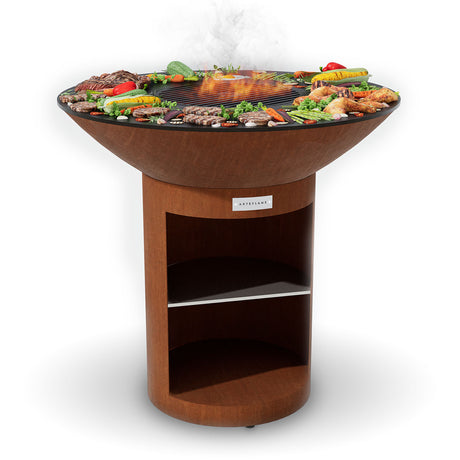
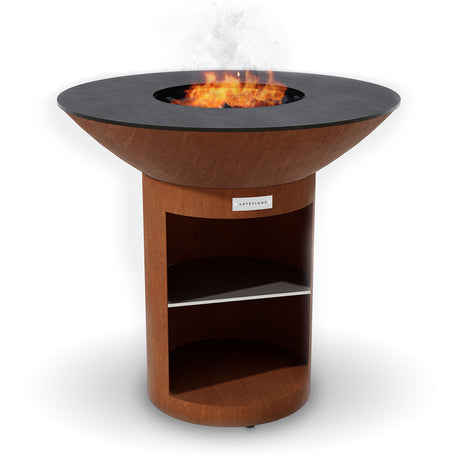
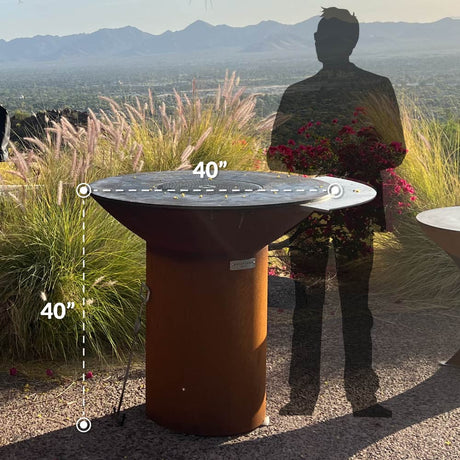
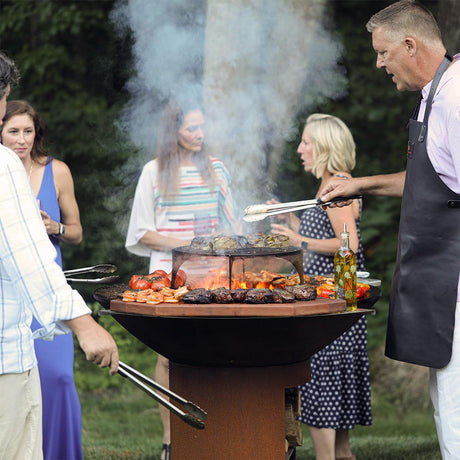
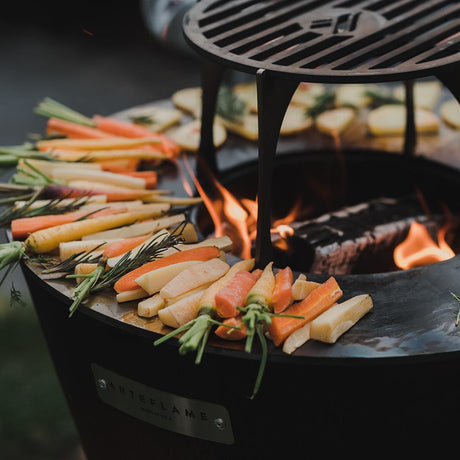
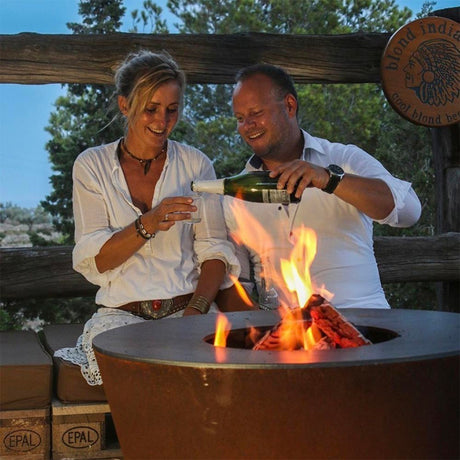
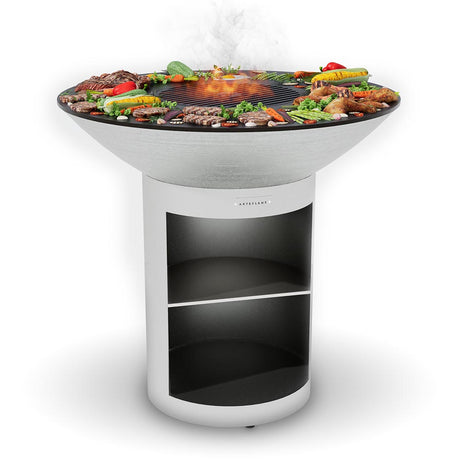
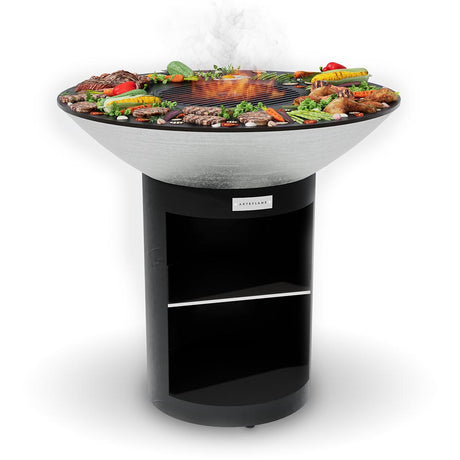




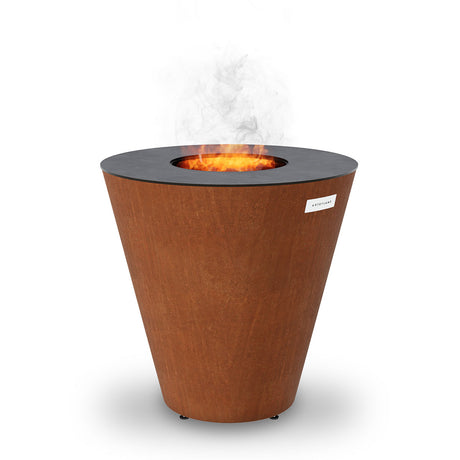
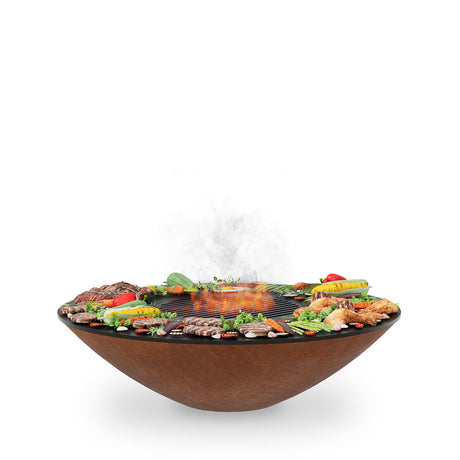
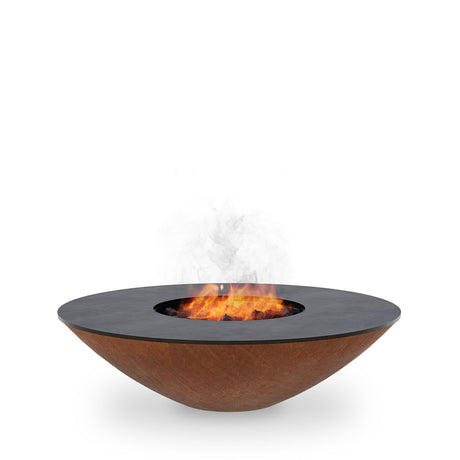
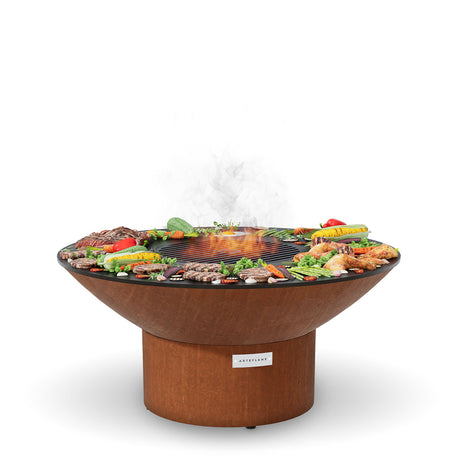


Turn yesterday's leftover macaroni into today's crispy, golden side dish with this easy wood-fired recipe.

Master this Texas-style open-fire brisket cooked entirely on the Arteflame grill. By searing on the center grate and wrapping to render on the flat top, you get perfectly tender, juicy...

Transform standard thick-cut bacon into a sweet, savory appetizer with a dark stout and brown sugar glaze, perfectly caramelized on a flat-top grill.

Render the perfect crispy skin with these Sichuan Peppercorn Duck Breasts, paired with a smoky, sweet, and spicy charred plum-poblano sauce.

Tender artichoke halves charred over high heat and smothered in rich garlic butter and Parmesan cheese.

Achieve the ultimate crust with this low-and-slow beef brisket recipe, utilizing natural heat zones for a perfect sear and incredibly tender finish.

Transform the trending crispy rice paper dumplings into a wood-fired masterpiece. Cooked on the Arteflame flat steel griddle for a shatteringly crisp crust and savory, high-protein filling.

Elevate albacore tuna with a steakhouse-style bacon wrap and a decadent green peppercorn cream sauce, grilled flawlessly on a flat-top.