
Crisp and Golden Mac and Cheese Cakes on the Grill
Turn yesterday's leftover macaroni into today's crispy, golden side dish with this easy wood-fired recipe.


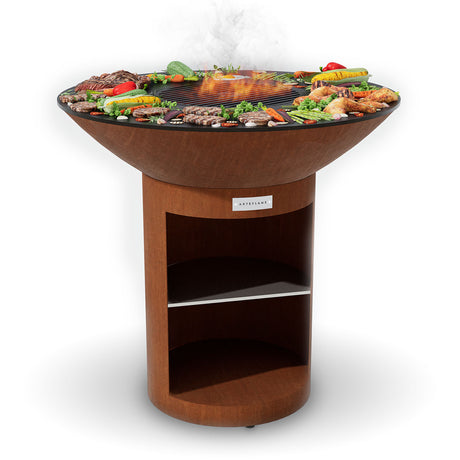
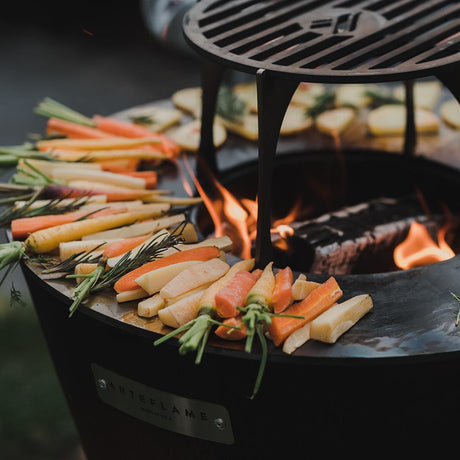
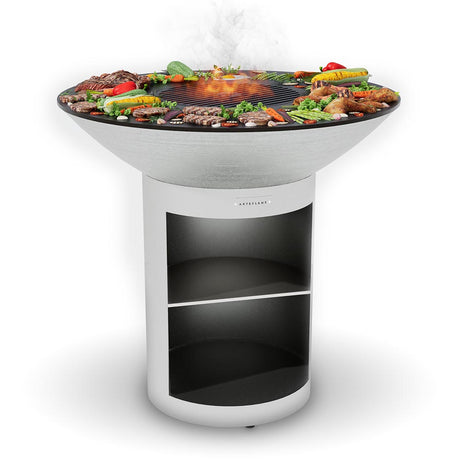
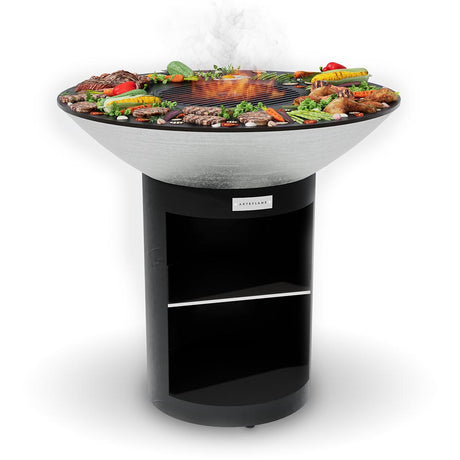
A gas grill and griddle combo with a lid offers the ultimate outdoor kitchen versatility, allowing you to sear steaks, sauté vegetables, and steam ingredients simultaneously. While gas hybrids provide convenience, solid fuel flat-top grills (like carbon steel cooktops) are increasingly preferred by chefs for their ability to generate higher heat, superior Maillard reactions, and authentic smoky flavor that gas burners simply cannot replicate.
When choosing between a traditional gas combo and a modern flat-top grill, the decision often comes down to flavor versus push-button convenience. The table below outlines the key performance differences affecting your culinary results.
| Feature | Gas Grill/Griddle Combo | Carbon Steel Flat Top (Arteflame) |
|---|---|---|
| Heat Source | Propane / Natural Gas | Wood / Charcoal |
| Maximum Temp | 500°F - 600°F | 1,000°F+ (Center) |
| Flavor Profile | Neutral / Gas fumes | Smoky / Wood-fired |
| Heat Zones | Burner dependent | Natural gradient (Center out) |
| Maintenance | Many parts to clean | Scrape and go |
The addition of a lid to a griddle setup transforms it from a simple frying surface into a roasting machine. A lid traps ambient heat, allowing you to melt cheese on burgers, steam vegetables thoroughly, or even bake items outdoors.
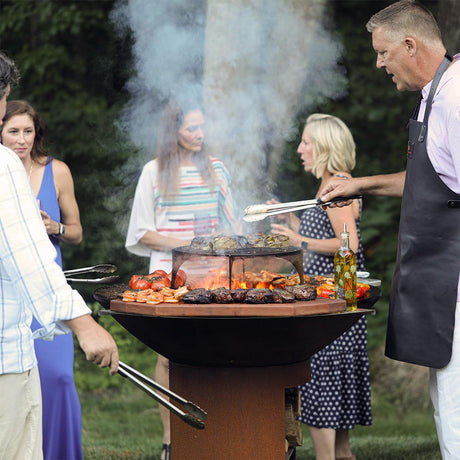
Yes. On flat-top grills without a traditional hinged lid, chefs use basting covers or cheese melting domes. These create a micro-convection oven effect directly over specific food items, which is often more efficient than heating the entire volume of a gas grill hood.
Pro Tip: To speed up the melting process and keep burgers juicy, squirt a small amount of water onto the griddle surface right before placing a basting cover over the meat. The resulting steam bath melts cheese instantly without overcooking the patty.
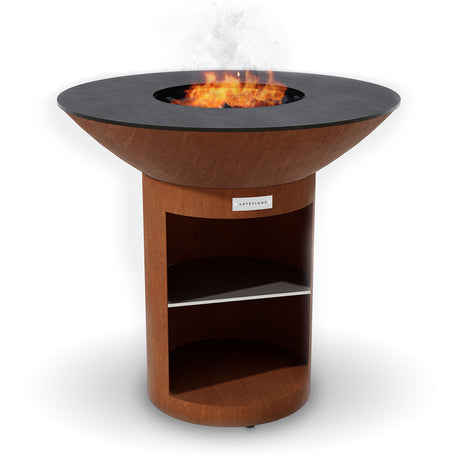
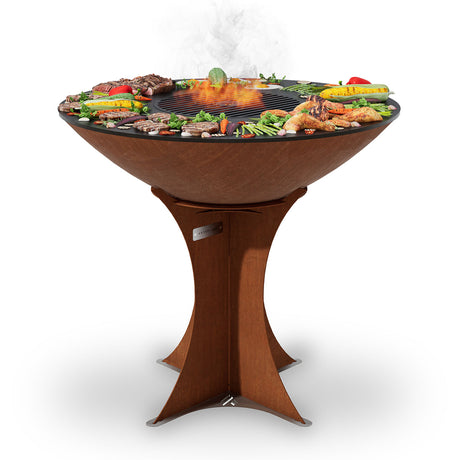
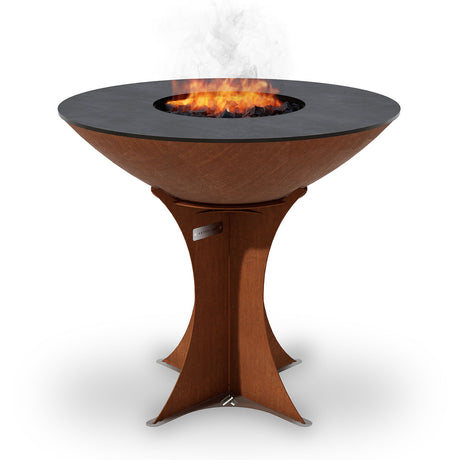
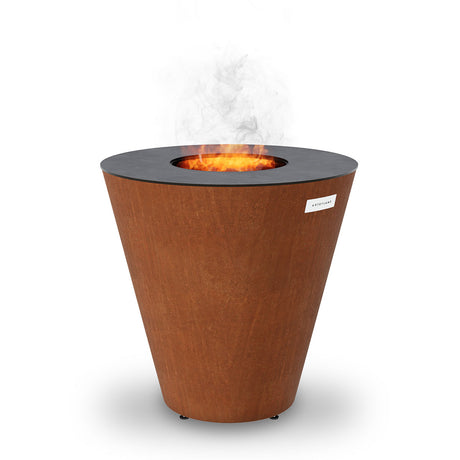
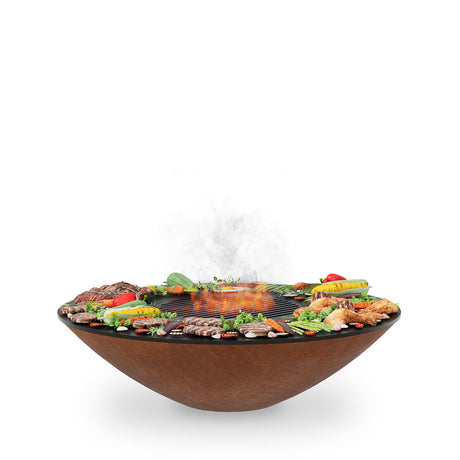
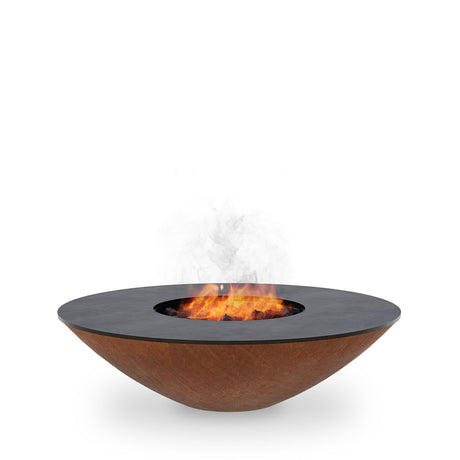
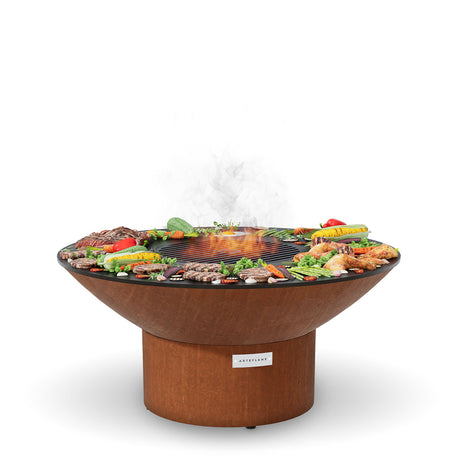
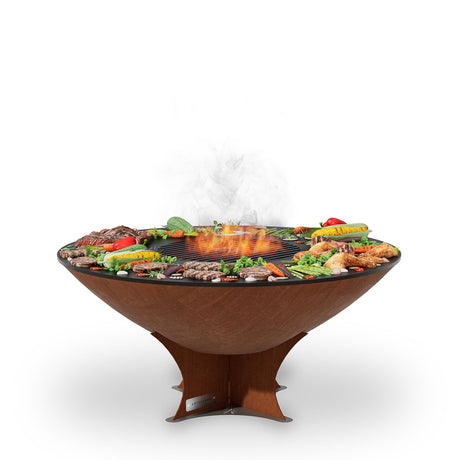
On a gas grill griddle combo, temperature control is achieved by adjusting knobs. However, this can result in uneven heating or "cold spots" between burners. In contrast, a circular flat-top grill utilizes natural thermal dynamics. The center is the hottest (for searing), and the temperature gradually decreases as you move toward the outer edge (for slow roasting or warming).
Pro Tip: When cooking a full meal, sear your proteins in the high-heat center first, then move them to the cooler outer ring to rest while you cook delicate vegetables like asparagus or peppers in the medium-heat zone.
Yes, you can place a cast iron or carbon steel griddle insert on top of gas grill grates. However, air gaps often lead to inefficient heat transfer compared to a dedicated flat-top unit.
A gas combo offers speed and convenience, but a charcoal or wood-fired grill provides superior flavor. If you want the best of both worlds—griddle versatility and wood-fired taste—a solid fuel flat-top grill is the optimal choice.
For carbon steel surfaces, clean it while hot by scraping residue into the fire or grease trap, then wipe with a paper towel and a thin layer of oil. Avoid soap, as it strips the non-stick seasoning.






Turn yesterday's leftover macaroni into today's crispy, golden side dish with this easy wood-fired recipe.

Master this Texas-style open-fire brisket cooked entirely on the Arteflame grill. By searing on the center grate and wrapping to render on the flat top, you get perfectly tender, juicy...

Transform standard thick-cut bacon into a sweet, savory appetizer with a dark stout and brown sugar glaze, perfectly caramelized on a flat-top grill.

Render the perfect crispy skin with these Sichuan Peppercorn Duck Breasts, paired with a smoky, sweet, and spicy charred plum-poblano sauce.

Tender artichoke halves charred over high heat and smothered in rich garlic butter and Parmesan cheese.

Achieve the ultimate crust with this low-and-slow beef brisket recipe, utilizing natural heat zones for a perfect sear and incredibly tender finish.

Transform the trending crispy rice paper dumplings into a wood-fired masterpiece. Cooked on the Arteflame flat steel griddle for a shatteringly crisp crust and savory, high-protein filling.

Elevate albacore tuna with a steakhouse-style bacon wrap and a decadent green peppercorn cream sauce, grilled flawlessly on a flat-top.