
Crisp and Golden Mac and Cheese Cakes on the Grill
Turn yesterday's leftover macaroni into today's crispy, golden side dish with this easy wood-fired recipe.


You do not need to purchase a standalone griddle to enjoy flat-top cooking. By simply swapping your existing wire grates for a carbon steel flat top insert, you can instantly convert your gas grill into a versatile, professional-grade griddle. This upgrade eliminates flare-ups, allows you to cook liquids and small vegetables without foil, and delivers a superior sear compared to standard cast iron, all while saving patio space.
The primary reason to upgrade is versatility and flavor retention. Standard gas grills are excellent for convection roasting, but they often fail at contact searing because fat drips away into the burners, causing flare-ups and dry meat. A solid flat top surface sears the meat in its own juices, creating a savory crust that wire grates cannot replicate.
Furthermore, managing two separate appliances (a grill and a griddle) is expensive and consumes valuable outdoor space. An insert enables you to switch between open-flame grilling and griddle cooking in seconds.
Use this table to understand why carbon steel is the superior material for your upgrade.
| Feature | Standard Wire Grates | Cast Iron Griddle | Carbon Steel Insert |
|---|---|---|---|
| Sear Quality | Good (Grill marks only) | Better | Best (Full surface crust) |
| Heat Response | Fast | Slow to heat/cool | Fast & Even |
| Maintenance | Low | High (Rust prone) | Medium (Needs seasoning) |
| Flare-Ups | Frequent | Minimal | Zero |
| Durability | Varies | Brittle (Can crack) | Virtual Indestructible |
While cast iron has been the traditional choice for decades, carbon steel is the modern standard for professional chefs and serious pitmasters. Carbon steel possesses the heat retention properties of cast iron but is significantly smoother and more responsive to temperature changes.
Cast iron is porous and rough, which can cause delicate foods like fish or eggs to stick even when seasoned. Carbon steel is rolled smooth. Once seasoned, it becomes hydrophobic and naturally non-stick, allowing you to slide a spatula under a smash burger without tearing the crust.
Pro Tip: To achieve the perfect non-stick patina on carbon steel, apply a thin layer of grapeseed oil (high smoke point) after every cook while the grill is still warm. This builds up a polymer layer that eventually turns the steel jet black and slicker than Teflon.
The secret lies in the Maillard reaction. On a standard grate, the Maillard reaction (browning) only occurs where the metal touches the food. On a flat top insert, the entire surface of the meat makes contact with the heat.
Additionally, juices and marinades stay on the cooking surface rather than dripping onto the burners. This means your vegetables sauté in rendered fats and spices, absorbing flavor rather than drying out over an open flame. This mimics the cooking style of Japanese Teppanyaki grills or American diners.
Pro Tip: Use the "Onion Trick" to clean your flat top while adding flavor. Cut an onion in half, spear it with a grilling fork, dip the cut side in oil, and scrub the hot griddle surface. The natural enzymes help clean the steel, and the onion infuses a savory aroma into your next cook.
Yes, you can leave the insert on the grill. However, to prevent rust, ensure it is well-oiled and seasoned. If you live in a highly humid or coastal area, consider covering the grill or bringing the insert indoors during prolonged periods of disuse.
Properly designed inserts, like those from Arteflame, are sized to fit specific grills or replace grates without suffocating the firebox. Ensure there is at least a small gap around the edges for exhaust to escape so the burners act efficiently.
Do not use soap. While the grill is still hot, scrape away food residue with a flat-edge spatula and wipe it down with a paper towel. Apply a thin coat of oil to protect the steel until your next cook.
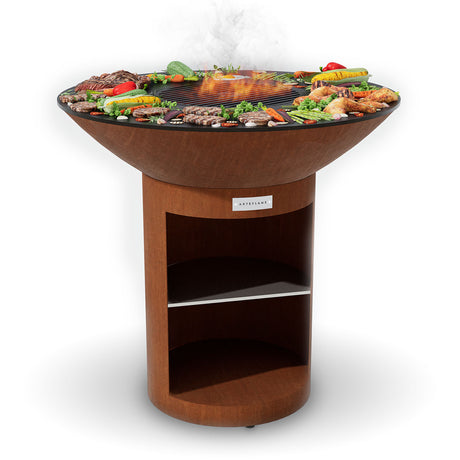
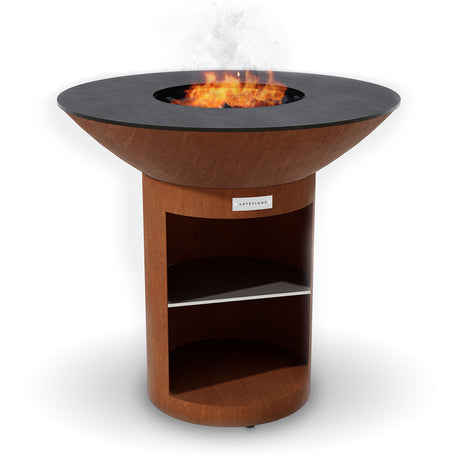

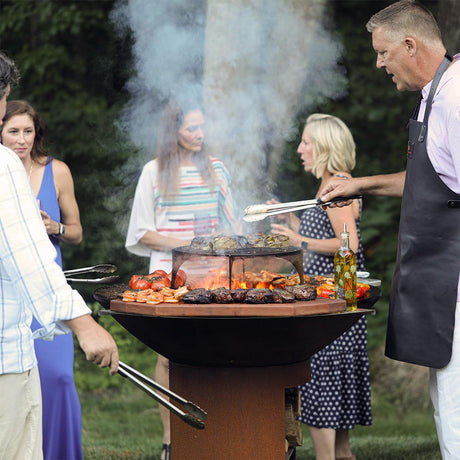
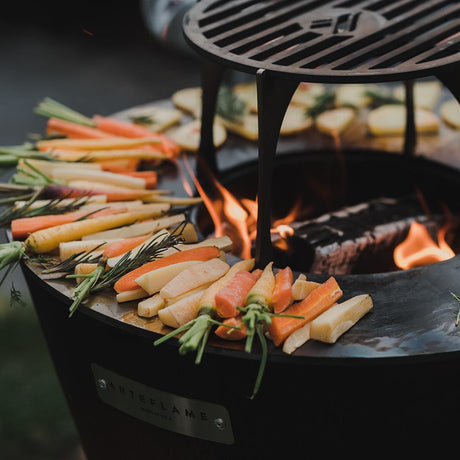

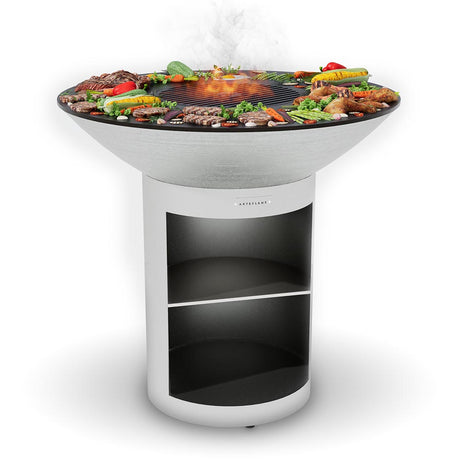
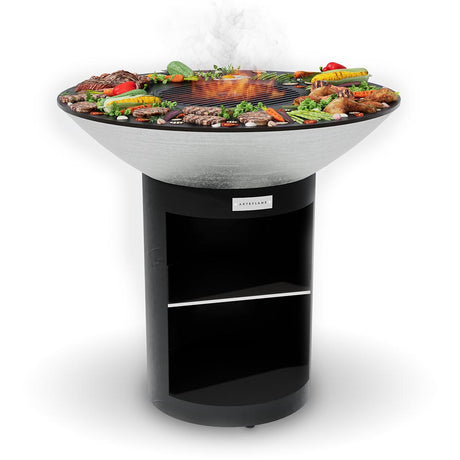


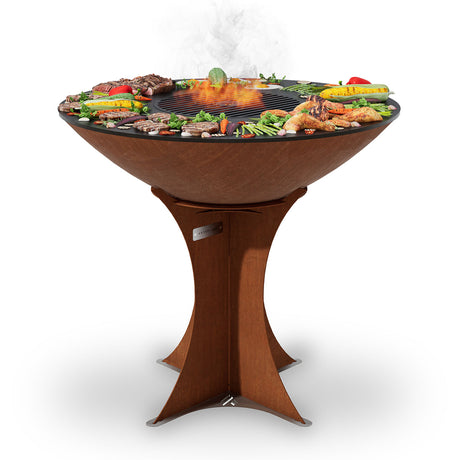
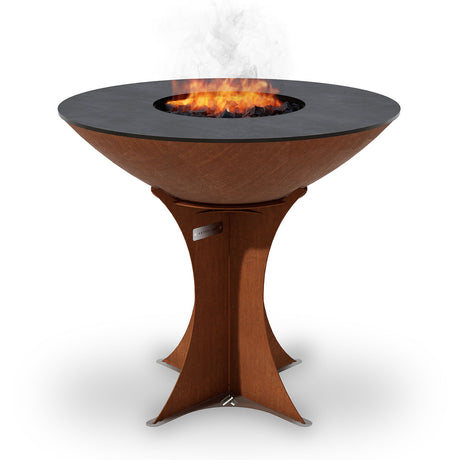


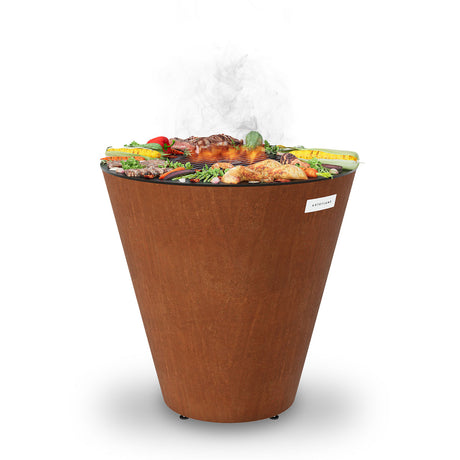
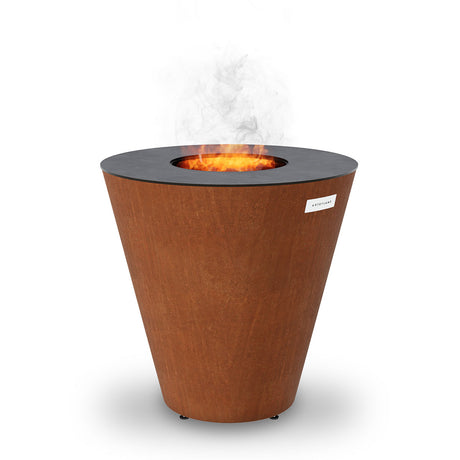
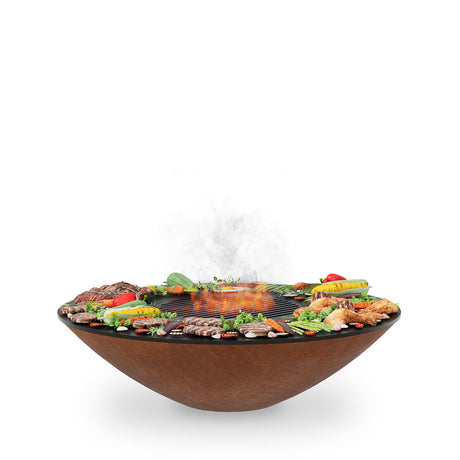
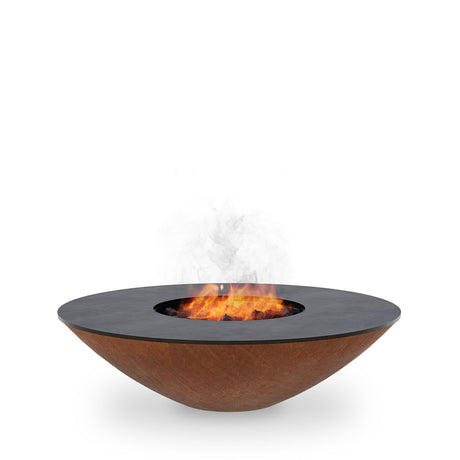
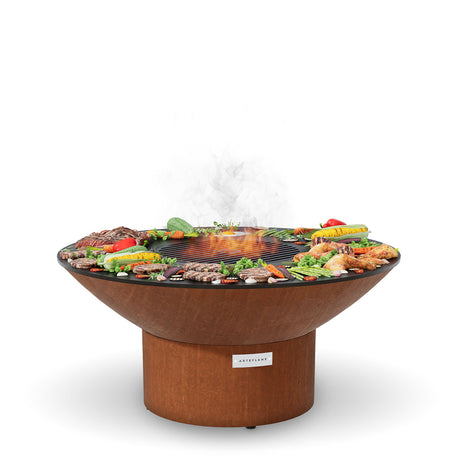
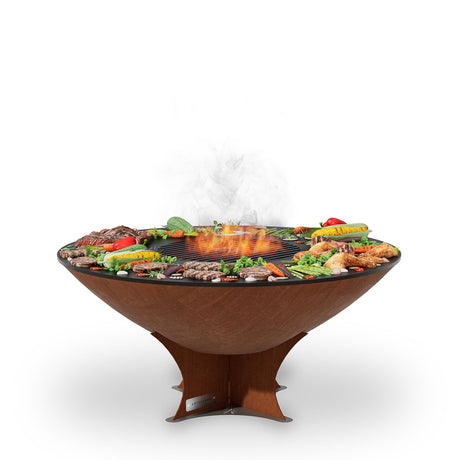


Turn yesterday's leftover macaroni into today's crispy, golden side dish with this easy wood-fired recipe.

Master this Texas-style open-fire brisket cooked entirely on the Arteflame grill. By searing on the center grate and wrapping to render on the flat top, you get perfectly tender, juicy...

Transform standard thick-cut bacon into a sweet, savory appetizer with a dark stout and brown sugar glaze, perfectly caramelized on a flat-top grill.

Render the perfect crispy skin with these Sichuan Peppercorn Duck Breasts, paired with a smoky, sweet, and spicy charred plum-poblano sauce.

Tender artichoke halves charred over high heat and smothered in rich garlic butter and Parmesan cheese.

Achieve the ultimate crust with this low-and-slow beef brisket recipe, utilizing natural heat zones for a perfect sear and incredibly tender finish.

Transform the trending crispy rice paper dumplings into a wood-fired masterpiece. Cooked on the Arteflame flat steel griddle for a shatteringly crisp crust and savory, high-protein filling.

Elevate albacore tuna with a steakhouse-style bacon wrap and a decadent green peppercorn cream sauce, grilled flawlessly on a flat-top.