
Crisp and Golden Mac and Cheese Cakes on the Grill
Turn yesterday's leftover macaroni into today's crispy, golden side dish with this easy wood-fired recipe.


The Bottom Line: While gas grills offer push-button convenience, they often fail to deliver the distinct flavor depth and moisture retention of a wood-fired flat top grill. A solid steel flat top eliminates flare-ups, provides concentric heat zones for cooking entire meals simultaneously, and creates a social grilling experience that isolates the chef from the party with standard propane units.
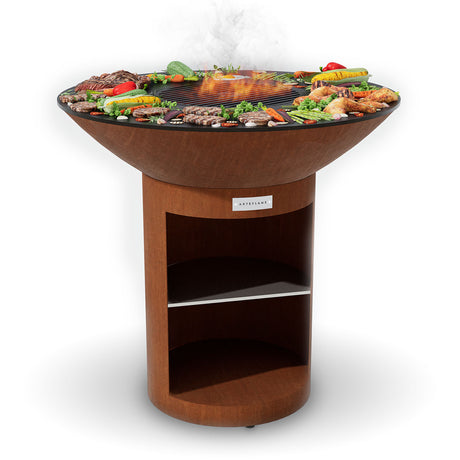
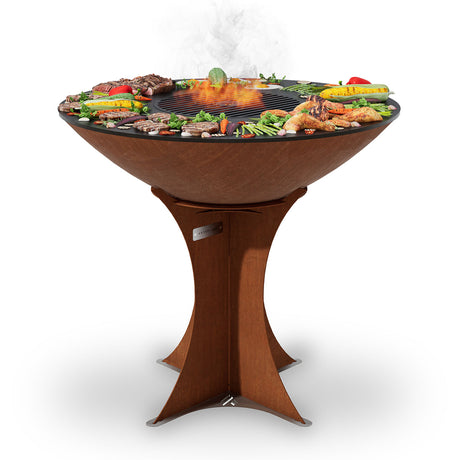
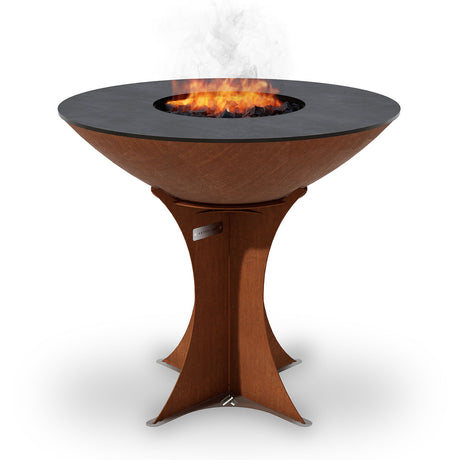
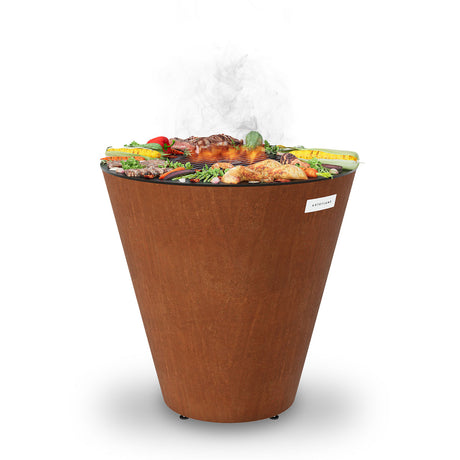
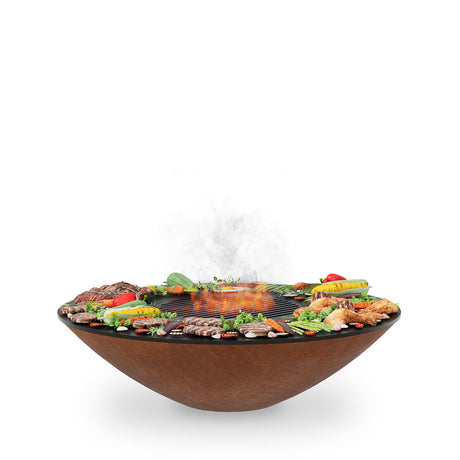
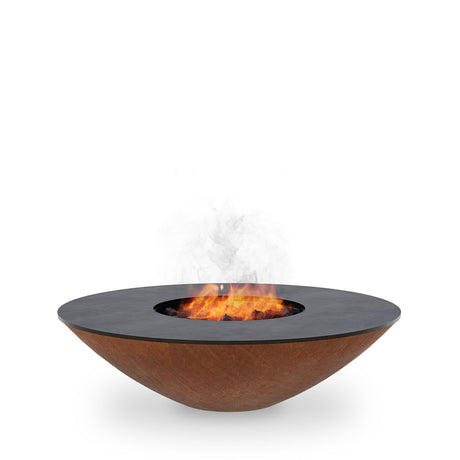
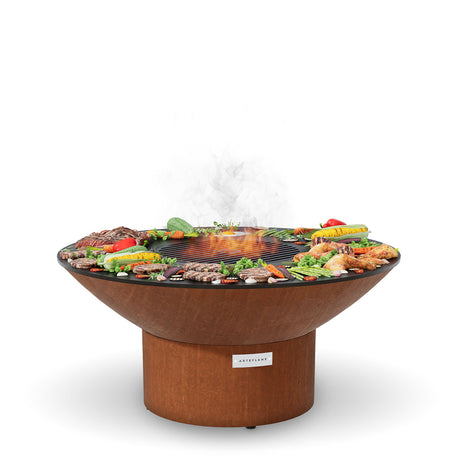
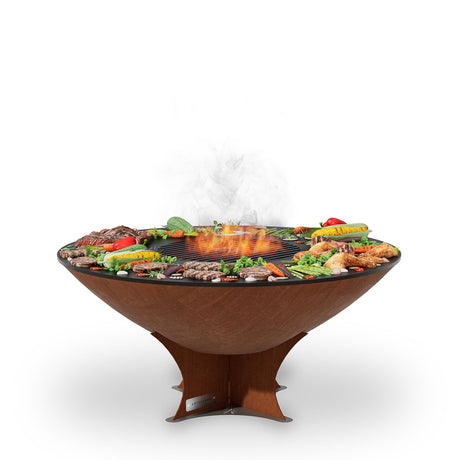
For decades, the gas grill has been the backyard standard due to its speed. However, serious outdoor cooks are switching to flat top designs like the Arteflame for one primary reason: Information Gain and Versatility. Unlike a gas grill, which relies on direct flame and dry heat that can dehydrate meat, a solid carbon steel cooktop sears meat in its own juices.
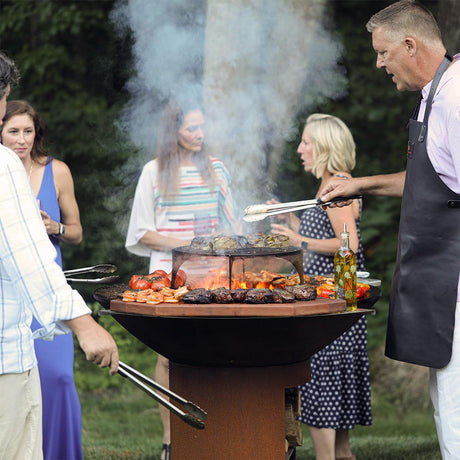
This "plancha" style cooking preserves moisture and allows for Maillard reaction browning across the entire surface of the food, not just where it touches a grate. Furthermore, the circular design turns grilling into a social event, allowing guests to gather around the fire rather than standing behind a chef whose back is turned.
Use this comparison to decide which grill suits your cooking style.
| Feature | Arteflame Flat Top | Standard Gas Grill |
|---|---|---|
| Heat Source | Wood or Charcoal (Smoky Flavor) | Propane or Natural Gas (Neutral/Chemical Flavor) |
| Cooking Surface | Solid Carbon Steel (No flare-ups) | Open Grates (Prone to flare-ups) |
| Temperature Control | Heat Zones (Hot center, cooler edges) | Knob adjustment (Uniform heat) |
| Versatility | Steaks, Eggs, Veggies, Pancakes | Mostly Meats and Large Veggies |
| Maintenance | Season like cast iron (improves with age) | Scrubbing grease traps and burners |
The flavor profile is the most significant differentiator. Gas is odorless and tasteless, meaning your food only tastes like the seasonings you add or the char you create. Conversely, cooking on a flat top over real wood infuses food with subtle, aromatic smoke without overpowering it.
Because the solid steel cooktop sits above the fire, the food is not engulfed in heavy soot. Instead, the rising heat seasons the food gently. Additionally, because juices do not drip away into the flames (causing acrid flare-ups), the meat bathes in its own rendered fat, significantly enhancing the natural beef or poultry flavors.
Pro Tip: Use seasoned hardwoods like oak or hickory for a robust flavor profile. Avoid softwoods like pine, as they burn too fast and produce resinous smoke that can ruin the taste of your food.
One of the biggest frustrations with traditional gas grilling is the "food juggling act." You grill the burgers, but the asparagus falls through the grates, and you have to run inside to check the potatoes on the stove. A flat top grill solves this through Graduated Heat Zones.
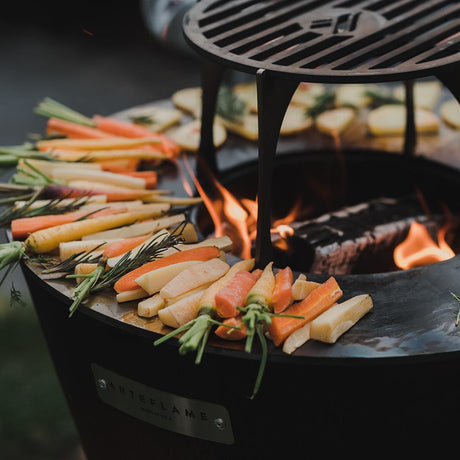
The closer you cook to the center of the Arteflame, the higher the heat (upwards of 1,000°F+). The outer edges are cooler. This allows you to:
This surface area utility means you can cook breakfast (bacon, eggs, and pancakes) just as easily as dinner, something impossible on standard grill grates.
Many gas owners hesitate to switch because they fear the cleanup of a wood fire. However, maintaining a carbon steel flat top is actually simpler than deep-cleaning a gas grill's burners, flavorizer bars, and grease trays.
The cooktop functions exactly like a cast-iron skillet. Once seasoned, it becomes non-stick and hydrophobic. You do not need wire brushes or harsh chemicals.
Pro Tip: After cooking, simply scrape any food residue into the fire while the grill is still warm. Wipe the surface with a cloth and a thin layer of oil (like grapeseed or avocado oil). This protects the steel and ensures it is ready for the next cook instantly.
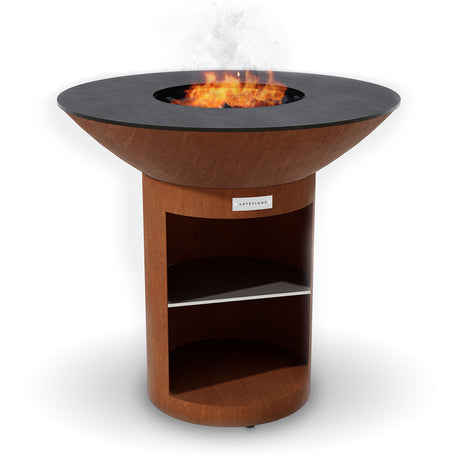
It typically takes 15 to 20 minutes for the wood fire to bring the steel cooktop to optimal cooking temperature. This is slightly longer than gas but essential for establishing the different heat zones.
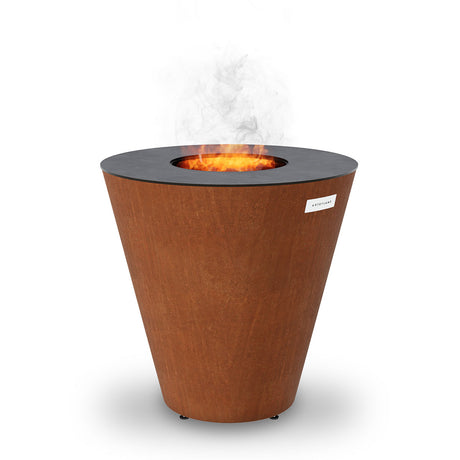
Yes, Arteflame grills are designed to be left outside in all seasons. The Corten steel base develops a protective patina that resists corrosion, and the cooktop simply needs to be kept oiled to prevent rust.
While the fire is contained, it is a wood-burning appliance. It is recommended to place the grill on a stone, concrete, or tile surface. If using a wooden deck, always use a fire-rated grill mat underneath to catch any stray sparks or embers.







Turn yesterday's leftover macaroni into today's crispy, golden side dish with this easy wood-fired recipe.

Master this Texas-style open-fire brisket cooked entirely on the Arteflame grill. By searing on the center grate and wrapping to render on the flat top, you get perfectly tender, juicy...

Transform standard thick-cut bacon into a sweet, savory appetizer with a dark stout and brown sugar glaze, perfectly caramelized on a flat-top grill.

Render the perfect crispy skin with these Sichuan Peppercorn Duck Breasts, paired with a smoky, sweet, and spicy charred plum-poblano sauce.

Tender artichoke halves charred over high heat and smothered in rich garlic butter and Parmesan cheese.

Achieve the ultimate crust with this low-and-slow beef brisket recipe, utilizing natural heat zones for a perfect sear and incredibly tender finish.

Transform the trending crispy rice paper dumplings into a wood-fired masterpiece. Cooked on the Arteflame flat steel griddle for a shatteringly crisp crust and savory, high-protein filling.

Elevate albacore tuna with a steakhouse-style bacon wrap and a decadent green peppercorn cream sauce, grilled flawlessly on a flat-top.