
Crisp and Golden Mac and Cheese Cakes on the Grill
Turn yesterday's leftover macaroni into today's crispy, golden side dish with this easy wood-fired recipe.


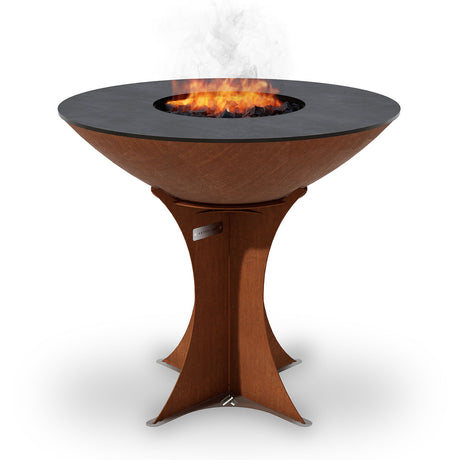
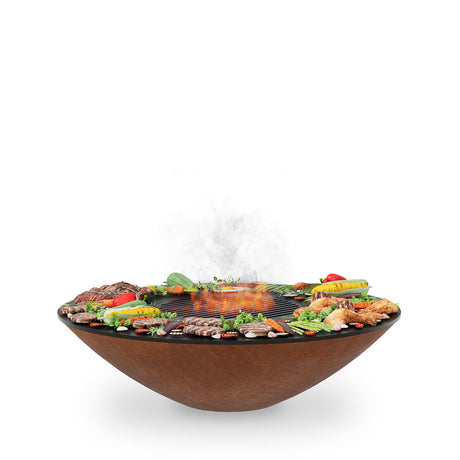
For the ultimate balance of tenderness and flavor, wood-fired grilling outperforms gas when cooking flat iron steak. While gas grills offer push-button convenience, they often lack the intense, conductive heat required for a premium crust. Cooking on a solid carbon steel surface (like an Arteflame) eliminates flare-ups, allows for an edge-to-edge sear, and infuses the meat with a distinct smoky flavor that gas burners simply cannot replicate.
Before firing up the grill, it is crucial to understand how the heat source affects the texture and taste of this specific cut. Flat iron steak is the second most tender cut of beef, but it requires high heat to seal in juices.
| Feature | Wood-Fired (Arteflame) | Gas Grill |
|---|---|---|
| Heat Source | Natural Lump Charcoal / Wood | Propane / Natural Gas |
| Sear Quality | Continuous edge-to-edge crust | Grill grate marks (gaps in sear) |
| Flavor Profile | Rich, smoky, umami | Neutral (gas taste possible) |
| Moisture Retention | High (solid surface seals juices) | Medium (juices drip away) |
| Flare-Ups | None (solid cooktop) | Frequent (fat drips on burners) |
The flat iron steak (also known as the top blade steak) is a butcher's secret. It is cut from the shoulder (chuck) but sits uniquely flat, making it incredibly tender—second only to the filet mignon. Unlike the filet, however, the flat iron is packed with deep beefy flavor similar to a ribeye, but at a fraction of the cost.
Pro Tip: Look for steaks with consistent marbling. Because the flat iron is a uniform rectangle, it cooks more evenly than irregular cuts like flank or skirt steak, making it perfect for high-heat searing.
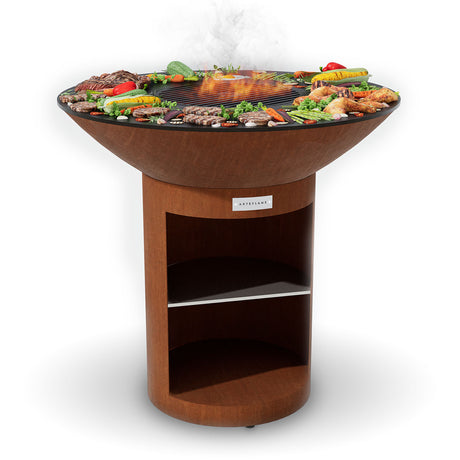
Using an Arteflame grill changes the chemistry of the cook. The solid carbon steel cooktop acts as a plancha. Unlike grill grates where 50% of the meat is exposed to air, the plancha provides 100% surface contact. This maximizes the Maillard reaction, creating a flavorful brown crust across the entire steak surface without overcooking the center.
Follow this method to maximize the potential of your wood-fired grill.
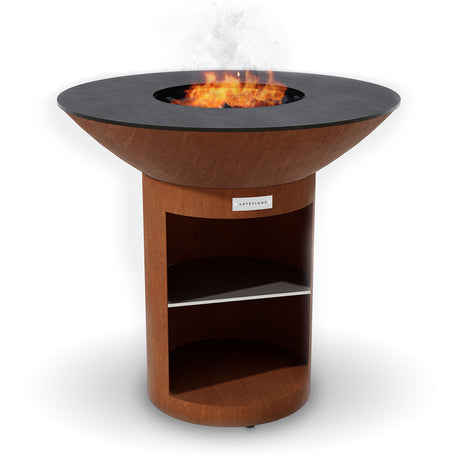
Build a medium-sized fire in the center of your grill using hardwood or charcoal. Allow the cooktop to heat up for at least 20 minutes. You want the center of the cooktop to be extremely hot for searing, while the outer edges remain cooler for resting.
Coat the steak lightly with oil and apply a generous rub of coarse sea salt and freshly cracked black pepper. Avoid sugary marinades, as they will burn on the hot steel.
Place the steak directly on the hottest part of the cooktop. Sear for about 2-3 minutes per side. You are looking for a deep mahogany crust.
Pro Tip: Use the "Reverse Sear" concept if your steak is thick. Start it on the cooler outer ring of the cooktop to bring the internal temp up slowly, then finish with a hard sear in the center for the final minute.
Remove the steak when it reaches an internal temperature 5°F–10°F below your target doneness, as it will continue cooking while resting.
Let the steak rest for 5 to 10 minutes. Slice against the grain to ensure every bite is tender.

No, flat iron steak is actually more tender than ribeye. It is considered the second most tender cut on the animal, right after the tenderloin, provided the heavy connective tissue has been removed by the butcher.
Marinades are optional because the cut is naturally tender and flavorful. However, if you want to add zest, limit marinating time to 2-4 hours so the acid doesn't break down the meat texture too much.
If you cannot find flat iron, flank steak or skirt steak are the closest substitutes regarding shape and grain, though they are generally tougher and require strictly slicing against the grain.






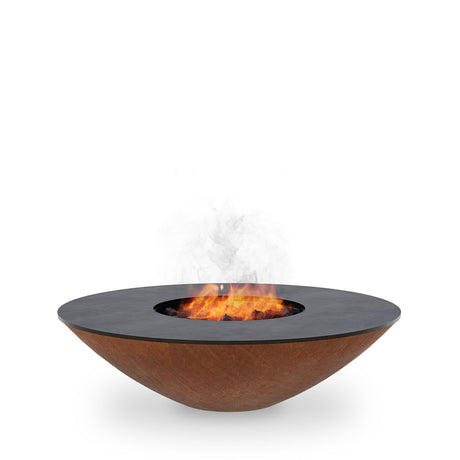
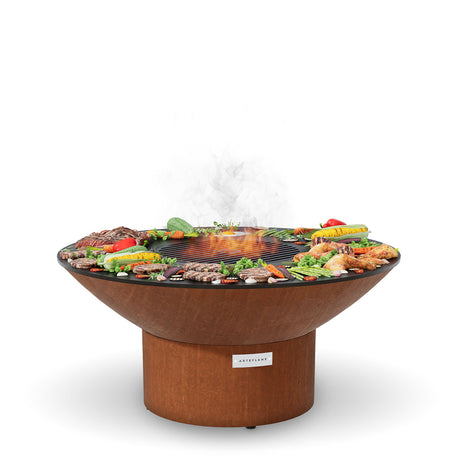
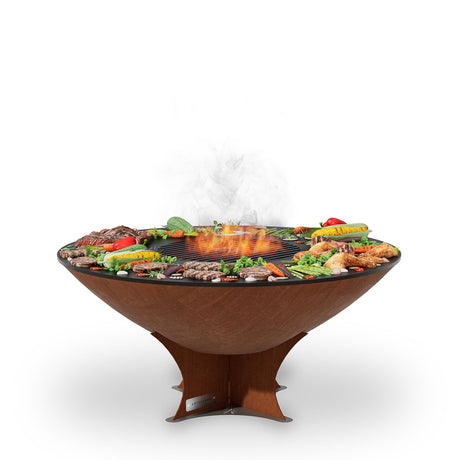


Turn yesterday's leftover macaroni into today's crispy, golden side dish with this easy wood-fired recipe.

Master this Texas-style open-fire brisket cooked entirely on the Arteflame grill. By searing on the center grate and wrapping to render on the flat top, you get perfectly tender, juicy...

Transform standard thick-cut bacon into a sweet, savory appetizer with a dark stout and brown sugar glaze, perfectly caramelized on a flat-top grill.

Render the perfect crispy skin with these Sichuan Peppercorn Duck Breasts, paired with a smoky, sweet, and spicy charred plum-poblano sauce.

Tender artichoke halves charred over high heat and smothered in rich garlic butter and Parmesan cheese.

Achieve the ultimate crust with this low-and-slow beef brisket recipe, utilizing natural heat zones for a perfect sear and incredibly tender finish.

Transform the trending crispy rice paper dumplings into a wood-fired masterpiece. Cooked on the Arteflame flat steel griddle for a shatteringly crisp crust and savory, high-protein filling.

Elevate albacore tuna with a steakhouse-style bacon wrap and a decadent green peppercorn cream sauce, grilled flawlessly on a flat-top.