
Best Grilled Vegetables: Charred & Crispy Guide | Arteflame
Learn the best veggies for grilling—plus times, temps, and pro tips—optimized for Arteflame heat zones for perfect char and flavor every time.

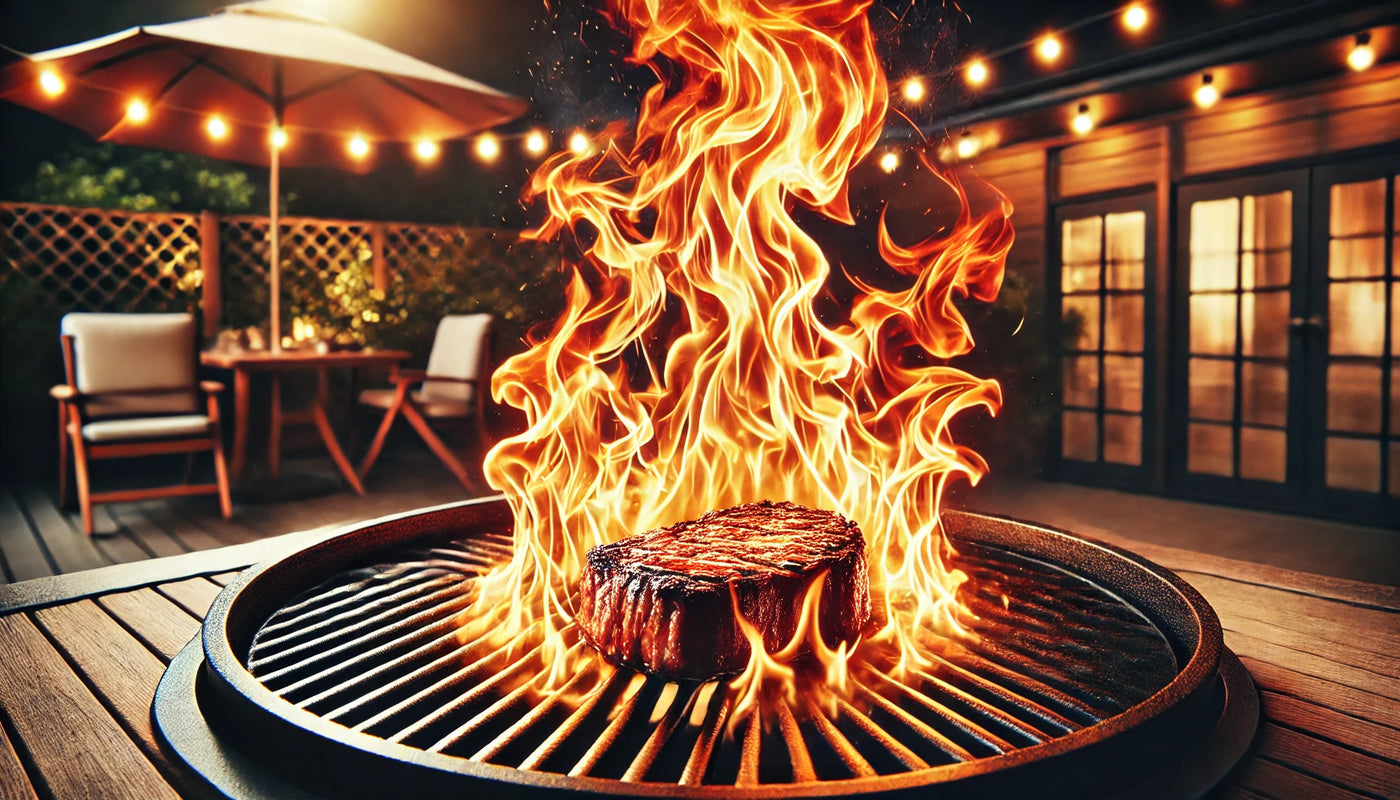
To flambé on a grill safely and effectively, pour a high-proof spirit (between 80 and 120 proof) into a separate cup—never directly from the bottle—and add it to a hot pan or flat-top griddle surface, not the open grates. Ignite the fumes immediately with a long-handled lighter if the heat does not auto-ignite the alcohol. This technique burns off the raw alcohol bite, leaving behind concentrated flavors and caramelized sugars on meats and fruits.
Choosing the right alcohol is critical for both safety and flavor. You need a spirit with 40% to 60% ABV (80–120 proof). Anything lower won't ignite properly; anything higher is a safety hazard.
| Spirit Type | Best Paired With | Flavor Profile | Recommended Proof |
|---|---|---|---|
| Bourbon / Whiskey | Steak, Ribs, Pork Chops | Sweet, vanilla, oaky notes | 80–100 Proof |
| Cognac / Brandy | Chicken, Seafood, Peaches | Fruity, rich, subtle sweetness | 80 Proof |
| Dark Rum | Pineapple, Bananas, Desserts | Molasses, caramel, spice | 80–100 Proof |
| Tequila | Shrimp, Scallops, Fajitas | Earthy, agave, citrus kick | 80 Proof |
| Vodka | Any (Neutral) | Adds heat without altering flavor | 80–100 Proof |
Flambéing on a traditional grate grill is dangerous because fats and liquids drip into the firebox, causing uncontrolled flare-ups. The Arteflame solid cooktop is superior for this technique because it acts like a restaurant plancha, keeping the liquids contained.
Pro Tip: Never pour liquor onto open flames. The flame can travel up the stream of liquid into the bottle and cause it to explode. Always pour into a measuring cup or ladle first.
Cook your meat or fruit until it is nearly done. The surface of the food and the grill needs to be very hot to help the alcohol vaporize quickly.
Cold liquor lowers the temperature of the cooking surface and may fail to light. Keeping your pouring vessel slightly warm ensures a faster, cleaner ignition.
Move the food to a slightly cooler zone of the flat top if the center is too aggressive. Pour the spirit over the food. If cooking on a very hot flat top, it may self-ignite. If not, use a long grill lighter immediately to ignite the vapors at the edge of the liquid.
Shake the food gently or let it rest until the blue flames die down naturally. This indicates the harsh raw alcohol has burned off, leaving only the essence of the spirit.
Yes, it is more than just a visual trick. The process alters the chemistry of the dish in two distinct ways. First, the burning alcohol creates a sudden burst of intense heat (often exceeding 500°F), which accelerates the Maillard reaction, deepening the browning and crust on steaks. Second, as the alcohol evaporates, it acts as a solvent, releasing aromatic compounds in the food that water or oil cannot unlock, resulting in a more complex scent and taste profile.
Pro Tip: For savory dishes like steak au poivre, add the alcohol after the meat is seared but while the pan juices are still bubbling. This deglazes the surface and incorporates the fond (browned bits) into a rich sauce.
No, beer and table wines generally have an alcohol content that is too low (usually 4% to 15%) to support a flame. You need a spirit that is at least 80 proof (40% ABV) to generate enough combustible vapor.
It can be risky on a standard gas grill due to potential grease fires or burner clogging. It is much safer to perform this technique on a solid surface griddle or a flat-top grill like an Arteflame, where liquids cannot drip down to the burners.
Do not throw water on a grease or alcohol fire, as this spreads the flames. Simply cover the food with a large metal lid or the grill hood to starve the fire of oxygen, and it will extinguish immediately.
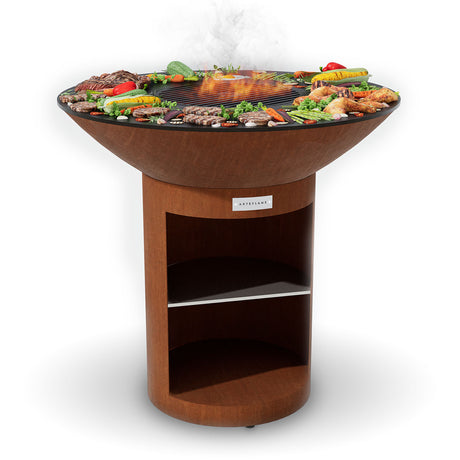
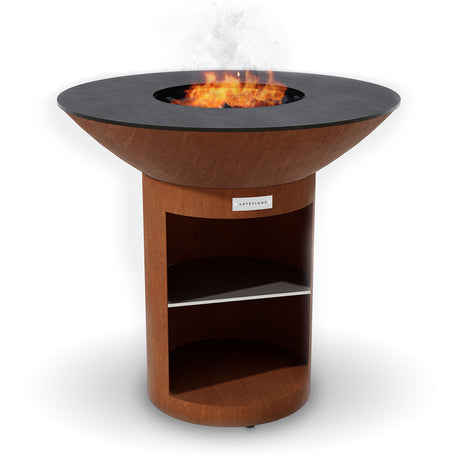
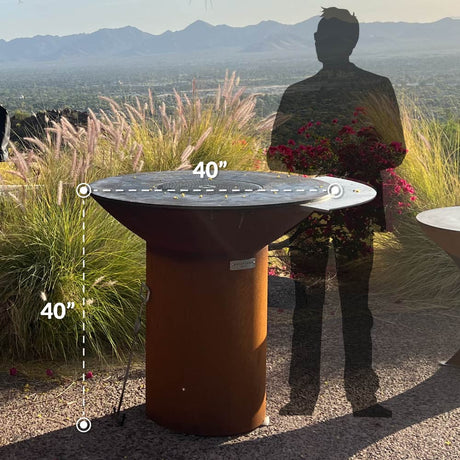
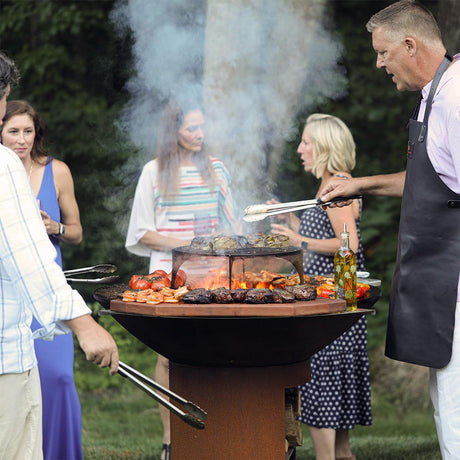
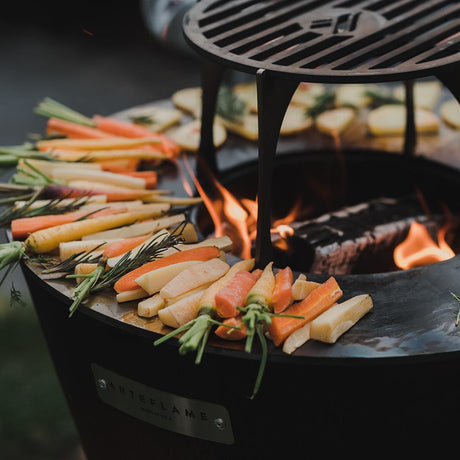
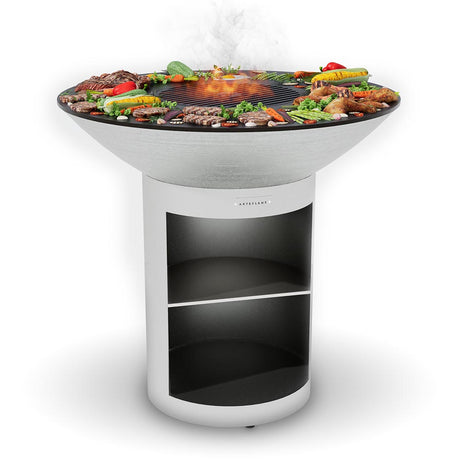
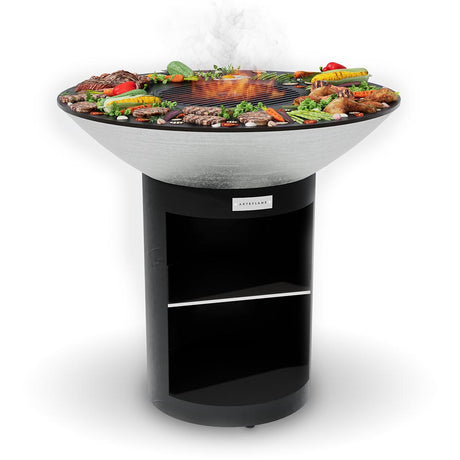
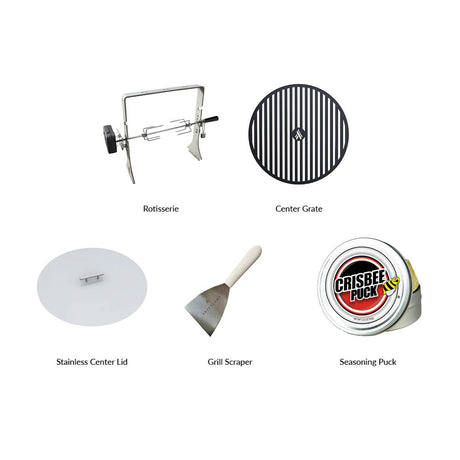

Arteflame Classic 40″ — Storage Base Flat-Top Grill & Fire Bowl (CORTEN Steel)
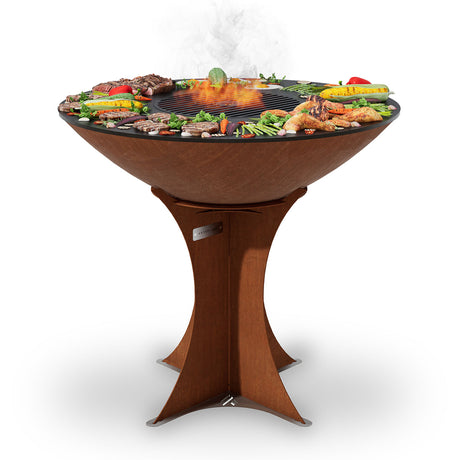


Arteflame ONE30 — 30″ One Series Flat-Top Charcoal Grill & Fire Bowl (Single-Piece CORTEN Steel)
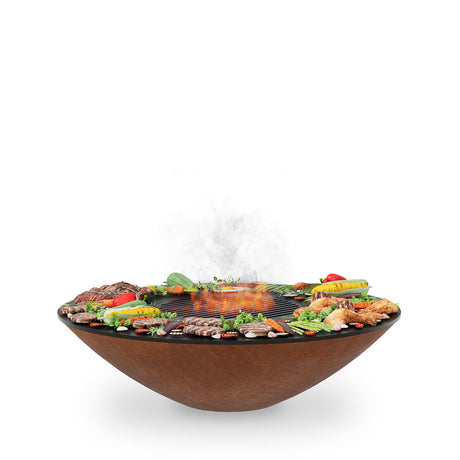
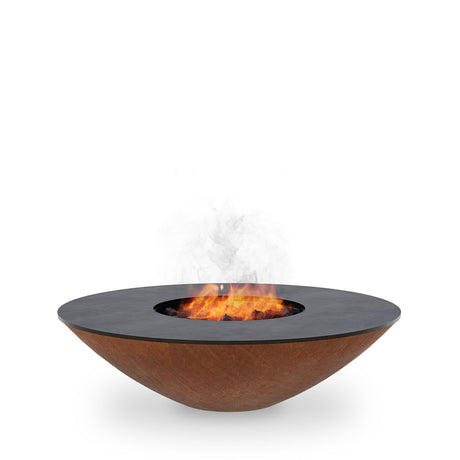
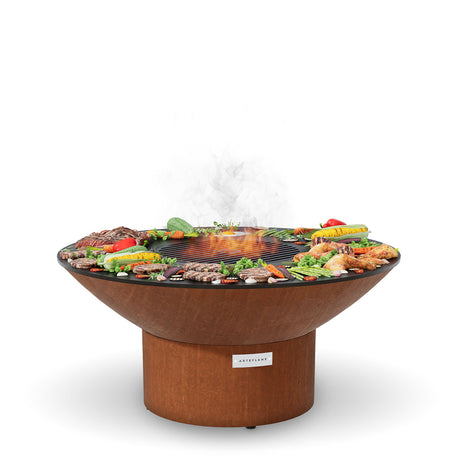
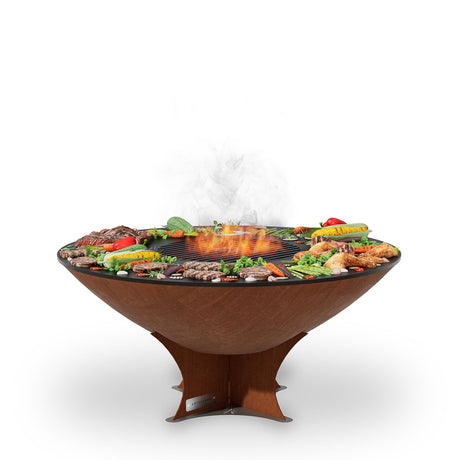


Learn the best veggies for grilling—plus times, temps, and pro tips—optimized for Arteflame heat zones for perfect char and flavor every time.

Transform classic apple pie into a handheld delight with these Wyoming Apple Cinnamon Grilled Dessert Wraps. perfectly crispy, caramelized, and cooked on the Arteflame grill for a smoky finish.

Experience the rustic taste of the West with this Wyoming Campfire Blueberry Cobbler recipe for the Arteflame grill. Featuring bubbling blueberries and a golden biscuit crust cooked in cast iron,...

Experience the rugged flavor of the American West with these Wyoming Wild Boar Chops. Seared to perfection on the Arteflame grill, this recipe uses a savory juniper and sage rub...

Elevate your BBQ with these Wyoming-style grilled carrots. Sweet honey, tangy balsamic, and a perfect char make this the ultimate side dish for your Arteflame grill. Easy, healthy, and packed...

Unleash the flavor of the American West with these tender Wyoming Teriyaki Bison Skewers. Featuring a homemade savory-sweet glaze and perfectly charred vegetables, this recipe maximizes the searing power of...

Unlock the savory flavors of the West with this Wyoming-style garlic parmesan grilled mushrooms recipe. Perfectly seared on the Arteflame flat top, these buttery, cheesy mushrooms make the ultimate side...

Unlock the bold flavors of the West with this Wyoming-style grilled jalapeño cheddar sausage recipe. Learn how to achieve the perfect sear and juicy interior using your Arteflame grill for...