
Crisp and Golden Mac and Cheese Cakes on the Grill
Turn yesterday's leftover macaroni into today's crispy, golden side dish with this easy wood-fired recipe.


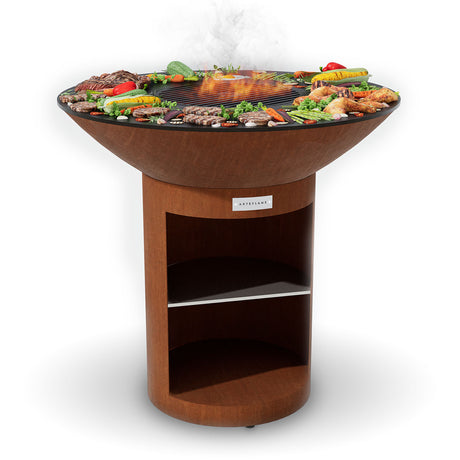
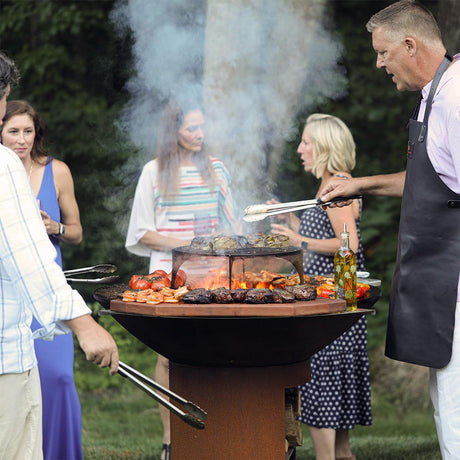
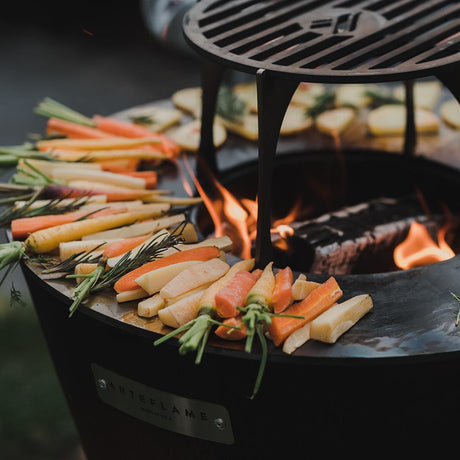
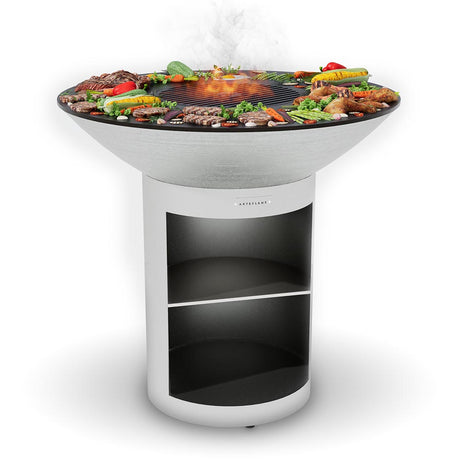
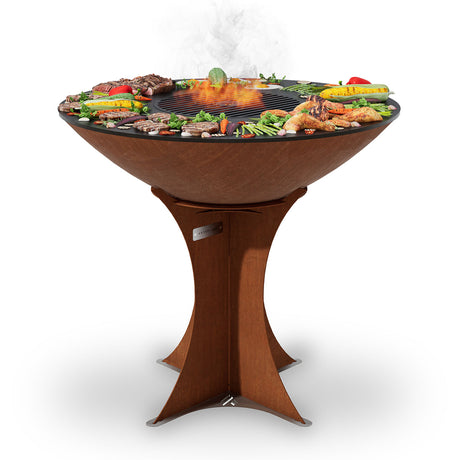
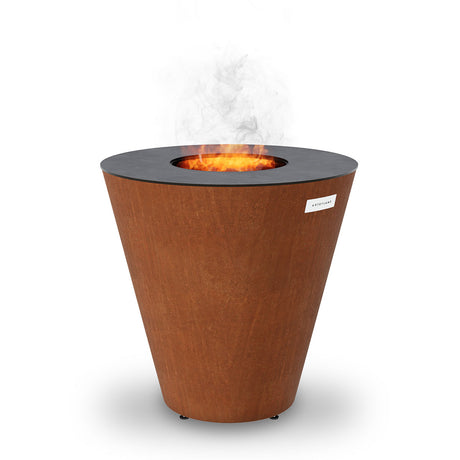
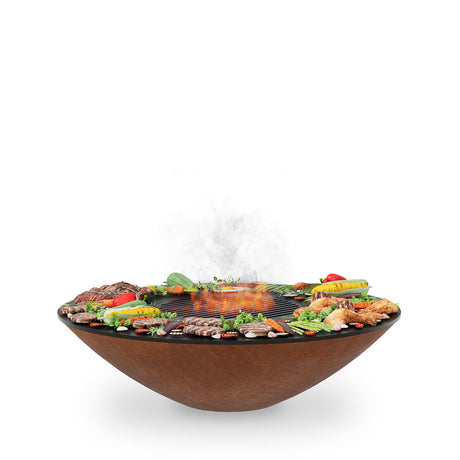
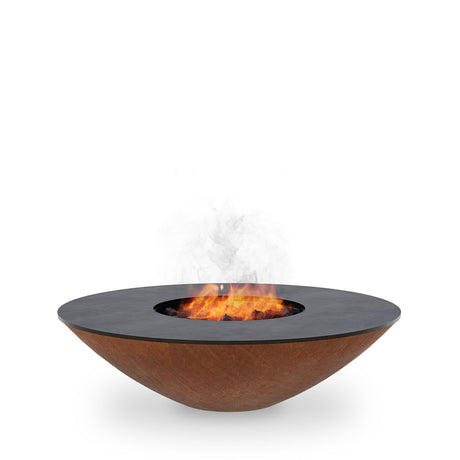
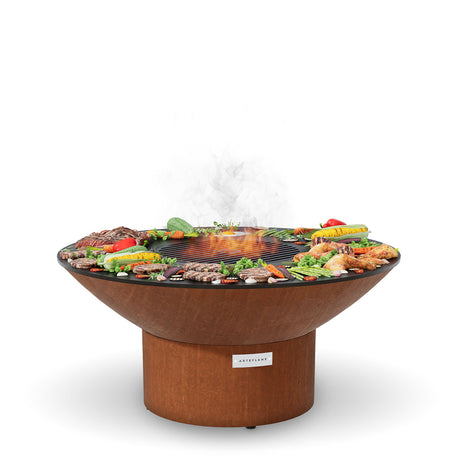
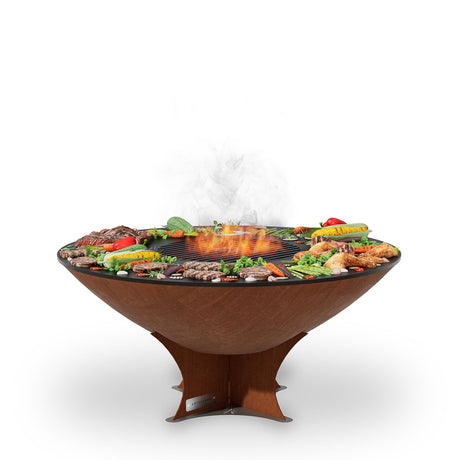
The most effective way to upgrade a standard masonry or steel fire pit is by replacing flimsy wire grates with a solid carbon steel plancha insert. Unlike traditional grates that lose juices to the fire and cause flare-ups, a solid insert turns your fire pit into a flattop grill. This creates a temperature gradient—searing heat in the center and cooler warming zones at the edges—allowing you to cook entire meals, from steaks to eggs, simultaneously.
Most fire pits come with standard stainless steel or chrome-plated wire grates. While functional for holding a burger, they fail to provide a true culinary experience. An Arteflame insert changes the physics of how you cook outdoors by replacing direct fire exposure with conduction cooking.
| Feature | Arteflame Carbon Steel Insert | Standard Wire Grate |
|---|---|---|
| Heat Distribution | Even conduction with distinct heat zones | Direct heat only (hot spots) |
| Flare-Ups | Zero flare-ups (solid surface) | Frequent (fat drips onto fire) |
| Versatility | Cooks eggs, veg, steak, seafood | Limited to large items only |
| Maintenance | Scrape and oil (improves with age) | Requires scrubbing, rusts easily |
Pro Tip: Treat your carbon steel insert like a cast iron skillet. Never use soap or degreasers. The black patina that develops over time is actually seasoning that protects the steel and adds flavor to your food.
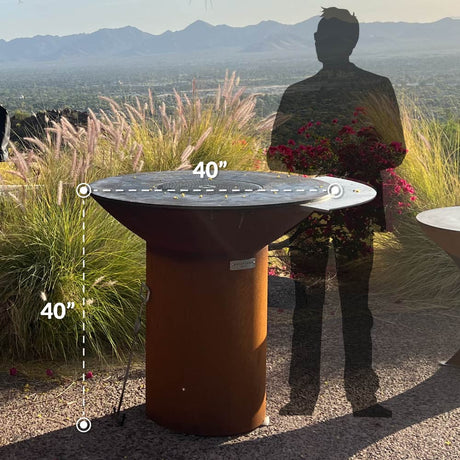
One of the most common hurdles in upgrading a fire pit is finding the right fit. Arteflame inserts are designed to be universal replacements for various setups, allowing you to retrofit almost any round fire feature.
Ensure you measure the inner opening of your fire pit before ordering. The insert requires stable contact points around the perimeter to sit safely without tipping.
On a traditional grill, you adjust vents or gas knobs to manage heat. On a fire pit insert, you control temperature through food placement. This method is often preferred by chefs for its precision and speed.
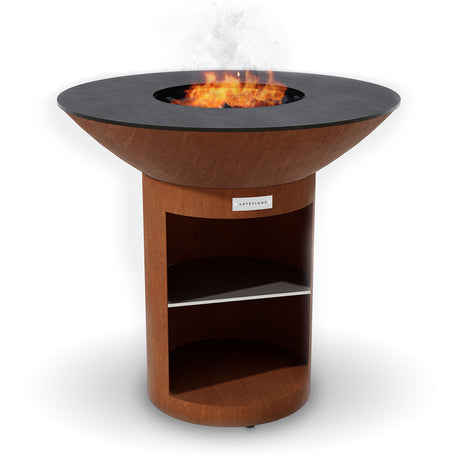
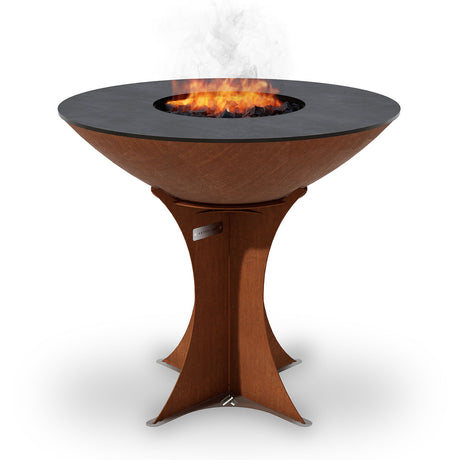
Because the steel plate is solid, heat radiates outward from the center. The closer to the open fire (center), the hotter the surface (800°F+). The outer edge serves as a warming zone (250°F-300°F).
Pro Tip: For the perfect reverse sear, start your thick steaks on the outer edge (cooler zone) to bring them up to temp slowly, then finish them with a quick sear on the inner ring closest to the flames.
Yes, carbon steel is incredibly durable. While surface rust may appear if left unseasoned for long periods, it can be easily scraped off with steel wool and re-oiled. Using a cover will prolong the seasoning and keep it ready to cook.
Hardwoods like oak, hickory, or pecan are ideal for cooking. They burn hotter and cleaner than softwoods like pine, which can produce resinous smoke that ruins the flavor of food and clogs the grill surface.
Cleaning is simple: while the grill is still hot, pour a little water on the surface and scrape the food residue into the center fire opening. Wipe it down with a thin layer of food-grade oil before it cools to protect the steel.






Turn yesterday's leftover macaroni into today's crispy, golden side dish with this easy wood-fired recipe.

Master this Texas-style open-fire brisket cooked entirely on the Arteflame grill. By searing on the center grate and wrapping to render on the flat top, you get perfectly tender, juicy...

Transform standard thick-cut bacon into a sweet, savory appetizer with a dark stout and brown sugar glaze, perfectly caramelized on a flat-top grill.

Render the perfect crispy skin with these Sichuan Peppercorn Duck Breasts, paired with a smoky, sweet, and spicy charred plum-poblano sauce.

Tender artichoke halves charred over high heat and smothered in rich garlic butter and Parmesan cheese.

Achieve the ultimate crust with this low-and-slow beef brisket recipe, utilizing natural heat zones for a perfect sear and incredibly tender finish.

Transform the trending crispy rice paper dumplings into a wood-fired masterpiece. Cooked on the Arteflame flat steel griddle for a shatteringly crisp crust and savory, high-protein filling.

Elevate albacore tuna with a steakhouse-style bacon wrap and a decadent green peppercorn cream sauce, grilled flawlessly on a flat-top.