
Best Grilled Vegetables: Charred & Crispy Guide | Arteflame
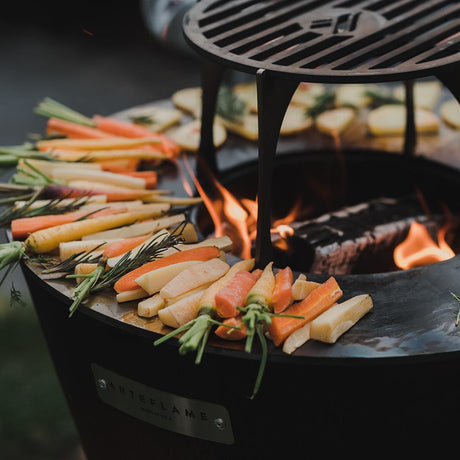
Learn the best veggies for grilling—plus times, temps, and pro tips—optimized for Arteflame heat zones for perfect char and flavor every time.


Reverse searing is the ultimate method for cooking thick steaks (1.5 inches or thicker) to ensure edge-to-edge perfection without the gray band of overcooked meat often caused by traditional grilling. By slow-cooking the steak at a low temperature (200°F–275°F) until it reaches 10°F–15°F below your target temperature, and finishing with a blazing hot sear, you maximize tenderness, moisture retention, and flavor development.
Traditional grilling blasts a cold steak with high heat, which often leads to a charred exterior and a raw center, or a "bullseye" gradient where much of the meat is overcooked. Reverse searing gently brings the internal temperature up, breaking down enzymes for tenderness before the crust is formed.
This method gives you total control over the internal doneness while drying out the surface of the meat, ensuring a crisper, more flavorful Maillard reaction (browning) during the final sear.
| Feature | Traditional Grilling | Reverse Sear |
|---|---|---|
| Cooking Speed | Fast (10-15 mins) | Slow (45-60 mins) |
| Doneness Consistency | Uneven (Gray bands) | Perfect (Edge-to-edge pink) |
| Moisture Retention | Lower (Juices squeeze out) | Higher (Gentle heat) |
| Best For | Thin Steaks (< 1 inch) | Thick Cuts (> 1.5 inch) |
The Arteflame grill is uniquely suited for this method because of its distinct heat zones. You don't need complex 2-zone setups involving charcoal dividers; the grill design does the work for you.
Pro Tip: Dry brine your steak by salting it liberally and leaving it uncovered in the fridge for 4 to 24 hours before grilling. This draws out surface moisture, guaranteeing a crust that rivals top steakhouses.
Build a fire in the center of your Arteflame. Place your seasoned steak on the outer edge of the cooktop where the temperature is lowest. You want the steak to cook gently. If it sizzles loudly, move it further out.
Cook the steak slowly, flipping occasionally for even heat distribution. Remove the steak when it is 10°F to 15°F below your final target temperature (e.g., pull at 115°F for a Medium-Rare result).
Let the steak rest for 5–10 minutes. This stabilizes the juices and allows the residual heat to carry over slightly. While it rests, stoke your fire to generate maximum heat in the center.
Place the steak directly on the center grill grate or the hottest part of the flat top. Sear for 45–60 seconds per side. You are only looking for color and crust here, not cooking the inside further.
Pro Tip: For an insane flavor boost, brush the steak with melted butter, garlic, and herbs right before the final sear. The fat helps conduct heat and creates a deep, golden-brown crust.
Accuracy is key. Use a reliable instant-read thermometer. Remember that the temperature will rise about 5°F during the sear and rest.
| Doneness Level | Pull Temperature (Before Sear) | Final Temperature (After Rest) |
|---|---|---|
| Rare | 115°F | 125°F |
| Medium-Rare | 120°F - 125°F | 130°F - 135°F |
| Medium | 130°F - 135°F | 140°F - 145°F |
| Medium-Well | 140°F - 145°F | 150°F - 155°F |
Yes, significantly. Because you are cooking at a low temperature to ensure evenness, plan for at least 45 to 60 minutes of total cook time, depending on the thickness of the steak.
No, it is not recommended. Steaks thinner than 1.5 inches cook through too quickly during the searing phase, resulting in overcooked meat. Stick to traditional high-heat searing for thin cuts like skirt or flank steak.
Absolutely. Reverse searing relies on precision. Guessing by touch or time is unreliable because factors like wind, ambient temperature, and steak thickness vary wildly.
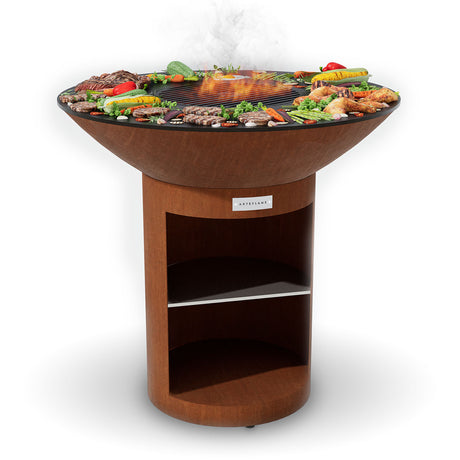
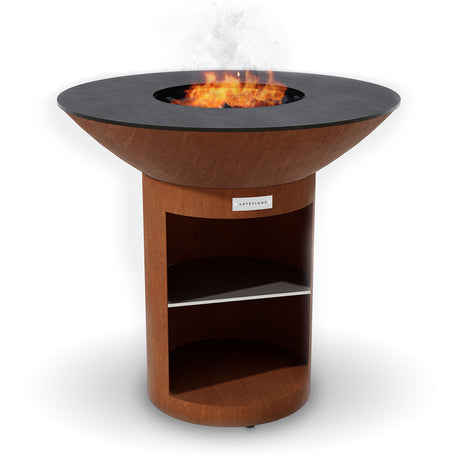
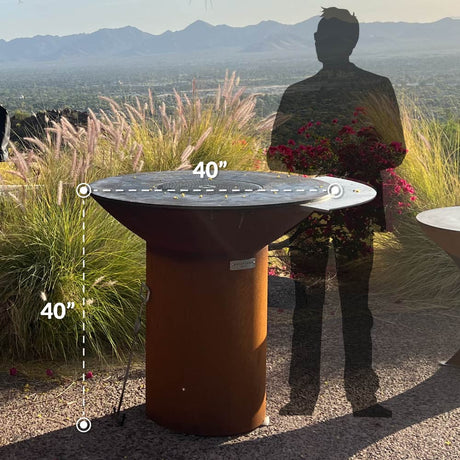
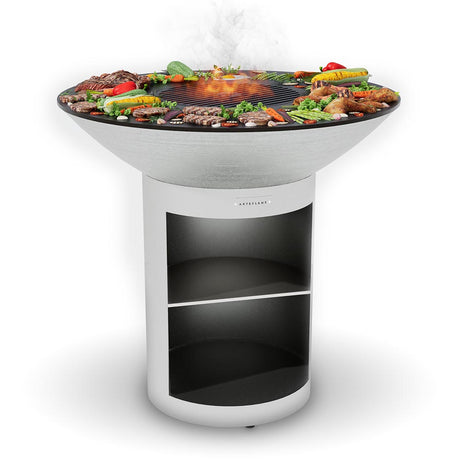
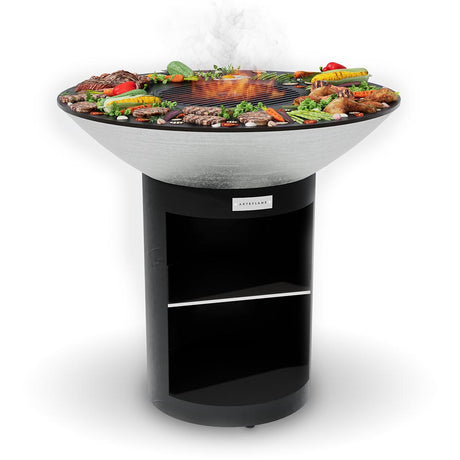


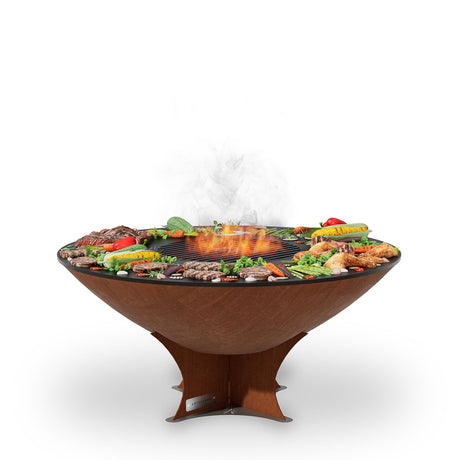
Arteflame Classic 40″ — Storage Base Flat-Top Grill & Fire Bowl (CORTEN Steel)


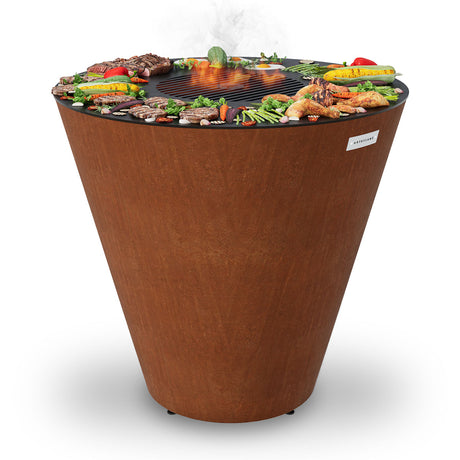
Arteflame ONE30 — 30″ One Series Flat-Top Charcoal Grill & Fire Bowl (Single-Piece CORTEN Steel)



Arteflame One Series 40″ — XXL Flat-Top Charcoal Grill & Fire Bowl (Single-Piece CORTEN Body)


Learn the best veggies for grilling—plus times, temps, and pro tips—optimized for Arteflame heat zones for perfect char and flavor every time.

Transform classic apple pie into a handheld delight with these Wyoming Apple Cinnamon Grilled Dessert Wraps. perfectly crispy, caramelized, and cooked on the Arteflame grill for a smoky finish.

Experience the rustic taste of the West with this Wyoming Campfire Blueberry Cobbler recipe for the Arteflame grill. Featuring bubbling blueberries and a golden biscuit crust cooked in cast iron,...

Experience the rugged flavor of the American West with these Wyoming Wild Boar Chops. Seared to perfection on the Arteflame grill, this recipe uses a savory juniper and sage rub...

Elevate your BBQ with these Wyoming-style grilled carrots. Sweet honey, tangy balsamic, and a perfect char make this the ultimate side dish for your Arteflame grill. Easy, healthy, and packed...

Unleash the flavor of the American West with these tender Wyoming Teriyaki Bison Skewers. Featuring a homemade savory-sweet glaze and perfectly charred vegetables, this recipe maximizes the searing power of...

Unlock the savory flavors of the West with this Wyoming-style garlic parmesan grilled mushrooms recipe. Perfectly seared on the Arteflame flat top, these buttery, cheesy mushrooms make the ultimate side...

Unlock the bold flavors of the West with this Wyoming-style grilled jalapeño cheddar sausage recipe. Learn how to achieve the perfect sear and juicy interior using your Arteflame grill for...