
Crisp and Golden Mac and Cheese Cakes on the Grill
Turn yesterday's leftover macaroni into today's crispy, golden side dish with this easy wood-fired recipe.


The only definitive way to ensure your meat is cooked safely and to your preferred level of doneness is by using a digital instant-read thermometer. Visual cues like clear juices or the "finger test" are unreliable and can lead to dry, overcooked meat or dangerous undercooking. For the best results on an Arteflame or any grill, insert the probe into the thickest part of the meat, avoiding bone and fat, to get an instant, precise reading.
Understanding the difference between thermometer types is crucial for grilling success. Use this comparison to choose the right tool for your cook.
| Thermometer Type | Best Use Case | Speed | Accuracy |
|---|---|---|---|
| Digital Instant-Read | Steaks, Burgers, Chops | 2-3 Seconds | High |
| Wireless Leave-In Probe | Large Roasts, Whole Chickens | Continuous | High |
| Dial/Analog | General calibration (not recommended for grilling) | Slow (15+ sec) | Low/Moderate |
| Infrared Gun | Surface Temp (Grill Grates) | Instant | Surface Only |
For high-heat searing on the Arteflame cooktop, an instant-read thermometer is your essential tool. However, if you are slow-roasting a large cut on the elevated grate, a wireless probe allows you to monitor temps without lifting the lid or losing heat.
Placement is everything. To get a true reading, insert the thermometer probe into the geometric center of the thickest part of the cut.
Pro Tip: Calibrate your thermometer occasionally using a glass of ice water. It should read exactly 32°F (0°C). If it doesn't, your dinner might be overcooked before the numbers tell you it's done.
Memorizing these USDA-recommended safe minimum internal temperatures (and chef-preferred ranges) ensures safety and flavor.
This phenomenon is called carryover cooking. When you remove meat from the high heat of the Arteflame, the residual heat continues to cook the interior. This is a critical factor often overlooked.
You must remove your meat from the grill when it is 5°F to 10°F lower than your target temperature. If you wait until the thermometer hits your target number while it's still on the grill, it will be overcooked by the time you eat it.
Pro Tip: Always rest your meat for 5 to 10 minutes (or longer for large roasts) before slicing. This allows the juices to redistribute and the final temperature to stabilize. Cutting too early releases the juices, drying out the meat immediately.
No, the "touch test" is highly subjective and inaccurate. Muscle density varies between cuts and animals, making a digital thermometer the only reliable method for determining doneness.
Insert the probe until the tip reaches the center of the thickest part of the meat. For most thermometers, the sensor is in the bottom 1/2 inch of the probe.
Yes, cross-contamination is a risk, especially when checking poultry. Wipe the probe with a food-safe sanitizing wipe or hot soapy water between readings to ensure safety.
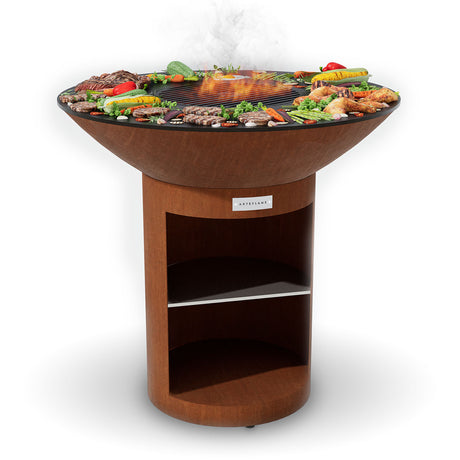
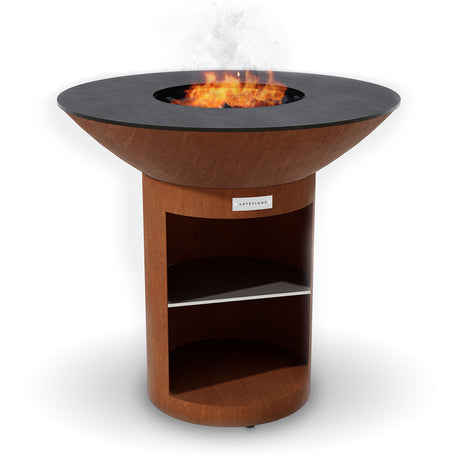
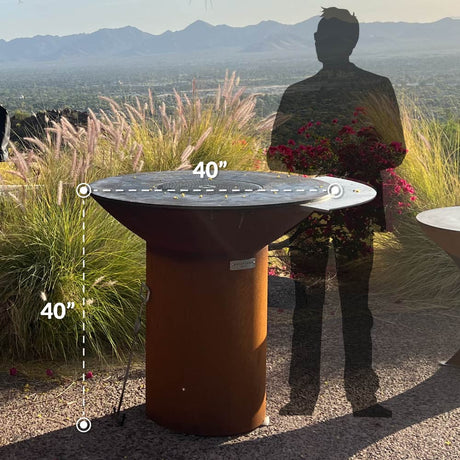
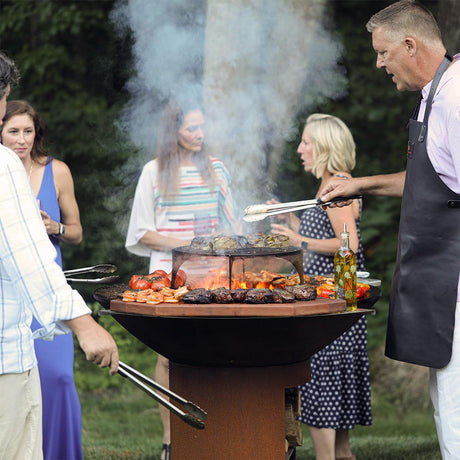
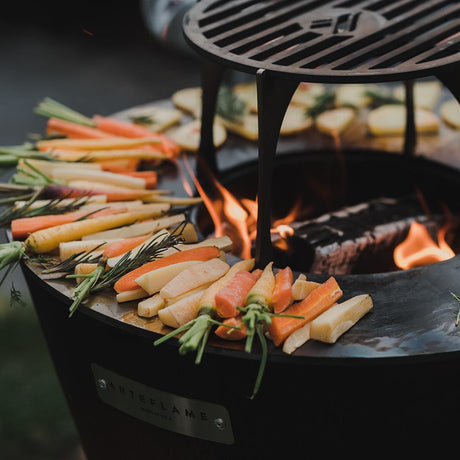






Turn yesterday's leftover macaroni into today's crispy, golden side dish with this easy wood-fired recipe.

Master this Texas-style open-fire brisket cooked entirely on the Arteflame grill. By searing on the center grate and wrapping to render on the flat top, you get perfectly tender, juicy...

Transform standard thick-cut bacon into a sweet, savory appetizer with a dark stout and brown sugar glaze, perfectly caramelized on a flat-top grill.

Render the perfect crispy skin with these Sichuan Peppercorn Duck Breasts, paired with a smoky, sweet, and spicy charred plum-poblano sauce.

Tender artichoke halves charred over high heat and smothered in rich garlic butter and Parmesan cheese.

Achieve the ultimate crust with this low-and-slow beef brisket recipe, utilizing natural heat zones for a perfect sear and incredibly tender finish.

Transform the trending crispy rice paper dumplings into a wood-fired masterpiece. Cooked on the Arteflame flat steel griddle for a shatteringly crisp crust and savory, high-protein filling.

Elevate albacore tuna with a steakhouse-style bacon wrap and a decadent green peppercorn cream sauce, grilled flawlessly on a flat-top.