
Crisp and Golden Mac and Cheese Cakes on the Grill
Turn yesterday's leftover macaroni into today's crispy, golden side dish with this easy wood-fired recipe.


For convenience and speed, gas grills win; they turn on instantly and hold steady low temperatures. However, for flavor and performance, charcoal and Kamado-style grills (like the Big Green Egg or Arteflame) are superior. They reach the 1,000°F+ temperatures required for steakhouse-quality searing and infuse food with a distinct smoky flavor that gas simply cannot replicate.
Before diving into the mechanics, review this data comparison to see which grill style matches your cooking goals.
| Feature | Gas Grill | Big Green Egg (Kamado) | Arteflame (Charcoal Griddle) |
|---|---|---|---|
| Max Temperature | ~500°F - 600°F | ~750°F+ | 1,000°F+ |
| Heat Up Time | Instant (5-10 mins) | Slow (30-45 mins) | Moderate (15-20 mins) |
| Flavor Profile | Neutral / Flat | Smoky / Wood-Fired | Rich / Smoky / Seared |
| Durability | Low (Parts rust/fail) | Medium (Ceramic can crack) | High (Solid Steel) |
| Cooking Surface | Open Grates | Open Grates | Solid Carbon Steel Griddle |
The primary complaint against gas grills is their inability to achieve a true, crusty sear on meats. This is a physics issue, not just a brand issue.
Gas grills rely heavily on convection (hot air circulating around the food). Air is a poor conductor of heat. Even if the internal thermometer reads 500°F, the heat transfer to the meat is inefficient, often resulting in gray banding rather than a crisp crust.
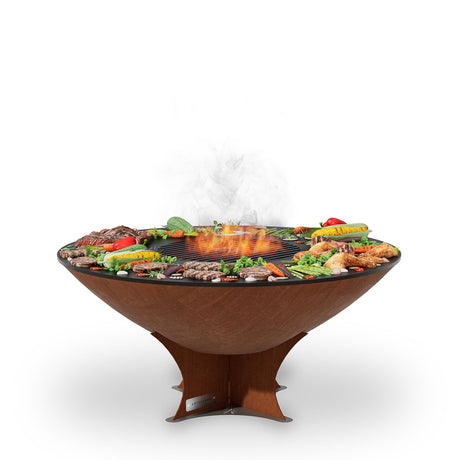
Charcoal and wood grills, particularly those with solid steel cooktops like the Arteflame, utilize conduction. The fire directly heats the steel surface, which transfers energy immediately to the food upon contact.
Pro Tip: For the perfect Maillard reaction (the browning that equals flavor), you need surface temperatures above 700°F. Most gas grills top out well below this, while charcoal grills easily exceed it.
Yes, and the science backs it up. The flavor difference comes from two sources: the fuel itself and the vaporization of drippings.
When fat and juices drip onto hot coals or a super-heated wood fire, they vaporize instantly, sending aromatic smoke back up into the meat. On a gas grill, these juices often hit burner covers, creating bitter flare-ups rather than flavorful smoke.
Gas (propane or natural gas) is odorless when burned efficiently, adding no flavor. Charcoal and wood provide distinct aromatic profiles (hickory, oak, mesquite) that act as an ingredient in your cooking.
Gas grills are complex machines with burners, igniters, tubes, and valves. Over time, grease clogs these ports, and moisture causes rust. The average lifespan of a big-box store gas grill is often 3 to 5 years before parts need replacing.
Ceramic grills like the Big Green Egg offer excellent heat retention but are fragile. If tipped over or struck, the ceramic can crack, which is often not covered by warranty if deemed "accidental damage."
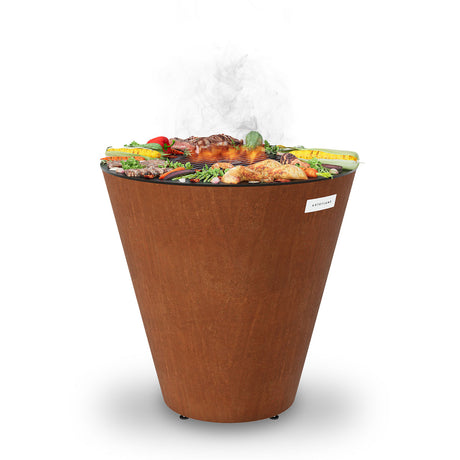
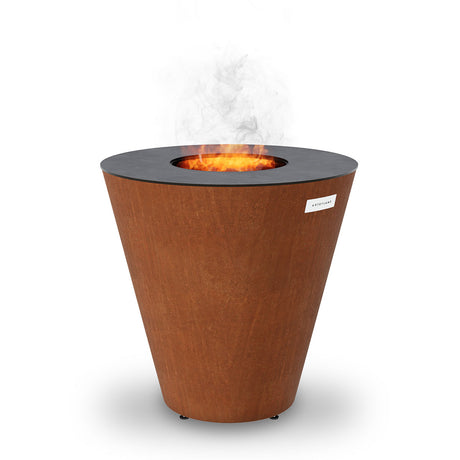
The Arteflame is built from Corten steel and carbon steel. It contains no moving parts to break and no ceramics to crack. It is designed to be left outside year-round without a cover, developing a protective patina over time.
Pro Tip: Look for a grill with a "seasonable" surface. Carbon steel cooktops absorb oil and polymerize over time—similar to a cast-iron skillet—becoming naturally non-stick and easier to clean the more you use them.
Gas burns cleaner in terms of particulate matter, but charcoal (specifically lump charcoal) is natural wood carbon. To keep charcoal grilling healthy, avoid using lighter fluids and minimize charring meat to reducing potential carcinogens.
Yes, you can use a smoker box with wood chips in a gas grill, but it will not replicate the intense heat or deep flavor profile of a fuel-based fire. The smoke tends to be thinner and less penetrating.
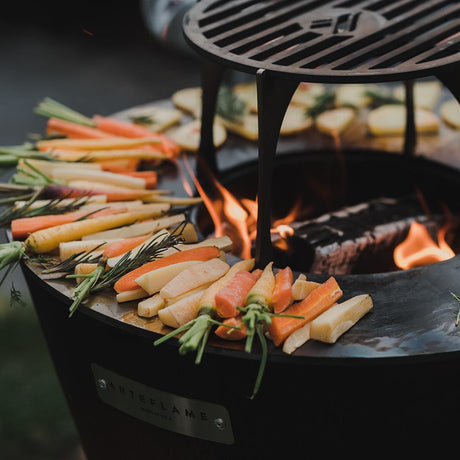
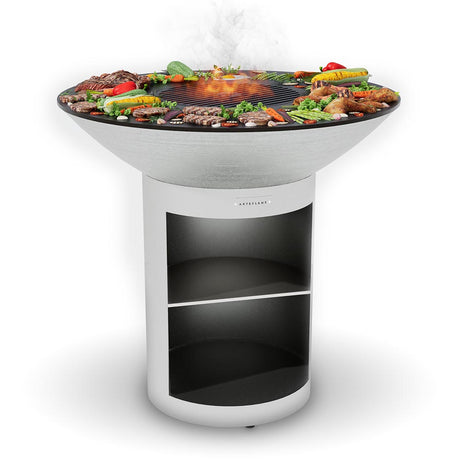
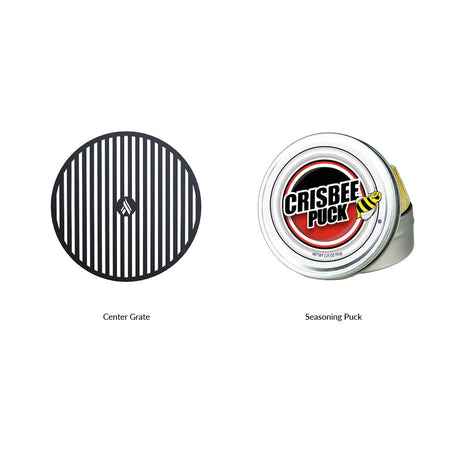
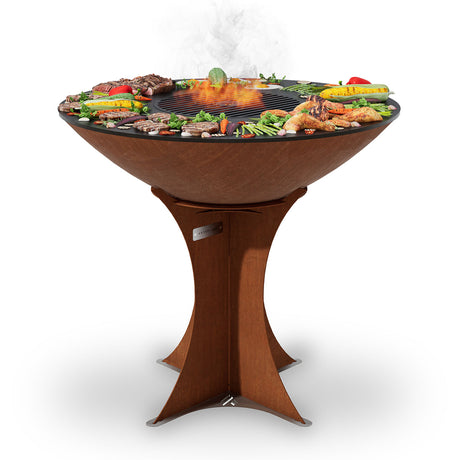
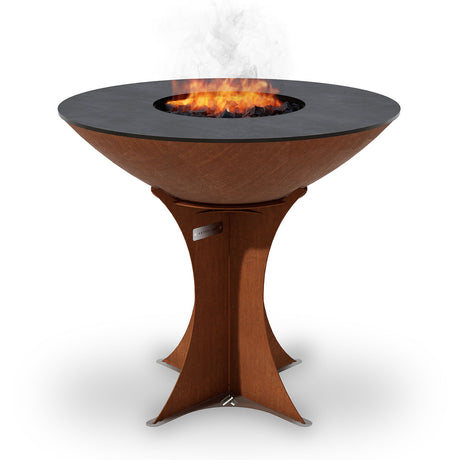
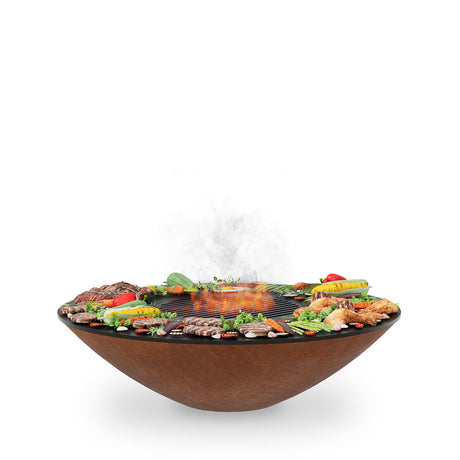
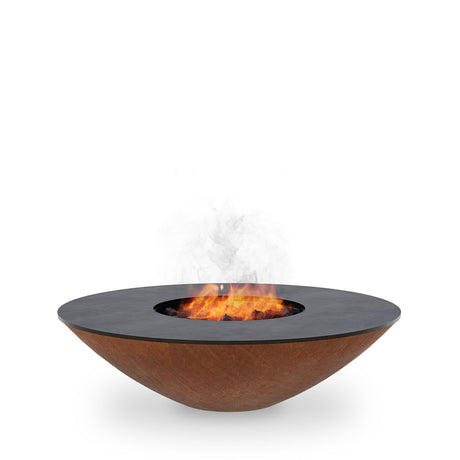
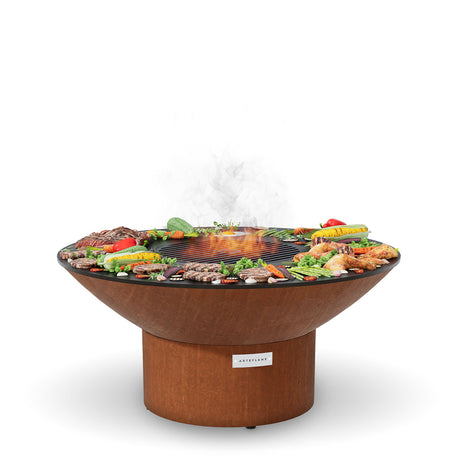
It functions as both a high-heat grill and a flat-top griddle. The center grate allows for open-flame grilling, while the surrounding solid steel cooktop allows you to cook vegetables, eggs, and seafood that would fall through standard gas grates.
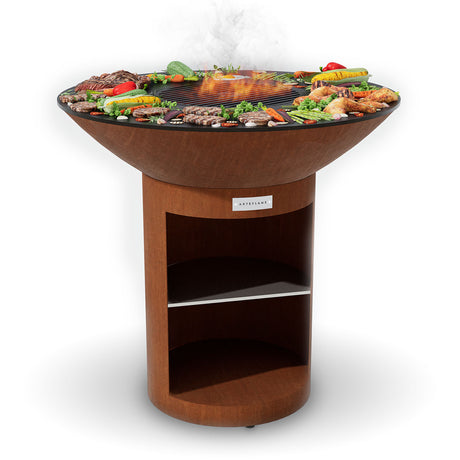
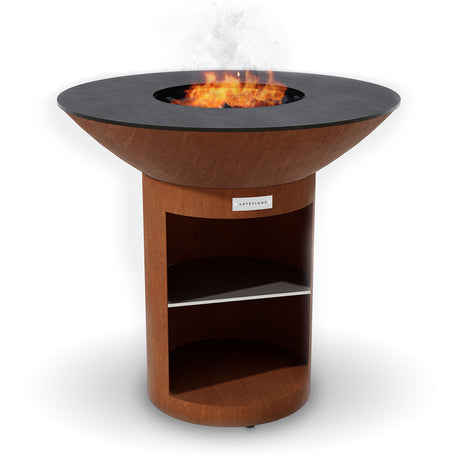
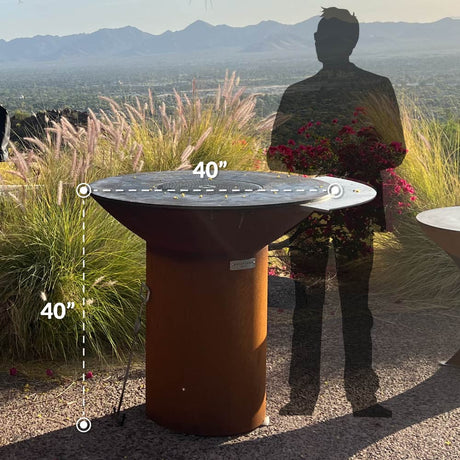
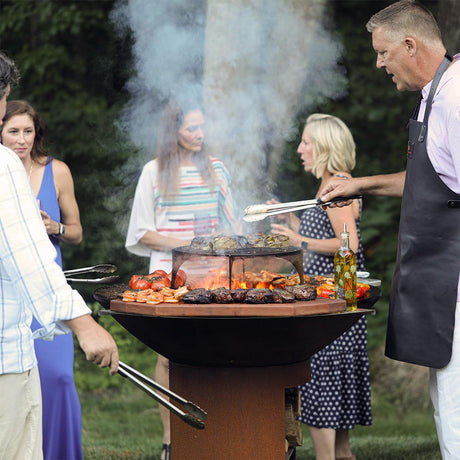






Turn yesterday's leftover macaroni into today's crispy, golden side dish with this easy wood-fired recipe.

Master this Texas-style open-fire brisket cooked entirely on the Arteflame grill. By searing on the center grate and wrapping to render on the flat top, you get perfectly tender, juicy...

Transform standard thick-cut bacon into a sweet, savory appetizer with a dark stout and brown sugar glaze, perfectly caramelized on a flat-top grill.

Render the perfect crispy skin with these Sichuan Peppercorn Duck Breasts, paired with a smoky, sweet, and spicy charred plum-poblano sauce.

Tender artichoke halves charred over high heat and smothered in rich garlic butter and Parmesan cheese.

Achieve the ultimate crust with this low-and-slow beef brisket recipe, utilizing natural heat zones for a perfect sear and incredibly tender finish.

Transform the trending crispy rice paper dumplings into a wood-fired masterpiece. Cooked on the Arteflame flat steel griddle for a shatteringly crisp crust and savory, high-protein filling.

Elevate albacore tuna with a steakhouse-style bacon wrap and a decadent green peppercorn cream sauce, grilled flawlessly on a flat-top.