
Crisp and Golden Mac and Cheese Cakes on the Grill
Turn yesterday's leftover macaroni into today's crispy, golden side dish with this easy wood-fired recipe.


While cast iron is a traditional favorite, it suffers from significant drawbacks including excessive weight, brittleness, and a susceptibility to rust that requires constant vigilance. Carbon steel offers a superior alternative, providing the same high-heat searing capability but with a smoother surface, lighter weight, and drastically better durability against thermal shock and physical impact.
Before investing in outdoor cookware, it is critical to understand how the materials behave under fire. While both retain heat well, their structural composition leads to vastly different cooking experiences. Carbon steel (used in Arteflame grills) solves the biggest pain points of traditional cast iron.
| Feature | Cast Iron Griddle | Carbon Steel Griddle |
|---|---|---|
| Weight | Extremely Heavy & Cumbersome | Lighter & Easier to Maneuver |
| Durability | Brittle (Can Crack if Dropped) | Tough & Malleable (Will Not Crack) |
| Surface Texture | Granular & Rough | Ultra-Smooth & Uniform |
| Heat Up Time | Slow to Absorb Heat | Rapid Heat Absorption |
| Maintenance | High (Prone to Rust) | Moderate (Seasons Quickly) |
Cast iron is made by pouring molten metal into a mold. This process creates a crystalline structure that is rigid but extremely brittle. If you accidentally drop a cast iron griddle on a patio or stone surface, it is highly likely to crack or shatter.
Furthermore, the surface of cast iron is microscopic peaks and valleys. While this holds seasoning eventually, it also creates pockets where moisture can hide, leading to rapid rusting if the seasoning layer is compromised even slightly.
Pro Tip: Unlike cast iron, carbon steel is rolled rather than cast. This manufacturing process aligns the metal grain, making it incredibly tough. You can drop a carbon steel griddle repeatedly, and while it might dent, it will never shatter or crack.
Yes, significantly. Cast iron has a rough, pebbly finish. To get a non-stick surface, you must build up many layers of seasoning to fill in the texture. This takes time and patience.
Carbon steel is ultra-smooth right out of the box. This allows for an even contact with your food, resulting in a better sear (the Maillard reaction) and a naturally non-stick surface that develops much faster than cast iron.
Because cast iron is so bulky, it takes a long time to come up to temperature. This can lead to hot spots if the fire isn't perfectly distributed. Carbon steel conducts heat more efficiently, allowing the griddle to heat up faster and respond more quickly to changes in temperature, giving you more control over your cooking.
For many outdoor chefs, the sheer weight of cast iron is a major disadvantage. Moving a large cast iron grate or griddle to clean it or refill charcoal can be a back-breaking task. This often discourages users from cleaning the grill properly.
Pro Tip: Information Gain: The lighter nature of carbon steel doesn't just make it portable; it makes daily maintenance easier. Because you don't dread lifting it, you are more likely to clean and oil it regularly, extending the lifespan of your grill significantly.
Cast iron rusts quickly because its porous, granular surface traps moisture and humidity. If the protective seasoning layer is scratched or not applied perfectly, oxidation begins almost immediately upon exposure to air.
Yes, you can use metal spatulas and scrapers on carbon steel without worry. Unlike Teflon or ceramic coatings, carbon steel is solid metal, so you can scrape it clean aggressively to remove food residue without damaging the surface.
The concept is the same—polymerizing oil to create a non-stick coating—but carbon steel seasons easier. Because the surface is smoother, the oil bonds more evenly, creating a slicker cooking surface in fewer uses compared to rough cast iron.
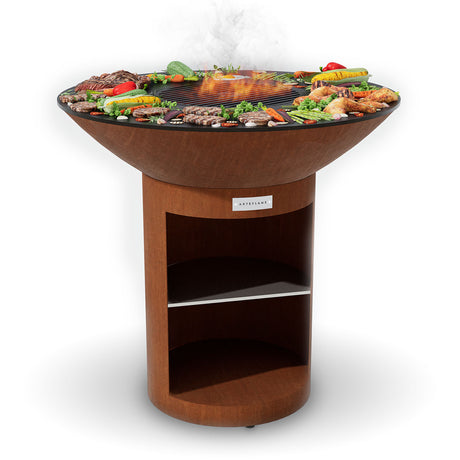
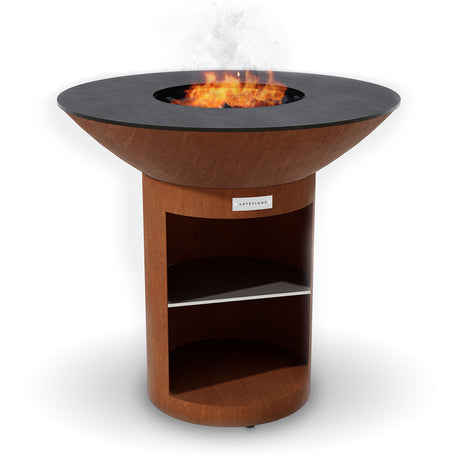
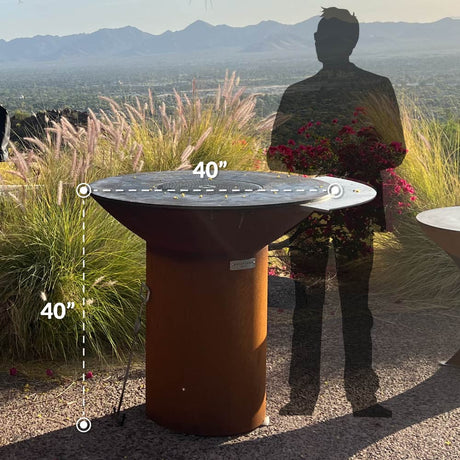
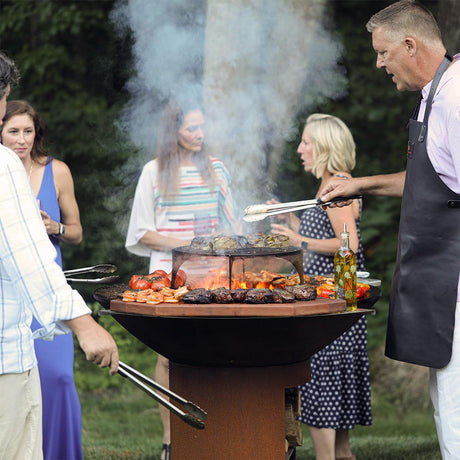
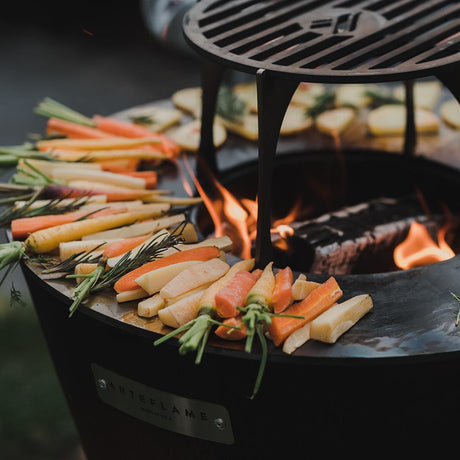

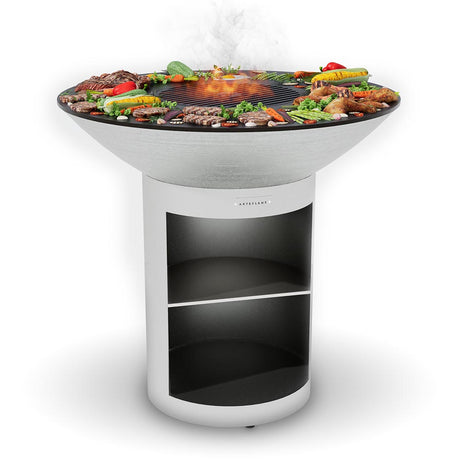
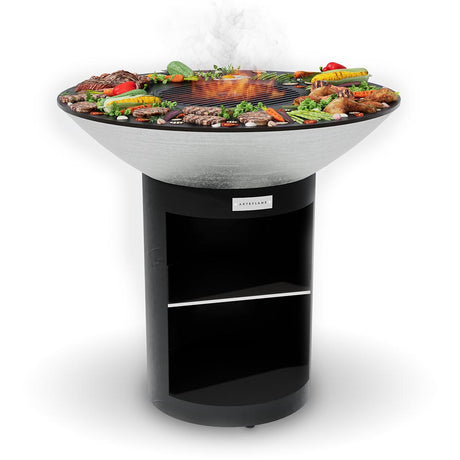


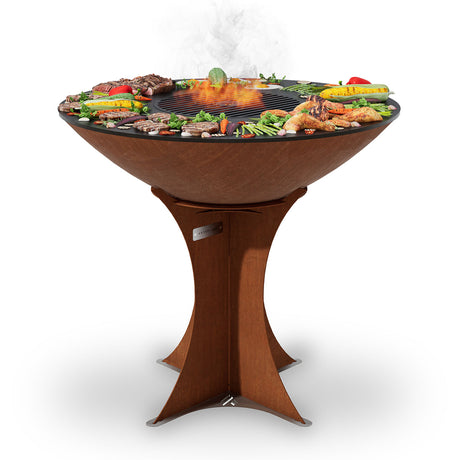
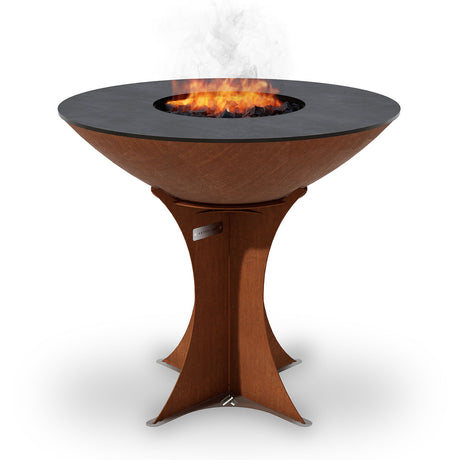


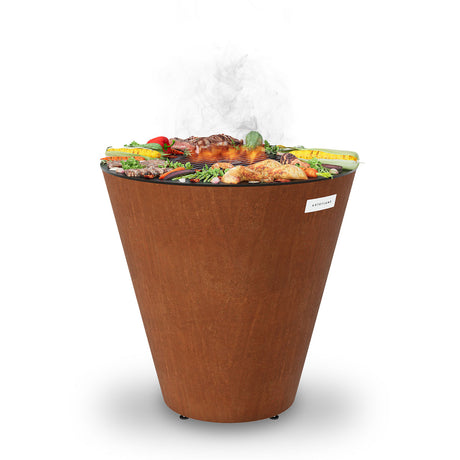
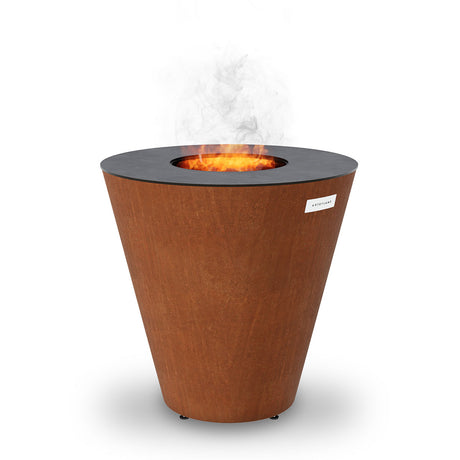


Turn yesterday's leftover macaroni into today's crispy, golden side dish with this easy wood-fired recipe.

Master this Texas-style open-fire brisket cooked entirely on the Arteflame grill. By searing on the center grate and wrapping to render on the flat top, you get perfectly tender, juicy...

Transform standard thick-cut bacon into a sweet, savory appetizer with a dark stout and brown sugar glaze, perfectly caramelized on a flat-top grill.

Render the perfect crispy skin with these Sichuan Peppercorn Duck Breasts, paired with a smoky, sweet, and spicy charred plum-poblano sauce.

Tender artichoke halves charred over high heat and smothered in rich garlic butter and Parmesan cheese.

Achieve the ultimate crust with this low-and-slow beef brisket recipe, utilizing natural heat zones for a perfect sear and incredibly tender finish.

Transform the trending crispy rice paper dumplings into a wood-fired masterpiece. Cooked on the Arteflame flat steel griddle for a shatteringly crisp crust and savory, high-protein filling.

Elevate albacore tuna with a steakhouse-style bacon wrap and a decadent green peppercorn cream sauce, grilled flawlessly on a flat-top.