
Crisp and Golden Mac and Cheese Cakes on the Grill
Turn yesterday's leftover macaroni into today's crispy, golden side dish with this easy wood-fired recipe.


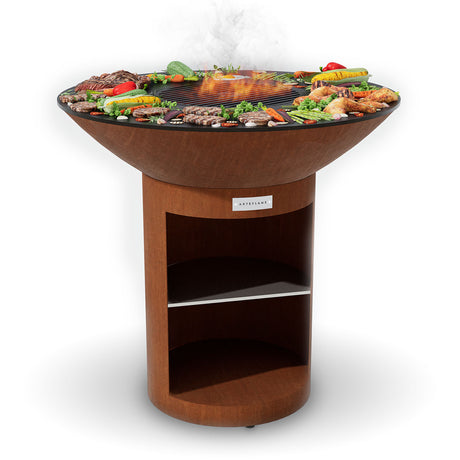
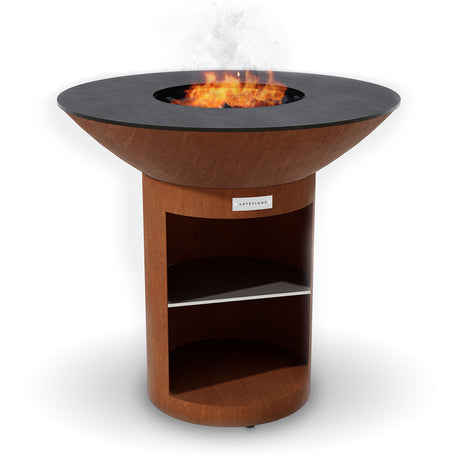
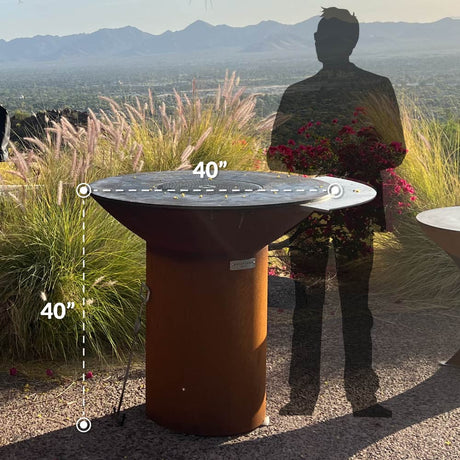
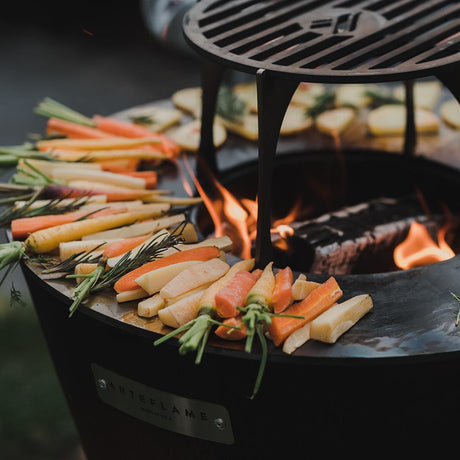
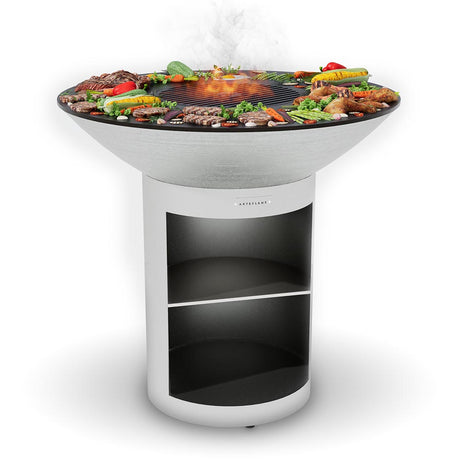
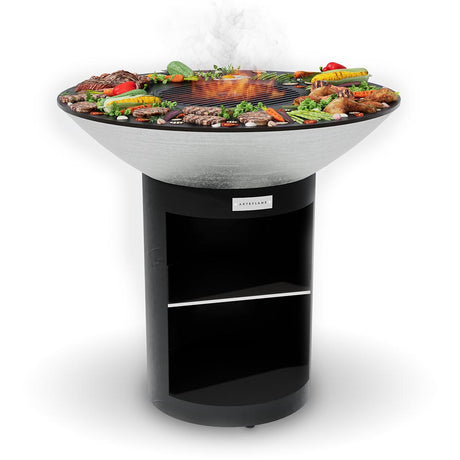
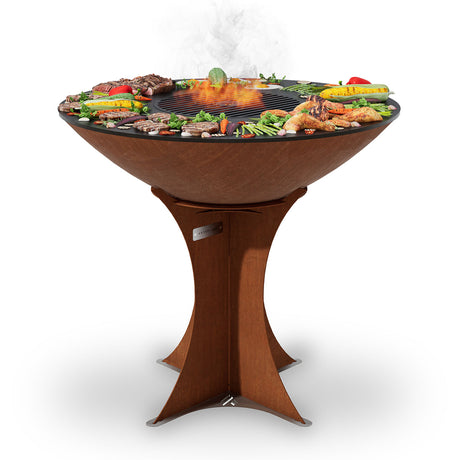
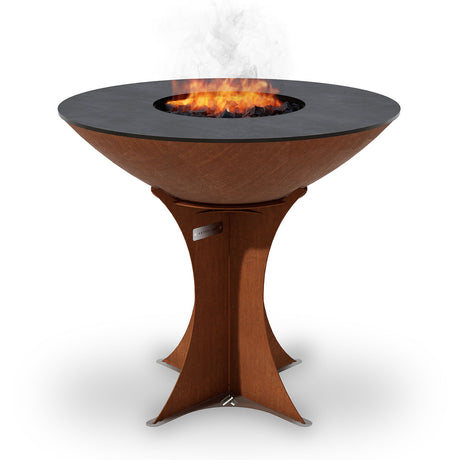
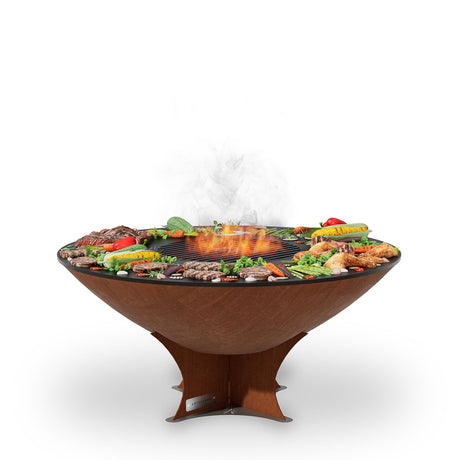
A combination grill and griddle offers the ultimate versatility by pairing high-heat open fire grilling with a solid steel flat top. This design allows you to sear steaks at over 1,000°F on the center grate while simultaneously sautéing vegetables, eggs, or delicate seafood on the surrounding griddle without anything falling through. Unlike traditional gas grills, the solid carbon steel surface improves flavor through the Maillard reaction and creates distinct heat zones for cooking an entire meal at once.
The primary advantage of the Arteflame combination design is the elimination of the "single-temperature" limitation found in standard kettle or gas grills. By utilizing a fire bowl design, heat radiates from the center out, creating natural temperature gradients.
| Feature | Arteflame Combo Grill | Standard Gas Grill | Charcoal Kettle |
|---|---|---|---|
| Temperature Range | 250°F to 1,200°F+ (Multi-zone) | 400°F to 600°F (Uniform) | Varies (Hard to control) |
| Surface Versatility | Grill grate + Flat top griddle | Open grates only | Open grates only |
| Food Retention | 100% (Nothing falls through) | Small items fall through | Small items fall through |
| Flavor Profile | Wood-fired + Maillard Sear | Propane taste (often) | Smoky/Charcoal |
| Maintenance | Scrape into fire (Seasoned oil) | Grease trap cleaning | Ash removal |
This dual-surface capability means you no longer need separate equipment for breakfast, lunch, and dinner. The flat top acts as a radiator, ensuring even cooking for everything from pancakes to smash burgers.
The solid surface of a griddle dramatically expands your outdoor menu. Because there are no open slots for food to drop into the fire, you can cook ingredients that are usually reserved for an indoor kitchen skillet.
Pro Tip: Use the "Reverse Sear" Shortcut
For thick steaks (like Ribeyes or Tomahawks), start them on the cooler outer edge of the flat top griddle to bring the internal temperature up slowly. Once they near your target doneness, move them to the center grill grate for a 1-minute high-heat sear. This guarantees edge-to-edge pinkness with a professional crust.
Yes, and it comes down to science. On a traditional grate grill, juices drip onto the coals or burners. While this creates some smoke, much of the fat is lost. On a combination flat top, the food cooks in its own juices and seasoned oils.
When cooking on an Arteflame, the juices that do run off the inner edge of the griddle drip directly into the fire. This creates an immediate burst of flavorful smoke that rises back up and infuses the food sitting on the ring. You get the benefits of iron-searing (like a cast iron skillet) combined with the wood-fired aroma of a campfire.
Cleaning a solid steel griddle is significantly faster than scrubbing wire racks. Because the cooktop is seasoned with oil (similar to cast iron), food residue creates a non-stick layer over time rather than sticking stubbornly.
Pro Tip: The "Onion Clean" Trick
If you don't have a cleaning pad handy, cut a raw onion in half. Stick a fork in the rounded side and rub the cut side vigorously over the hot griddle surface. The natural enzymes in the onion help break down carbon buildup and season the grill simultaneously.
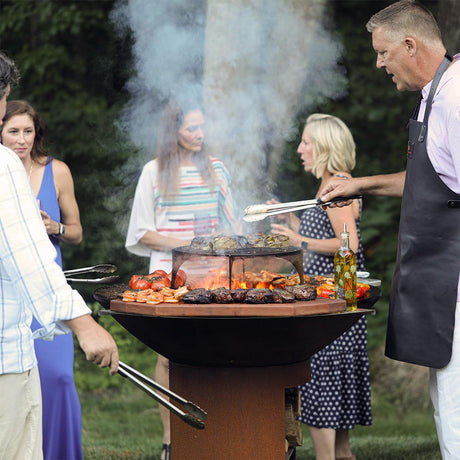
The circular shape of the Arteflame isn't just aesthetic; it changes the social dynamic of grilling. Traditional grills force the chef to turn their back on guests and face a wall or the grill lid.
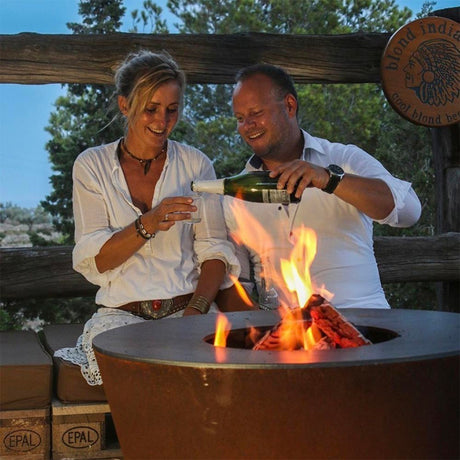
With a 360-degree combination grill, the fire is the centerpiece. Guests can gather around the fire bowl, warm their hands, and even cook their own food on their section of the griddle. It turns meal prep into a communal "Hibachi-style" experience right in your backyard.
Yes, Arteflame grills are designed to be left outside in all seasons. The corten steel base develops a protective patina, and if the cooktop is kept well-oiled (seasoned), it resists rust even in snow and rain.
Hardwoods like oak, hickory, or pecan are best for flavor and heat longevity. Charcoal can also be used, but wood provides the essential flame contact needed for the center grill grate to reach searing temperatures.
Generally, it takes about 20 to 30 minutes for the fire to build up enough thermal mass to heat the steel cooktop evenly. Once heated, the heavy steel retains heat for hours, making it efficient for cooking for large groups.




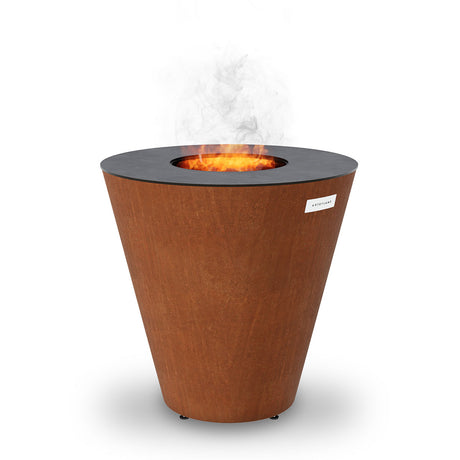
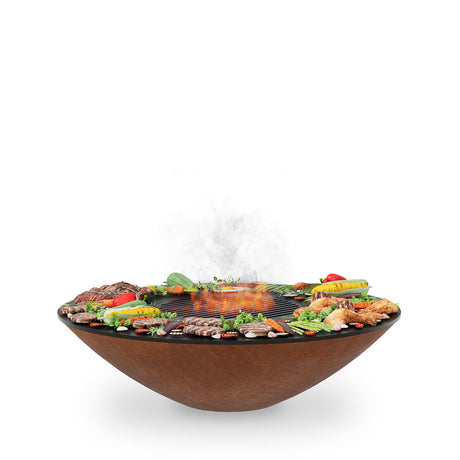
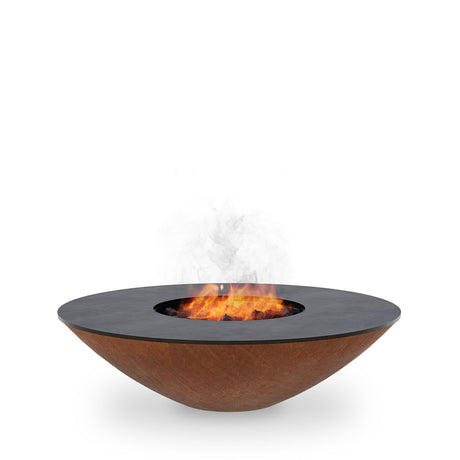
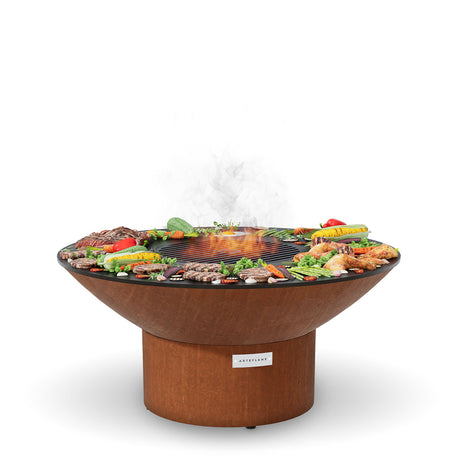


Turn yesterday's leftover macaroni into today's crispy, golden side dish with this easy wood-fired recipe.

Master this Texas-style open-fire brisket cooked entirely on the Arteflame grill. By searing on the center grate and wrapping to render on the flat top, you get perfectly tender, juicy...

Transform standard thick-cut bacon into a sweet, savory appetizer with a dark stout and brown sugar glaze, perfectly caramelized on a flat-top grill.

Render the perfect crispy skin with these Sichuan Peppercorn Duck Breasts, paired with a smoky, sweet, and spicy charred plum-poblano sauce.

Tender artichoke halves charred over high heat and smothered in rich garlic butter and Parmesan cheese.

Achieve the ultimate crust with this low-and-slow beef brisket recipe, utilizing natural heat zones for a perfect sear and incredibly tender finish.

Transform the trending crispy rice paper dumplings into a wood-fired masterpiece. Cooked on the Arteflame flat steel griddle for a shatteringly crisp crust and savory, high-protein filling.

Elevate albacore tuna with a steakhouse-style bacon wrap and a decadent green peppercorn cream sauce, grilled flawlessly on a flat-top.