
Crisp and Golden Mac and Cheese Cakes on the Grill
Turn yesterday's leftover macaroni into today's crispy, golden side dish with this easy wood-fired recipe.


Quick Take: Yes, and it comes down to chemistry. Charcoal is wood that has already been burned (carbonized), meaning the organic flavor compounds have been stripped away. Wood fire grilling preserves Guaiacol, an organic compound in wood fibers that creates that signature deep, smoky, and bacon-like flavor profile. For the best flavor, skip the pre-burnt briquettes and cook over real hardwood embers.
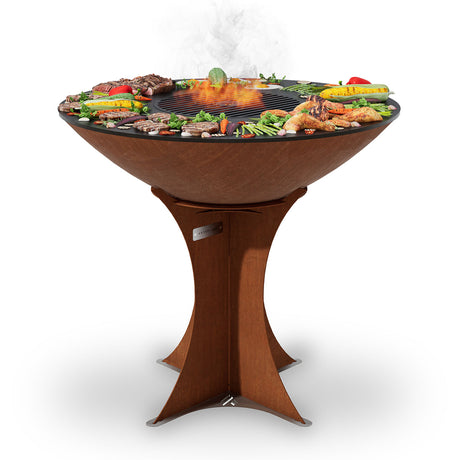
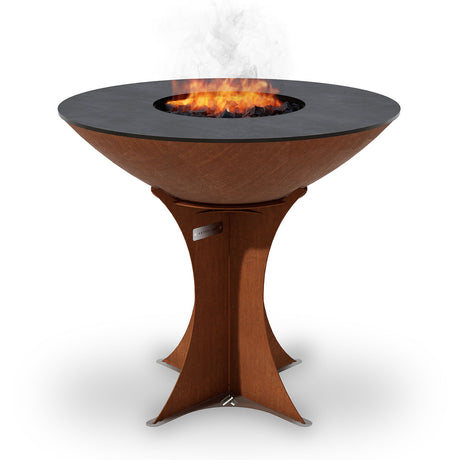
Before diving into the science, use this comparison to understand how your fuel source impacts heat, flavor, and cooking versatility.
| Feature | Cheap Charcoal Grill | Wood Fire Grill (e.g., Arteflame) |
|---|---|---|
| Primary Fuel Source | Carbonized Briquettes or Lump Charcoal | Raw Hardwood (Oak, Hickory, Pecan) |
| Flavor Profile | Neutral, mild smokiness (often chemical if using lighter fluid) | Complex, rich, aromatic (Guaiacol-infused) |
| Heat Output | Inconsistent; loses heat quickly | High, sustained heat; exceeds 1,000°F+ |
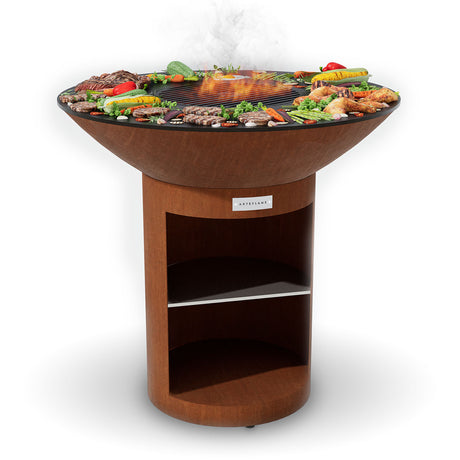
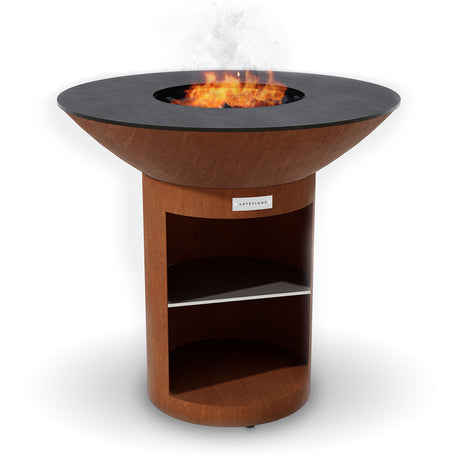
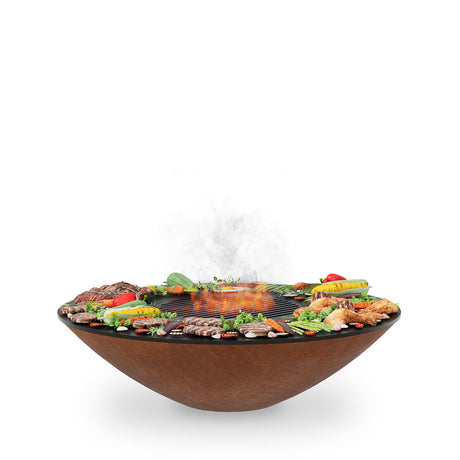
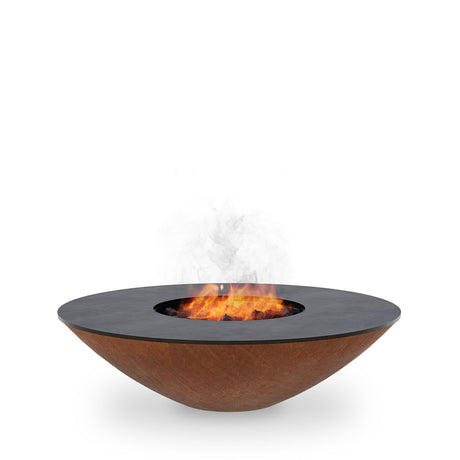
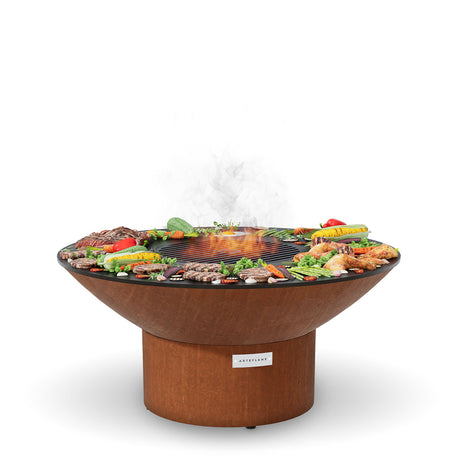
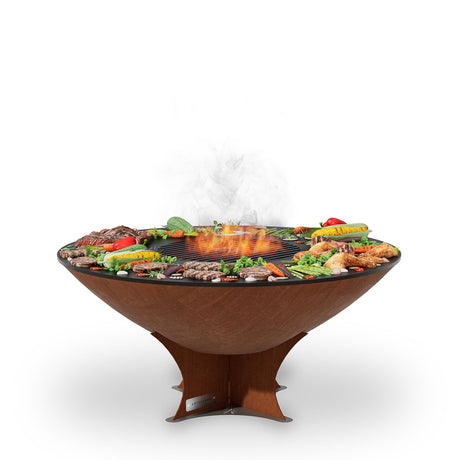
| Cooking Surface | Open wire grates (flare-ups common) | Solid Carbon Steel Griddle (no flare-ups) |
| Versatility | Direct grilling only | Direct grilling + Griddle searing zones |
Many grillers assume charcoal and wood are interchangeable, but they are chemically distinct. Charcoal is essentially pure carbon. To make charcoal, wood is burned in a low-oxygen environment, a process that burns off water, sap, and—crucially—the organic flavor molecules.
When you cook with charcoal, you are cooking with a fuel that has already been spent. While it provides heat, it acts as a neutral heat source rather than a flavor enhancer. The "charcoal flavor" people describe is often just the smell of the lighting agents or the food drippings hitting hot coals, not the fuel itself.
Pro Tip: To reintroduce flavor into a charcoal grill, you must add unsoaked wood chunks directly to the coals. However, a dedicated wood-fired flat top generates this flavor naturally while maintaining higher searing temperatures.
The superior taste of wood-fired food comes from a molecule called Guaiacol. This compound is produced when the lignin (the stiff part of the wood) creates smoke at high temperatures.
Flavor isn't just about smoke; it is about texture. The second component of a perfect steak is the Maillard Reaction. This chemical reaction between amino acids and reducing sugars gives browned food its distinctive flavor.
Cheap charcoal grills with thin wire grates struggle to produce an even sear. They often result in:
The Solution: Using a solid carbon steel cooktop (like an Arteflame) allows for a 100% surface contact sear. This maximizes the Maillard reaction across the entire steak, not just on grid lines, locking in juices and flavor.
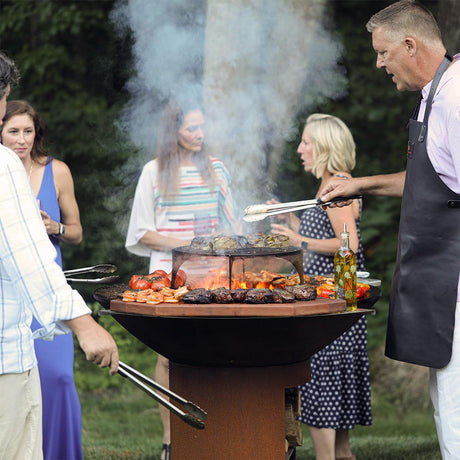
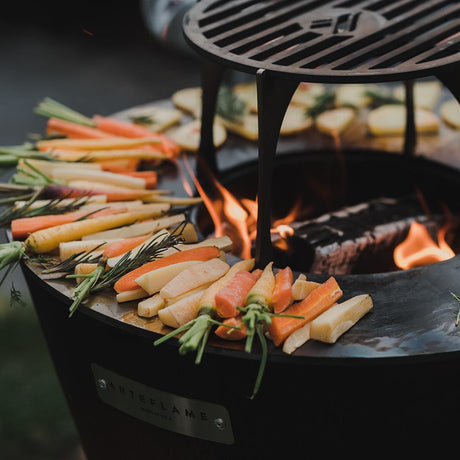
Pro Tip: For the ultimate reverse sear, smoke your steak on the cooler outer edge of the wood fire grill first to absorb the Guaiacol, then move it to the center ring (closest to the fire) for a 1,000°F+ finish.
Generally, yes. Cheap charcoal briquettes often contain chemical binders, fillers, and accelerants (lighter fluid) that can transfer into your food. Cooking with natural, seasoned hardwood eliminates these artificial chemicals.
Yes, you can use wood chunks or logs in a standard kettle grill, but airflow is often an issue. Charcoal grills are designed for low-oxygen burns, whereas wood requires significant airflow to burn clean and hot without producing thick, acrid white smoke.
Hardwoods are essential for high heat and good flavor. Oak is a fantastic all-rounder with a medium smoky flavor. Hickory offers a stronger "bacon-like" punch, while Fruitwoods (Cherry, Apple) are milder and better suited for pork or poultry.







Turn yesterday's leftover macaroni into today's crispy, golden side dish with this easy wood-fired recipe.

Master this Texas-style open-fire brisket cooked entirely on the Arteflame grill. By searing on the center grate and wrapping to render on the flat top, you get perfectly tender, juicy...

Transform standard thick-cut bacon into a sweet, savory appetizer with a dark stout and brown sugar glaze, perfectly caramelized on a flat-top grill.

Render the perfect crispy skin with these Sichuan Peppercorn Duck Breasts, paired with a smoky, sweet, and spicy charred plum-poblano sauce.

Tender artichoke halves charred over high heat and smothered in rich garlic butter and Parmesan cheese.

Achieve the ultimate crust with this low-and-slow beef brisket recipe, utilizing natural heat zones for a perfect sear and incredibly tender finish.

Transform the trending crispy rice paper dumplings into a wood-fired masterpiece. Cooked on the Arteflame flat steel griddle for a shatteringly crisp crust and savory, high-protein filling.

Elevate albacore tuna with a steakhouse-style bacon wrap and a decadent green peppercorn cream sauce, grilled flawlessly on a flat-top.