
Crisp and Golden Mac and Cheese Cakes on the Grill
Turn yesterday's leftover macaroni into today's crispy, golden side dish with this easy wood-fired recipe.


Quick Take: While gas grills offer push-button convenience and rapid heating, they struggle to replicate the deep, smoky flavor profile of charcoal or wood-fired grilling. Charcoal grills reach significantly higher temperatures (up to 1,000°F+), essential for the perfect steak sear and the chemical process known as the Maillard reaction. If your priority is authentic flavor and juicy textures, charcoal wins; if your priority is weeknight speed, gas wins.
Use this data to determine which grill fits your cooking style. Note that hybrid wood/charcoal grills like the Arteflame bridge the gap between high heat and versatility.
| Feature | Gas Grill (Propane) | Traditional Charcoal | Arteflame (Wood/Charcoal) |
|---|---|---|---|
| Max Temperature | ~500°F - 600°F | ~700°F - 800°F | 1,000°F+ |
| Flavor Profile | Neutral, no smoke | Smoky, classic BBQ | Rich wood-fired aroma |
| Heat Up Time | 10-15 Minutes | 20-30 Minutes | 15-20 Minutes |
| Moisture Retention | Low (Dries food out) | High (Sears juices in) | Highest (Solid griddle surface) |
| Versatility | Grates only | Grates / Smoking | Grates + Flat Top Griddle |
The primary argument for charcoal is flavor. This isn't just subjective; it is chemistry. When meat drippings hit hot coals or wood, they vaporize into flavor-packed smoke that infuses the food. This creates Guaiacol, an aroma compound responsible for the "bacon-like" taste associated with high-quality BBQ.
Gas grills rely on metal heat deflectors. While convenient, these do not generate the same vaporization effect. Furthermore, propane contains water vapor as a combustion byproduct. This excess moisture can steam the meat rather than sear it, often leading to a tougher, drier texture compared to the crispy exterior and juicy interior produced by dry wood heat.
Pro Tip: For the ultimate flavor boost, skip the lighter fluid, which adds a chemical taste. Use a chimney starter or, on an Arteflame, build a log cabin fire structure in the center to establish a clean, hot bed of coals naturally.
Yes, substantially. Most residential gas grills cap out around 500°F to 600°F. While this cooks food, it often fails to achieve a true steakhouse sear. Charcoal and wood fires can easily exceed 800°F to 1,000°F.
This extreme heat is crucial for the Maillard Reaction—the browning process that creates the savory crust on steaks and burgers. Because gas grills generally lack this radiant intensity, they often leave meat looking gray or pale unless cooked for too long, which compromises the internal doneness.
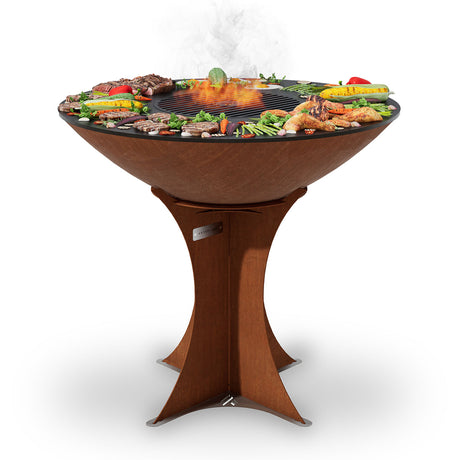
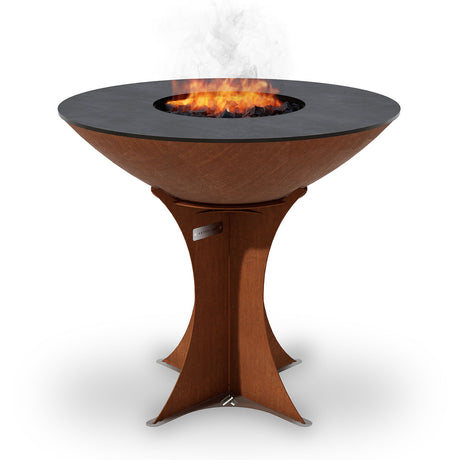
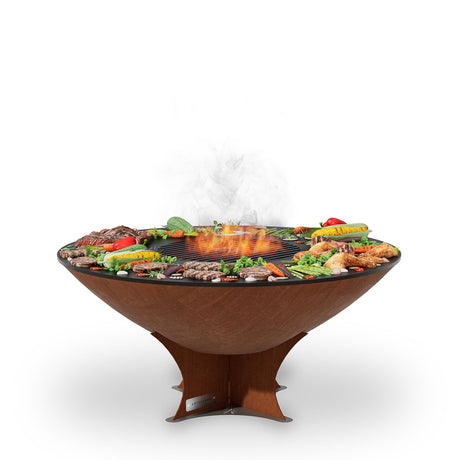
On a gas grill, changing temperatures requires adjusting knobs and waiting. With a charcoal grill, specifically designs like the Arteflame, you have instant access to heat zones. The center is hottest for searing, while the outer ring is cooler for veggies. You cook by moving the food, not the dial.
Traditional gas grills limit you to open grates. If you want to cook eggs, pancakes, or stir-fry veggies, you usually need separate pans or accessories. This is where modern charcoal designs have evolved.
Carbon Steel Cooktops: Grills that utilize a solid carbon steel flat top (plancha) allow you to cook everything from steaks to breakfasts simultaneously. The solid surface prevents flare-ups entirely—a common annoyance with gas grills where grease fires can char food instantly.
Pro Tip: Information Gain
Charcoal isn't just for high heat. By pushing coals to one side or utilizing the outer rim of a flat-top grill, you can maintain a "low and slow" zone perfect for reverse-searing thick cuts of meat like Tomahawk ribeyes.
Generally, a gas grill is cheaper to operate per cook because propane is inexpensive and efficient. However, charcoal grills often have a lower initial purchase price and fewer mechanical parts that break over time, potentially saving money on repairs.
Cooking at extremely high temperatures can create HCAs (heterocyclic amines), regardless of the heat source. However, you can mitigate this by marinating meat beforehand and flipping frequently. Using natural lump charcoal or wood instead of briquettes with additives also ensures a cleaner burn.
Yes, adding wood chunks to standard charcoal creates smoke flavor. However, grills designed specifically for wood firing (like Arteflame) are built with heavier steel to withstand the higher BTU output of burning logs without warping.
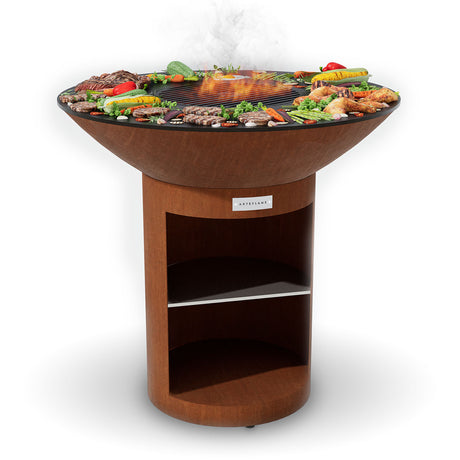
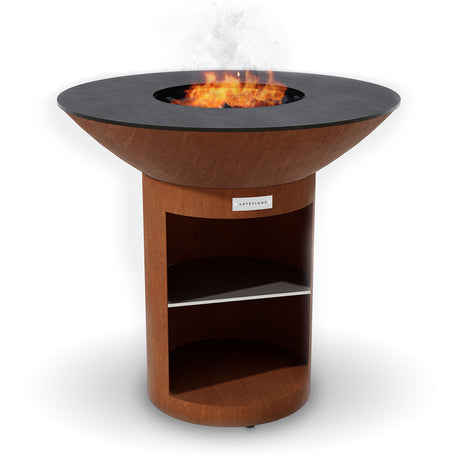
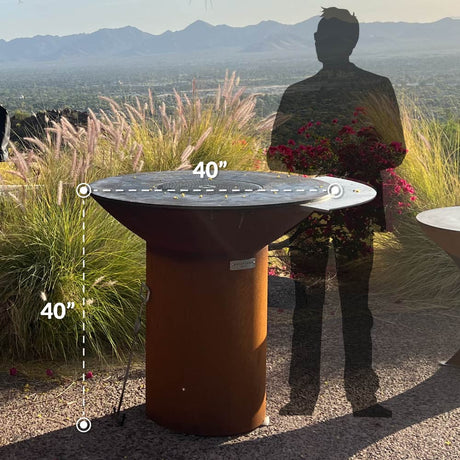
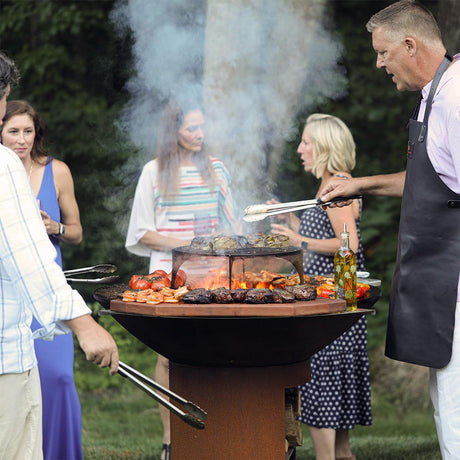
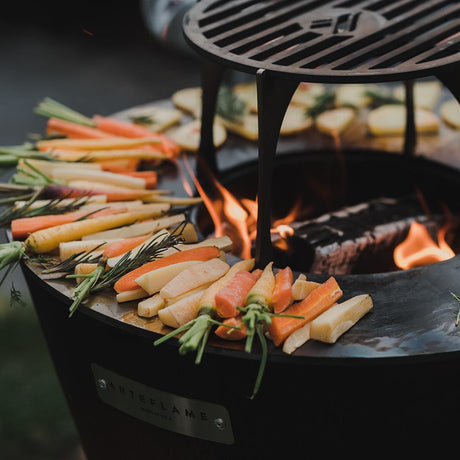




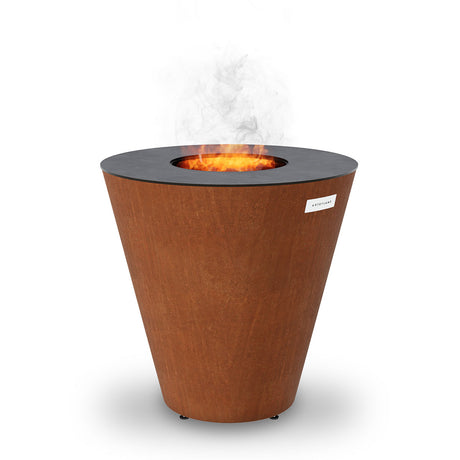
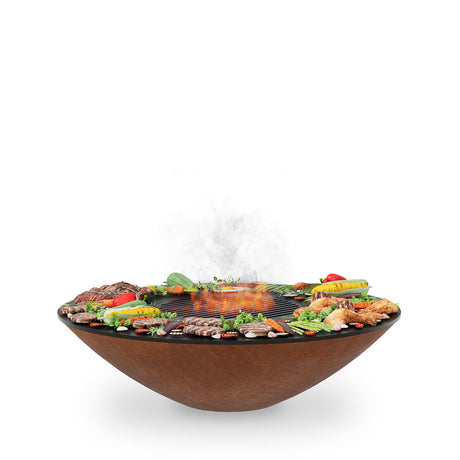
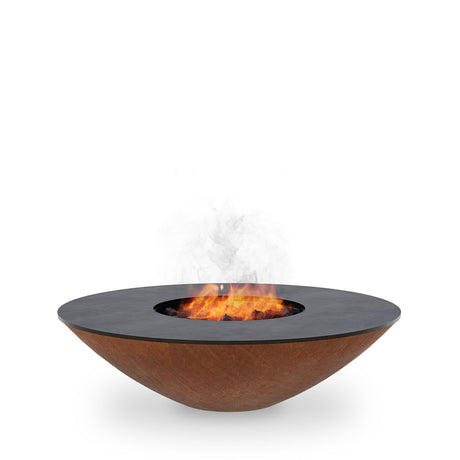
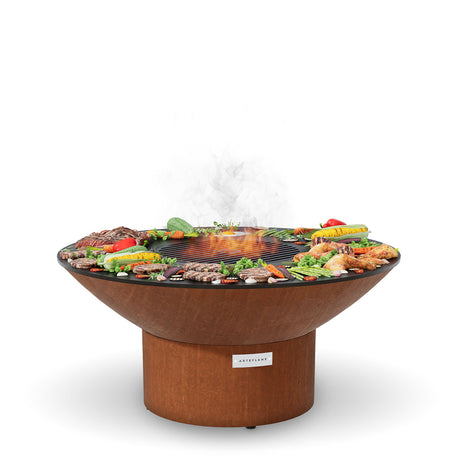


Turn yesterday's leftover macaroni into today's crispy, golden side dish with this easy wood-fired recipe.

Master this Texas-style open-fire brisket cooked entirely on the Arteflame grill. By searing on the center grate and wrapping to render on the flat top, you get perfectly tender, juicy...

Transform standard thick-cut bacon into a sweet, savory appetizer with a dark stout and brown sugar glaze, perfectly caramelized on a flat-top grill.

Render the perfect crispy skin with these Sichuan Peppercorn Duck Breasts, paired with a smoky, sweet, and spicy charred plum-poblano sauce.

Tender artichoke halves charred over high heat and smothered in rich garlic butter and Parmesan cheese.

Achieve the ultimate crust with this low-and-slow beef brisket recipe, utilizing natural heat zones for a perfect sear and incredibly tender finish.

Transform the trending crispy rice paper dumplings into a wood-fired masterpiece. Cooked on the Arteflame flat steel griddle for a shatteringly crisp crust and savory, high-protein filling.

Elevate albacore tuna with a steakhouse-style bacon wrap and a decadent green peppercorn cream sauce, grilled flawlessly on a flat-top.