
Crisp and Golden Mac and Cheese Cakes on the Grill
Turn yesterday's leftover macaroni into today's crispy, golden side dish with this easy wood-fired recipe.


When it comes to charcoal vs. gas grill flavor, the science is clear: charcoal and wood-fired grills produce superior taste. While gas grills offer convenience, they lack the ability to generate the aromatic compounds that define authentic BBQ. Gas combustion produces only water and carbon dioxide—both flavorless.
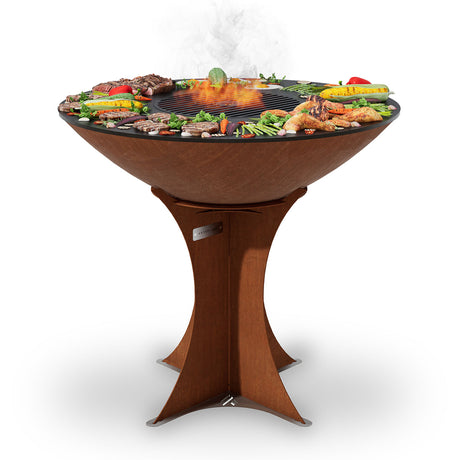
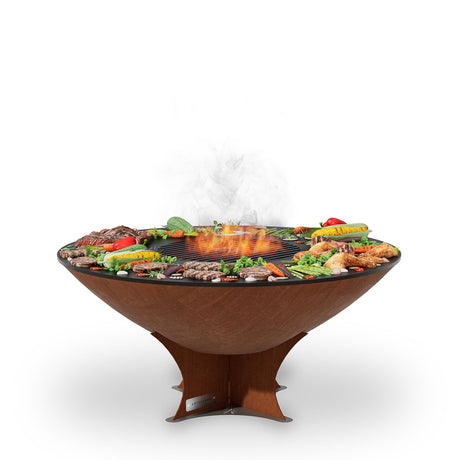
In contrast, charcoal and wood fire release guaiacol (a smoky, bacon-like aroma) and reach the extreme temperatures necessary for the Maillard reaction. For the ultimate flavor profile, a wood-fired flat-top grill (like the Arteflame) combines the high-heat searing of charcoal with the savory infusion of natural wood smoke, minus the chemical taste of propane.
To understand why food tastes different depending on your equipment, we must look at the fuel source. Below is a direct comparison of how different grills impact the flavor and texture of your food.
| Feature | Gas / Propane | Traditional Charcoal | Arteflame (Wood Fire) |
|---|---|---|---|
| Primary Flavor Profile | Neutral / Minimal | Smoky, Classic BBQ | Rich, Wood-Smoked, Savory |
| Maillard Reaction (Searing) | Moderate (often lacks heat) | High (can be uneven) | Maximum (consistent high heat) |
| Moisture Retention | Low (often dries food) | Moderate | High (plancha seals juices) |
| Chemical Byproducts | Uncombusted Propane | Lighter Fluid (if used) | None (100% Natural Wood/Lump) |
The Takeaway: Gas is strictly for convenience. If your priority is flavor depth and restaurant-quality searing, solid fuel (charcoal or wood) is the only viable option.
The distinct "grilled flavor" you crave comes from a specific molecule called guaiacol. This is produced when lignin (found in wood and charcoal) creates smoke as it burns. This smoke coats the meat, enhancing its natural taste.
Gas grills do not contain lignin. Therefore, they cannot produce guaiacol. When drippings hit the flavorizer bars of a gas grill, they produce a steam that mimics smoke, but it lacks the chemical complexity of real wood smoke.
Pro Tip: To maximize flavor on any grill, avoid lighter fluid. It leaves a petrochemical residue on food. Always use a chimney starter or, on an Arteflame, use natural fire starters with lump charcoal and hardwood.
Flavor isn't just about smoke; it's about chemistry. The Maillard reaction is the browning process that creates the savory crust on a steak. This reaction accelerates rapidly above 300°F (150°C).
Gas grills often struggle to maintain the high, consistent radiant heat needed for a perfect sear without drying out the meat. Charcoal and wood fires burn hotter and drier, allowing the crust to form instantly, sealing in the internal juices.
While charcoal is better than gas, traditional wire-grate charcoal grills have a downside: flare-ups. When fat drips directly onto the coals, it can burn and create acrid, bitter smoke (soot) that rises back onto the food.
Arteflame grills solve this issue using a solid carbon steel cooktop (plancha). The food sears on a solid surface while the fire burns in the center. This design ensures:
Pro Tip: Use the reverse-sear method on an Arteflame. Place your steak on the cooler outer edge of the cooktop to bring the internal temp up slowly, then finish it on the center edge near the flames for a steakhouse-quality crust.
Gas grills impart very little inherent flavor because propane and natural gas burn cleanly, producing water vapor and CO2. Any flavor comes from vaporized drippings hitting the heat shields, but this is significantly less potent than wood or charcoal smoke.
Charcoal grilling can produce HCAs (heterocyclic amines) if meat is charred excessively by direct flame flare-ups. Using a solid surface grill like an Arteflame mitigates this by preventing direct flame contact while still providing high-heat searing.
You can use a smoker box with wood chips to add some smoke, but it will not replicate the depth of flavor from a full wood or charcoal fire. The heat transfer in gas grills is convection-heavy, whereas wood fire provides radiant heat which cooks meat differently.
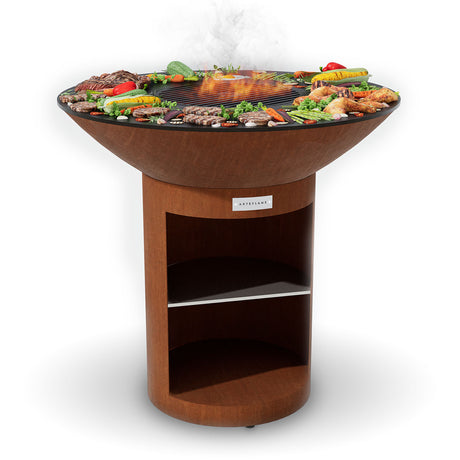
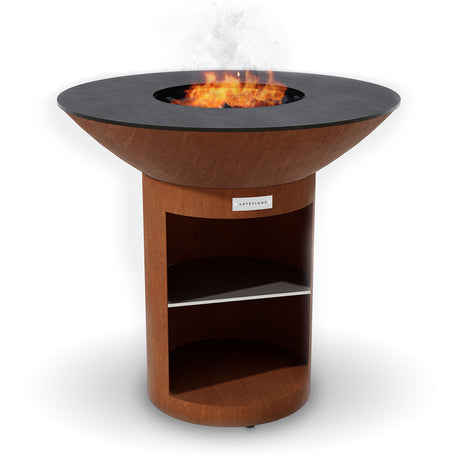
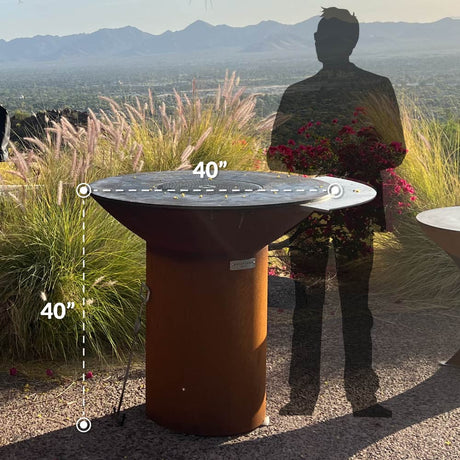
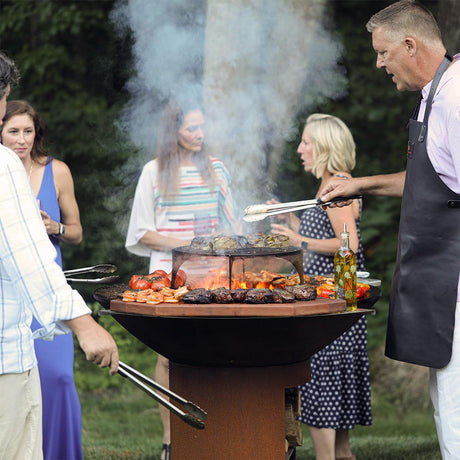
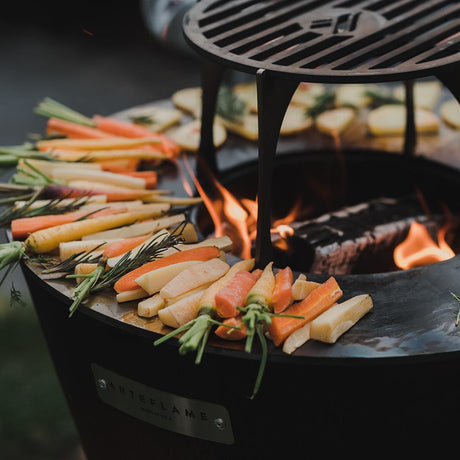
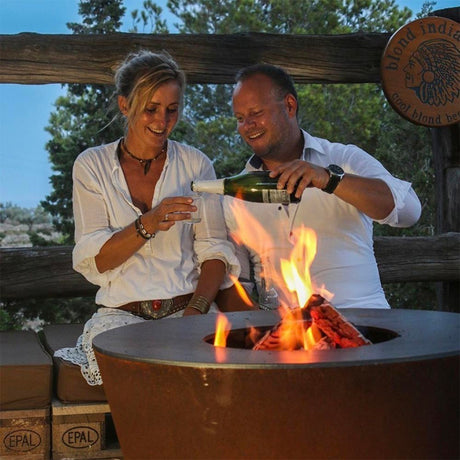
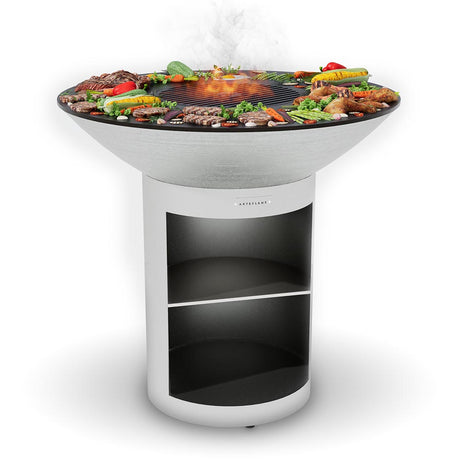
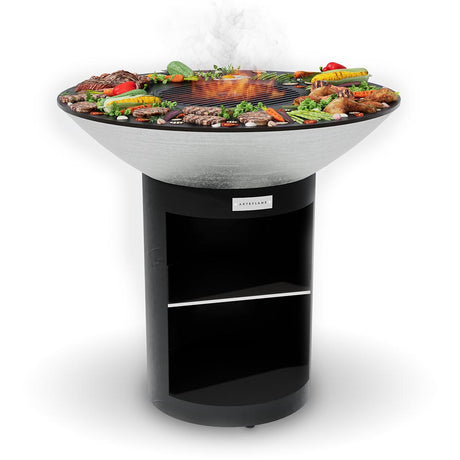




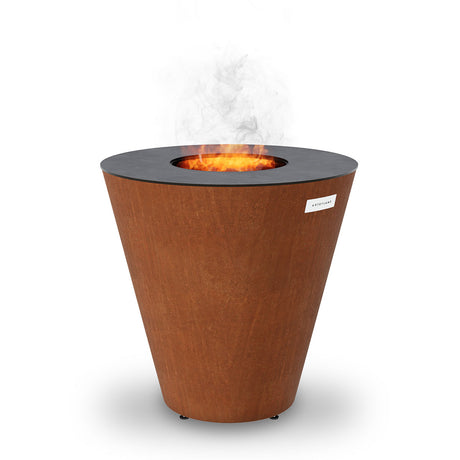
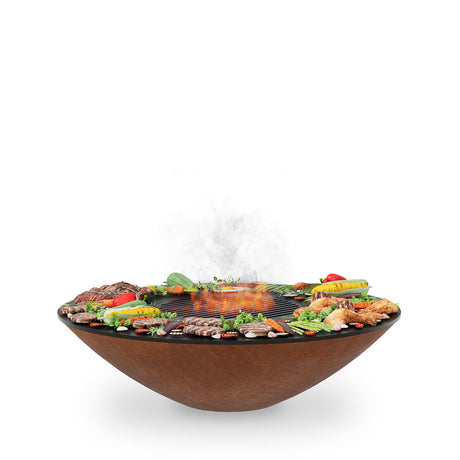
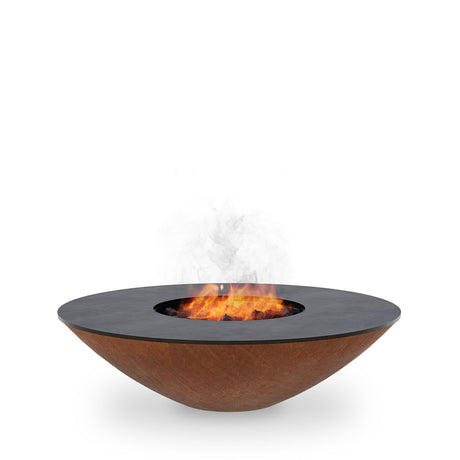
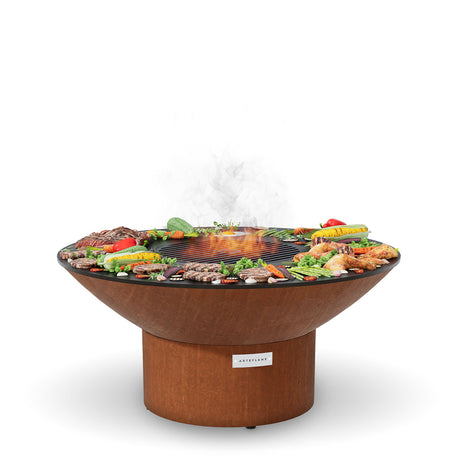


Turn yesterday's leftover macaroni into today's crispy, golden side dish with this easy wood-fired recipe.

Master this Texas-style open-fire brisket cooked entirely on the Arteflame grill. By searing on the center grate and wrapping to render on the flat top, you get perfectly tender, juicy...

Transform standard thick-cut bacon into a sweet, savory appetizer with a dark stout and brown sugar glaze, perfectly caramelized on a flat-top grill.

Render the perfect crispy skin with these Sichuan Peppercorn Duck Breasts, paired with a smoky, sweet, and spicy charred plum-poblano sauce.

Tender artichoke halves charred over high heat and smothered in rich garlic butter and Parmesan cheese.

Achieve the ultimate crust with this low-and-slow beef brisket recipe, utilizing natural heat zones for a perfect sear and incredibly tender finish.

Transform the trending crispy rice paper dumplings into a wood-fired masterpiece. Cooked on the Arteflame flat steel griddle for a shatteringly crisp crust and savory, high-protein filling.

Elevate albacore tuna with a steakhouse-style bacon wrap and a decadent green peppercorn cream sauce, grilled flawlessly on a flat-top.