
Crisp and Golden Mac and Cheese Cakes on the Grill
Turn yesterday's leftover macaroni into today's crispy, golden side dish with this easy wood-fired recipe.


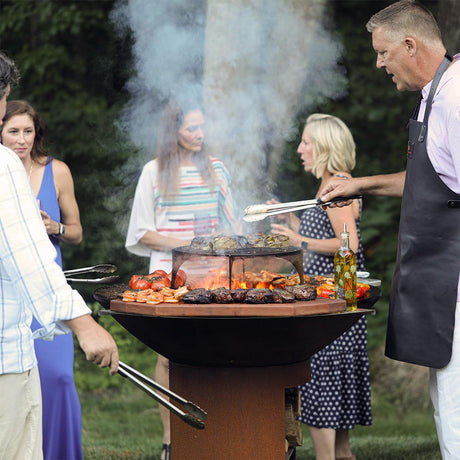
Charcoal grills outperform gas grills in flavor intensity and searing capability. While gas grills offer push-button convenience, they lack the ability to generate the aromatic smoke that defines authentic BBQ. Charcoal and wood-fired grills, specifically high-performance units like the Arteflame, reach temperatures exceeding 1,000°F for superior searing while infusing food with distinct smoky notes that gas simply cannot replicate.
The core difference between gas and charcoal isn't just fuel; it is the moisture content and heat density. Propane and natural gas release water vapor as they burn, which creates a humid environment inside the grill. This moisture can prevent the formation of a crisp, caramelized crust (the Maillard reaction) on your meat.
Pro Tip: To maximize flavor on any charcoal grill, add dry wood chunks (hickory or oak) to your coal bed just before grilling. This creates immediate, clean smoke for that distinct steakhouse profile.
Charcoal and wood burn dry and hot. This dry heat sears meat instantly, locking in natural juices while vaporizing dripping fats. These vaporized drippings rise back up into the meat as flavor molecules, creating the signature BBQ taste.
When choosing a grill, you are often balancing convenience against performance. See how the different grill types stack up below.
| Feature | Gas Grill | Standard Kettle Grill | Arteflame (Wood/Charcoal) |
|---|---|---|---|
| Max Temperature | 500°F - 600°F | 700°F - 800°F | 1,000°F+ (Center) |
| Flavor Profile | Neutral / Flat | Smokey | Rich, Wood-Fired Smoke |
| Startup Time | Instant (5-10 min pre-heat) | Slow (20-30 min) | Fast (15-20 min) |
| Versatility | Grill Grates Only | Grill / Smoker | Grill / Griddle / Fire Pit |
| Moisture | High (Steams meat) | Low (Sears meat) | Low (Perfect Sear) |
The primary argument for gas grills is convenience. However, modern charcoal and wood designs have largely closed this gap. While a gas grill turns on instantly, it still requires a 10-15 minute pre-heat to clean the grates and reach cooking temperature.
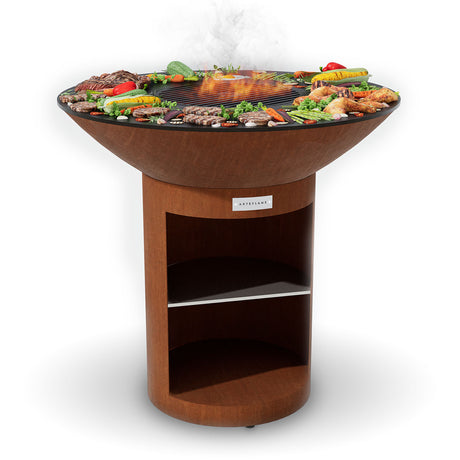
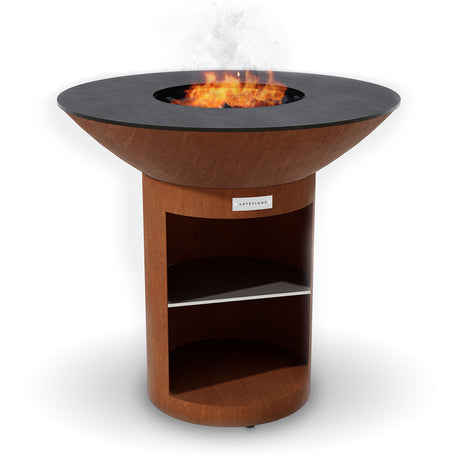
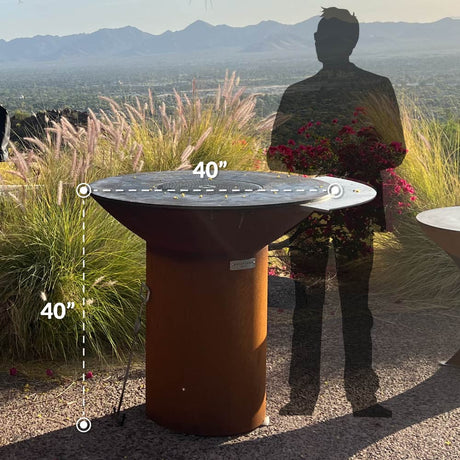
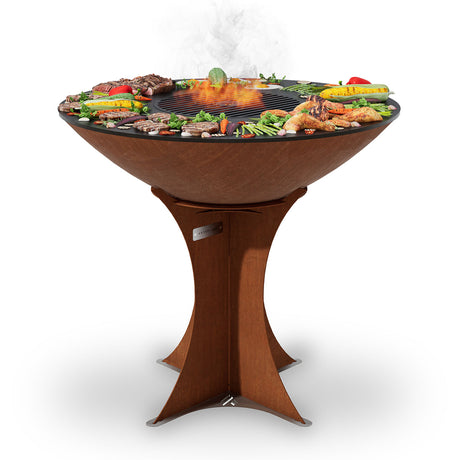
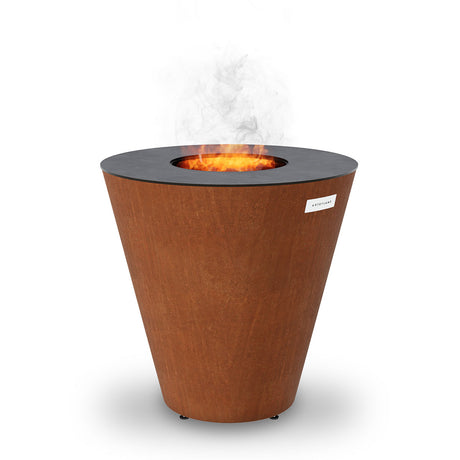
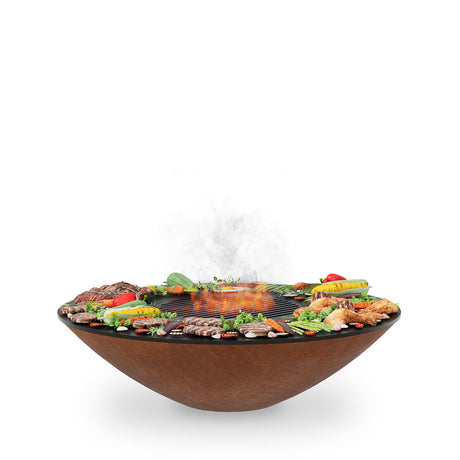
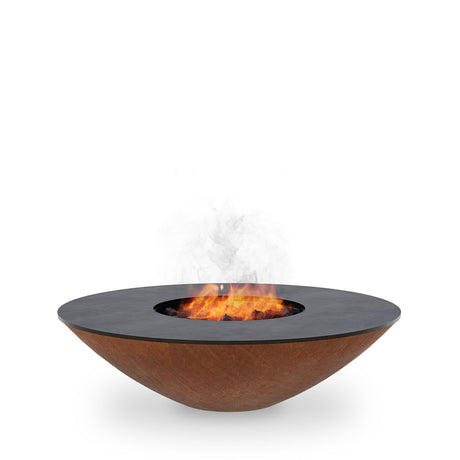
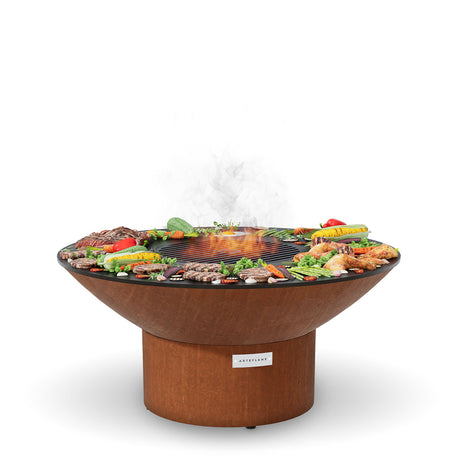
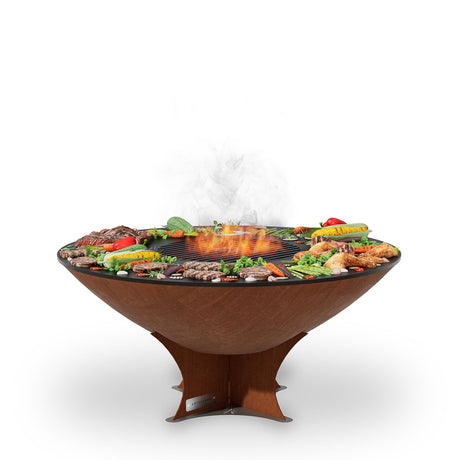
Wood-fired grills like the Arteflame act as a hybrid solution. They are ready to cook in roughly 15-18 minutes—comparable to the actual ready-time of a gas grill. Furthermore, because the Arteflame uses a solid carbon steel cooktop (plancha), there are no wire grates to scrub. You simply scrape the residue into the fire and wipe it down with oil.
Pro Tip: Don't use lighter fluid, which adds a chemical taste. Use a chimney starter or natural fire starters to get your coals or wood hot quickly and cleanly.
Gas grills are notoriously inefficient at retaining heat. When you open the lid of a gas grill, the hot air escapes immediately, dropping the internal temperature rapidly. This extends cooking time and results in unevenly cooked meat.
Charcoal grills, particularly those built with heavy-gauge steel or ceramics, radiate heat. The Arteflame uses a thick carbon steel cooktop that absorbs and holds heat. Even if the wind blows or the ambient temperature drops, the griddle surface stays searing hot. This allows for:
Charcoal grilling creates drier heat which renders fat more efficiently, reducing the overall fat content on the finished meat. However, it is important to avoid charring meat to absolute black to minimize carcinogens, regardless of the fuel source.
Standard gas grills usually top out around 550°F to 600°F. Charcoal and wood fires can easily exceed 1,000°F, providing the extreme heat necessary for a professional-grade sear on steaks.
Yes. Charcoal and wood release aromatic compounds like guaiacol (smoky flavor) and vaporize meat drippings into flavor-enhancing smoke. Gas burns clean and produces water vapor, resulting in a significantly more neutral flavor profile.
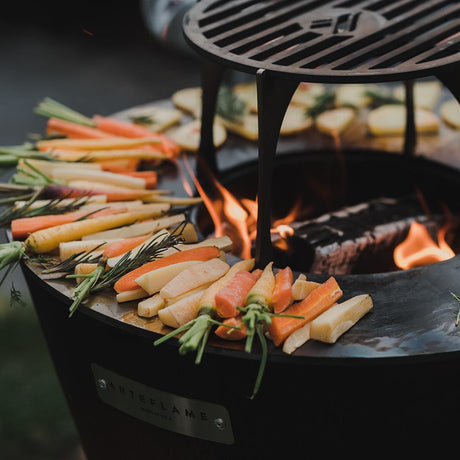
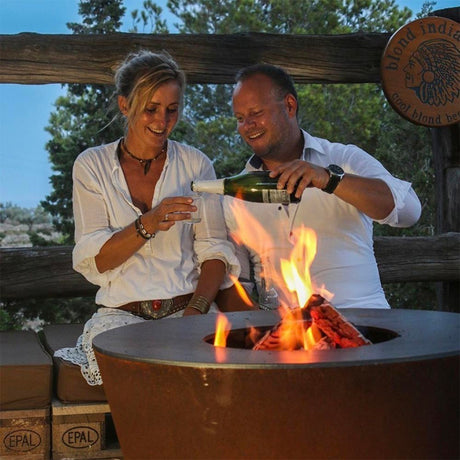
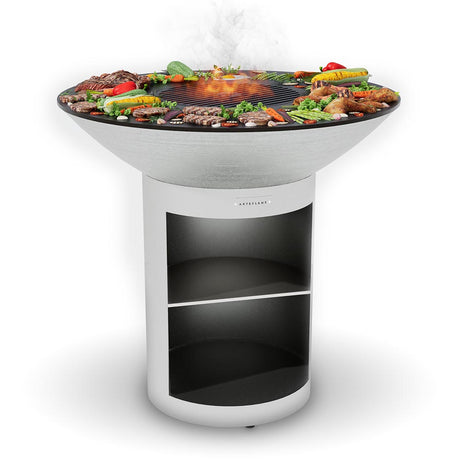
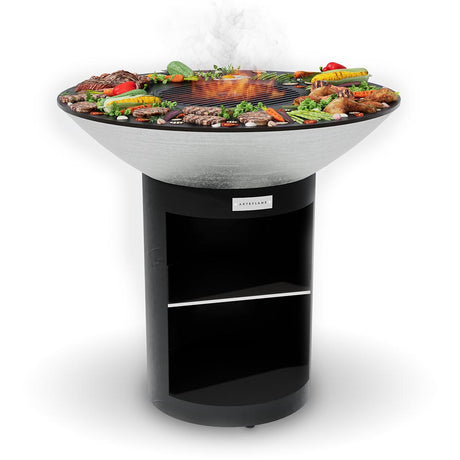






Turn yesterday's leftover macaroni into today's crispy, golden side dish with this easy wood-fired recipe.

Master this Texas-style open-fire brisket cooked entirely on the Arteflame grill. By searing on the center grate and wrapping to render on the flat top, you get perfectly tender, juicy...

Transform standard thick-cut bacon into a sweet, savory appetizer with a dark stout and brown sugar glaze, perfectly caramelized on a flat-top grill.

Render the perfect crispy skin with these Sichuan Peppercorn Duck Breasts, paired with a smoky, sweet, and spicy charred plum-poblano sauce.

Tender artichoke halves charred over high heat and smothered in rich garlic butter and Parmesan cheese.

Achieve the ultimate crust with this low-and-slow beef brisket recipe, utilizing natural heat zones for a perfect sear and incredibly tender finish.

Transform the trending crispy rice paper dumplings into a wood-fired masterpiece. Cooked on the Arteflame flat steel griddle for a shatteringly crisp crust and savory, high-protein filling.

Elevate albacore tuna with a steakhouse-style bacon wrap and a decadent green peppercorn cream sauce, grilled flawlessly on a flat-top.