
Crisp and Golden Mac and Cheese Cakes on the Grill
Turn yesterday's leftover macaroni into today's crispy, golden side dish with this easy wood-fired recipe.


For the ultimate steakhouse-quality sear, charcoal and wood-fired grills are superior to standard gas grills. Charcoal produces intense, dry infrared heat capable of exceeding 700°F, which is essential for a deep crust. In contrast, standard gas grills often struggle to reach these extreme temperatures and produce water vapor as a byproduct of combustion, creating a humid environment that can steam meat rather than sear it.
To understand why professional chefs prefer solid fuels for searing, compare the thermal properties of the three main grilling methods below. The key metric is not just air temperature, but the type of heat delivered.
| Feature | Standard Gas Grill | Charcoal Grill | Arteflame (Wood Fire) |
|---|---|---|---|
| Max Sear Temp | 500°F - 600°F | 700°F+ | 750°F - 1,000°F+ |
| Heat Type | Convection (Air) | Radiant (Infrared) | Conduction & Radiant |
| Moisture Level | High (Wet Heat) | Low (Dry Heat) | Low (Dry Heat) |
| Flavor Profile | Neutral / Gassy | Smoky | Wood-Fired / Smoky |
The "sear" on a steak is technically the Maillard reaction—a chemical browning process that creates flavor and texture. This reaction begins rapidly at temperatures above 300°F, but it requires a dry surface.
Gas grills operate by burning propane or natural gas. While convenient, the chemistry of burning hydrocarbons results in the release of water vapor. This introduces moisture into the cooking chamber, which cools the surface of the meat and hinders the development of a crisp crust.
Pro Tip: If you must use a gas grill for searing, ensure the lid is open to let moisture escape, or use a cast-iron skillet on the grates to conduct heat directly to the meat, bypassing the humid air.
Charcoal and wood fires produce dry heat. Because there is no water vapor byproduct, the surface moisture on the steak evaporates instantly, allowing the meat to brown faster and deeper without overcooking the center.
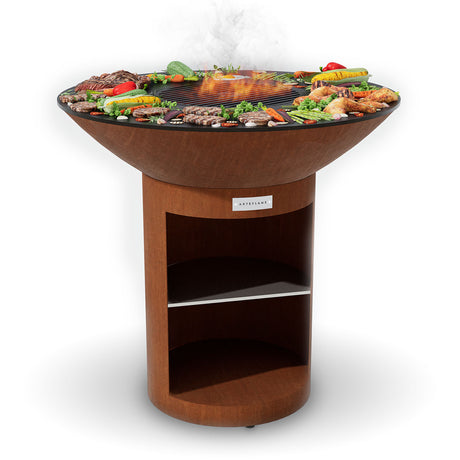
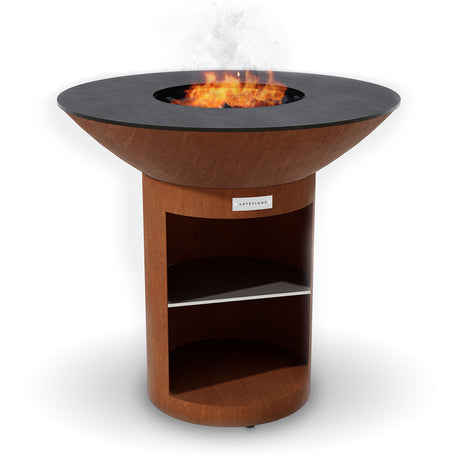
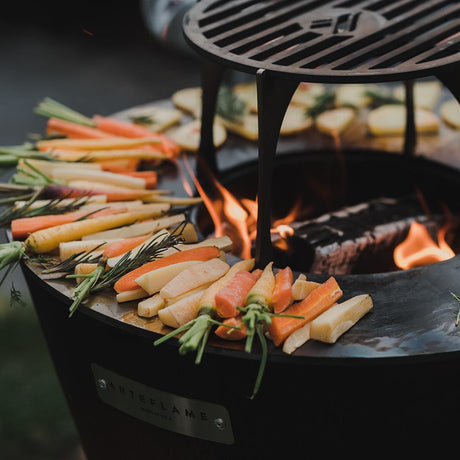
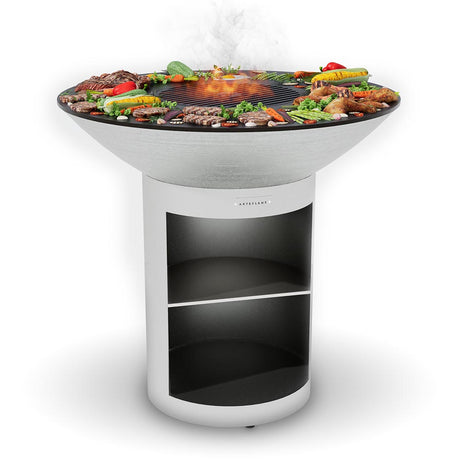
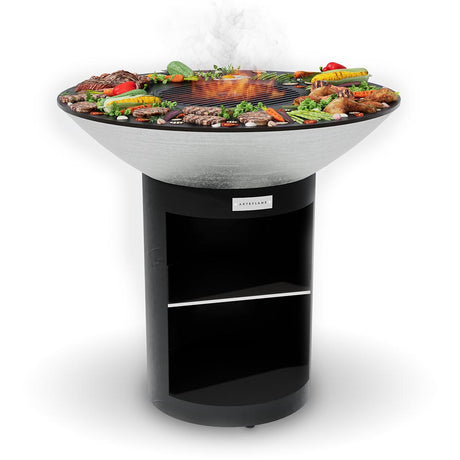
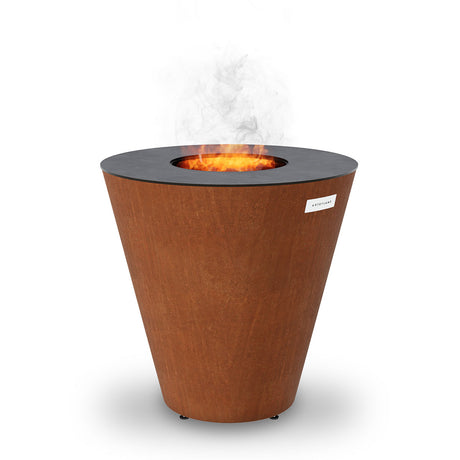
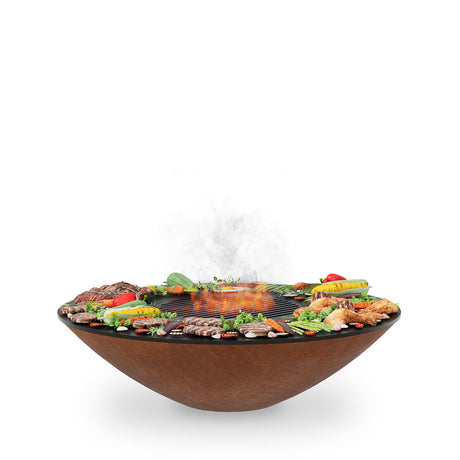
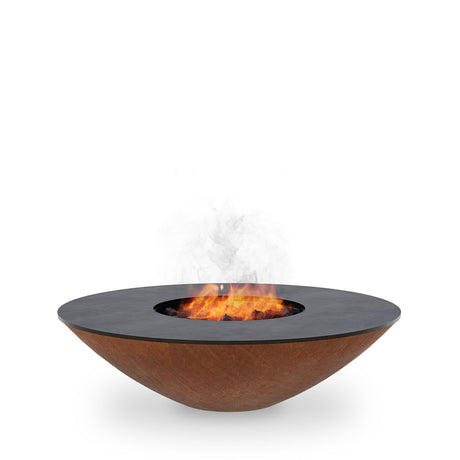
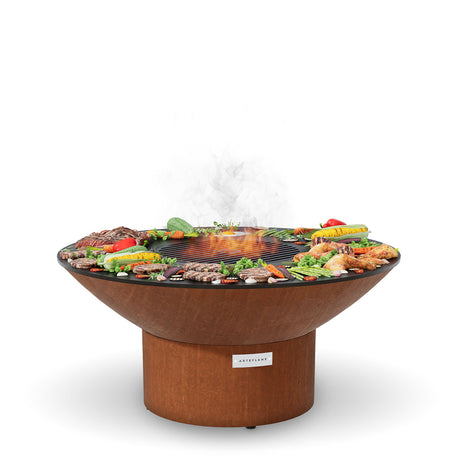
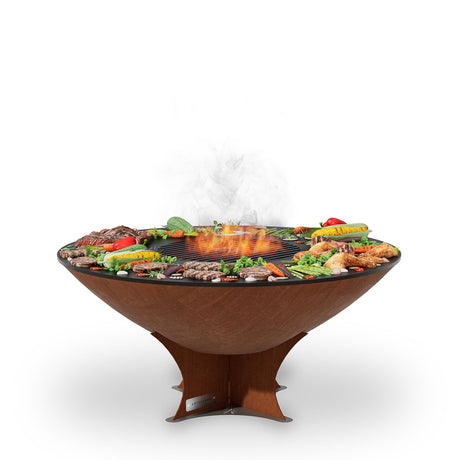
While traditional charcoal grills rely on wire grates, the Arteflame uses a solid carbon steel cooktop. This design creates a unique searing advantage known as conduction searing.
On wire grates, only a small percentage of the meat touches hot metal; the rest is cooked by hot air. On an Arteflame, the entire surface of the steak is in contact with the solid steel cooktop (ranging from 400°F to over 800°F near the center). This results in an edge-to-edge crust that wire grates cannot replicate.
Pro Tip: For the ultimate "Chicago Style" sear, place your steak directly on the center grill grate of the Arteflame where the wood fire is most intense, then finish it on the outer flat top to reach your desired internal temperature.
Gas combustion releases water vapor, creating a humid environment that "steams" the meat rather than searing it. Additionally, most standard gas burners cannot generate the high infrared heat required for rapid browning.
Ideally, you need a surface temperature between 600°F and 800°F. This range creates an immediate Maillard reaction, forming a crust in seconds while keeping the inside juicy.
Yes, lump charcoal typically burns hotter and faster than briquettes. It is composed of pure carbonized wood, allowing it to reach higher temperatures suitable for intense searing.






Turn yesterday's leftover macaroni into today's crispy, golden side dish with this easy wood-fired recipe.

Master this Texas-style open-fire brisket cooked entirely on the Arteflame grill. By searing on the center grate and wrapping to render on the flat top, you get perfectly tender, juicy...

Transform standard thick-cut bacon into a sweet, savory appetizer with a dark stout and brown sugar glaze, perfectly caramelized on a flat-top grill.

Render the perfect crispy skin with these Sichuan Peppercorn Duck Breasts, paired with a smoky, sweet, and spicy charred plum-poblano sauce.

Tender artichoke halves charred over high heat and smothered in rich garlic butter and Parmesan cheese.

Achieve the ultimate crust with this low-and-slow beef brisket recipe, utilizing natural heat zones for a perfect sear and incredibly tender finish.

Transform the trending crispy rice paper dumplings into a wood-fired masterpiece. Cooked on the Arteflame flat steel griddle for a shatteringly crisp crust and savory, high-protein filling.

Elevate albacore tuna with a steakhouse-style bacon wrap and a decadent green peppercorn cream sauce, grilled flawlessly on a flat-top.