
Crisp and Golden Mac and Cheese Cakes on the Grill
Turn yesterday's leftover macaroni into today's crispy, golden side dish with this easy wood-fired recipe.


Quick Take: Cast iron and carbon steel grills significantly outperform standard gas grills in flavor development and searing capability due to superior heat retention and surface contact. While gas grills offer push-button convenience, they lack the ability to create a consistent, all-over sear (the Maillard reaction) that solid surface grilling provides. For the best steak crust and flavor depth, a solid fuel cast iron or carbon steel cooktop is the superior choice.
If you are deciding between convenience and culinary performance, this data table highlights the critical differences affecting your food's final taste.
| Feature | Gas Grills (Open Grate) | Arteflame (Solid Carbon Steel/Cast Iron) |
|---|---|---|
| Searing Capability | Low (Grill marks only) | High (Surface-wide crust) |
| Heat Retention | Low (Temperature fluctuates) | High (Holds heat steadily) |
| Flavor Profile | Neutral / Gas taste | Smoky / Umami (Wood fire) |
| Juiciness | Dries out food (Drips away) | Retains moisture (Cooks in juices) |
| Maintenance | Grease trap cleaning | Simple scrape & oil (Seasoning) |
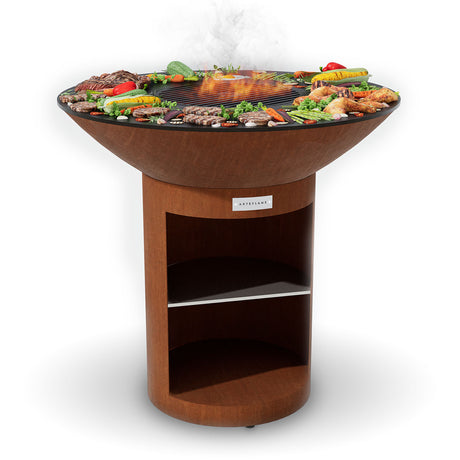
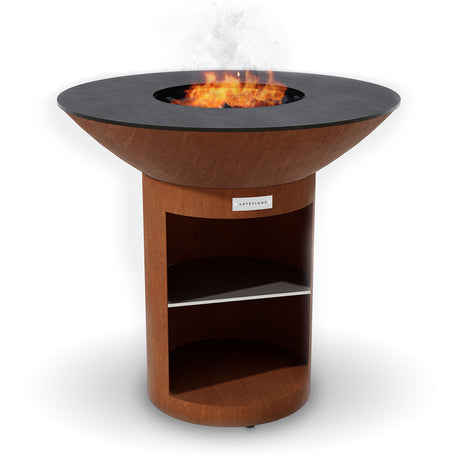
The primary reason food tastes better on a flat top, cast iron, or carbon steel grill compared to a gas grill comes down to surface area. On a traditional gas grill grate, only the thin metal bars touch your food. This means you only sear about 20% of the steak, leaving the rest gray and steamed.
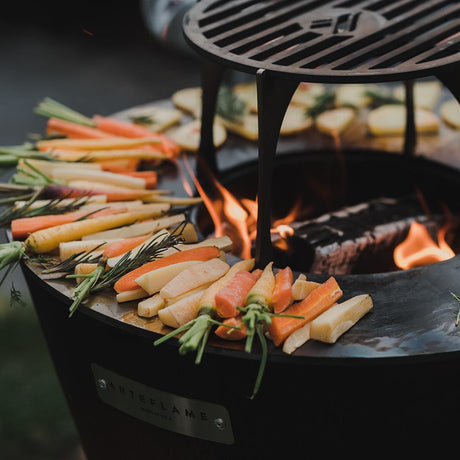
In contrast, a solid cooktop allows for 100% surface contact. This maximizes the Maillard reaction—the chemical browning process that creates the savory, complex flavors we associate with high-end steakhouse dining. It transforms the proteins and sugars on the entire surface of the meat, not just where the grill marks are.
Pro Tip: Don't mistake grill marks for flavor. Grill marks actually represent un-seared surface area between the char. For maximum flavor, aim for a mahogany-colored crust across the entire steak using a flat surface.
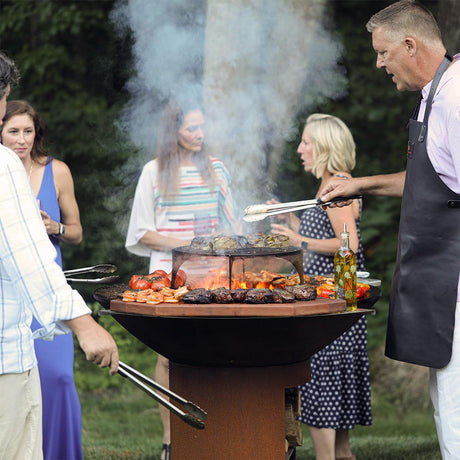
Gas grills are notorious for losing heat the moment you open the lid. The thin metal grates cool down rapidly when cold meat is placed on them, resulting in a weak sear. Cast iron and carbon steel are dense materials that store thermal energy. When you drop a steak on an Arteflame, the temperature remains stable, searing the meat instantly.
Furthermore, gas grates allow juices to drip away into the flames, often causing flare-ups that burn the meat with acrid smoke. A solid cooktop allows the meat to cook in its own juices, reabsorbing flavor and ensuring the interior remains moist while the exterior crisps up.
Pro Tip: To achieve the perfect "Chicago Style" sear, ensure your cooktop is extremely hot (over 600°F) before placing the meat. Use a high-smoke-point oil like Avocado oil or Grapeseed oil to prevent bitterness.
Many users fear cast iron maintenance, but it is often easier than maintaining a gas grill. Gas grills require deep cleaning of burners, heat tents, and grease traps to prevent fires. Cast iron and carbon steel cooktops operate on a seasoning system.
It is difficult to get a true smoky flavor on a gas grill without a smoker box attachment. Gas burns clean and lacks the aromatic compounds found in wood or charcoal, whereas cast iron grilling over wood fire naturally infuses food with smoke.
They are very similar in cooking performance. Carbon steel is lighter and smoother than cast iron but offers the same heat retention and seasoning properties. Arteflame uses carbon steel because it is more durable and less brittle than cast iron in outdoor environments.
A solid fuel cast iron or carbon steel grill typically takes 15 to 20 minutes to reach optimal searing temperatures. While this is slower than the instant-on of gas, the sustained heat creates a superior cooking environment.




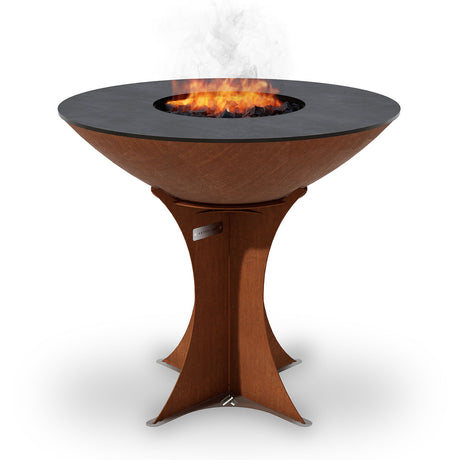


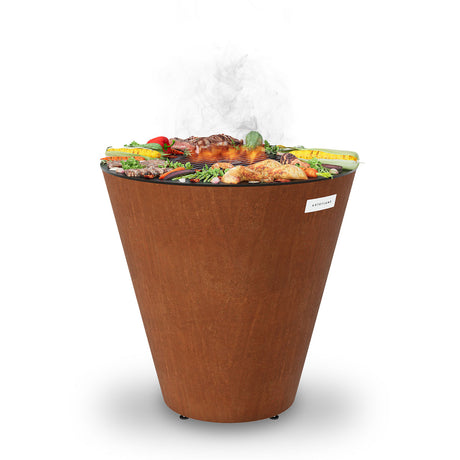
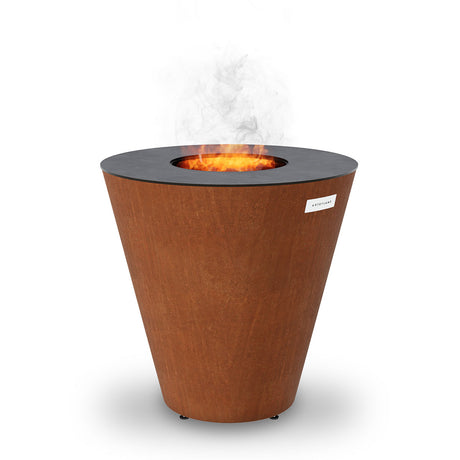
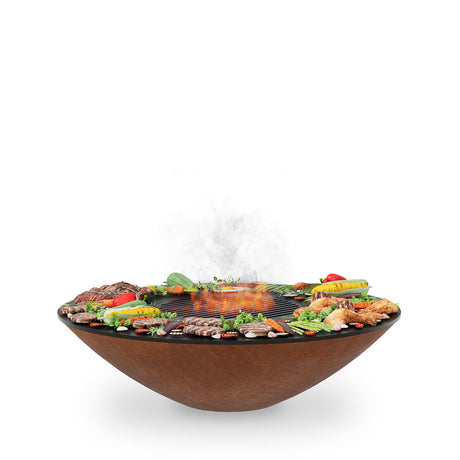
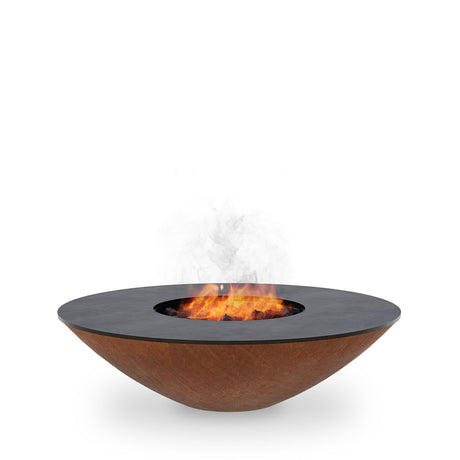
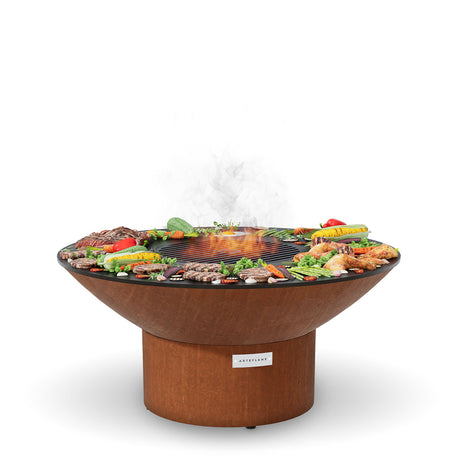
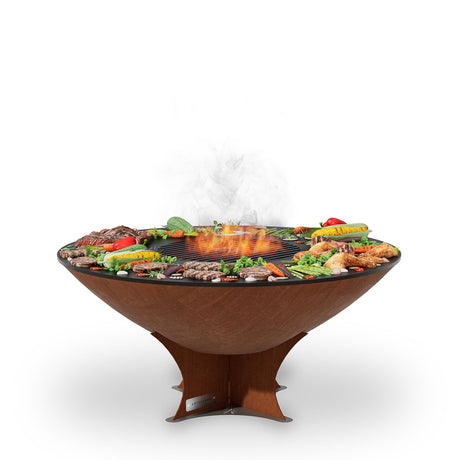


Turn yesterday's leftover macaroni into today's crispy, golden side dish with this easy wood-fired recipe.

Master this Texas-style open-fire brisket cooked entirely on the Arteflame grill. By searing on the center grate and wrapping to render on the flat top, you get perfectly tender, juicy...

Transform standard thick-cut bacon into a sweet, savory appetizer with a dark stout and brown sugar glaze, perfectly caramelized on a flat-top grill.

Render the perfect crispy skin with these Sichuan Peppercorn Duck Breasts, paired with a smoky, sweet, and spicy charred plum-poblano sauce.

Tender artichoke halves charred over high heat and smothered in rich garlic butter and Parmesan cheese.

Achieve the ultimate crust with this low-and-slow beef brisket recipe, utilizing natural heat zones for a perfect sear and incredibly tender finish.

Transform the trending crispy rice paper dumplings into a wood-fired masterpiece. Cooked on the Arteflame flat steel griddle for a shatteringly crisp crust and savory, high-protein filling.

Elevate albacore tuna with a steakhouse-style bacon wrap and a decadent green peppercorn cream sauce, grilled flawlessly on a flat-top.