
Crisp and Golden Mac and Cheese Cakes on the Grill
Turn yesterday's leftover macaroni into today's crispy, golden side dish with this easy wood-fired recipe.


While gas grills offer push-button convenience, they physically cannot replicate the high-heat searing capabilities and authentic smoky flavor of a charcoal or wood-fired grill. If your priority is culinary excellence—specifically achieving a steakhouse-quality crust through temperatures exceeding 1,000°F—a large format charcoal grill provides superior performance and versatility compared to standard propane models.
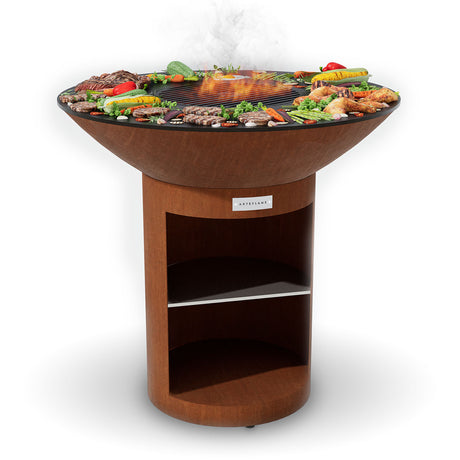
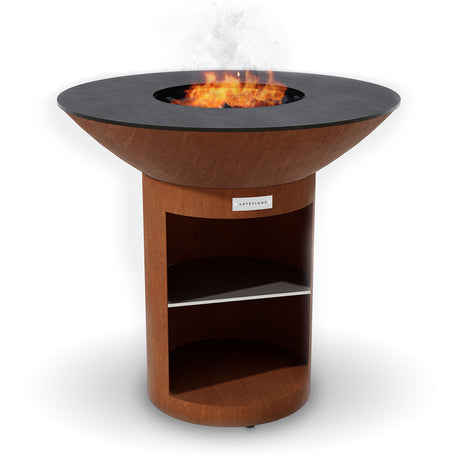
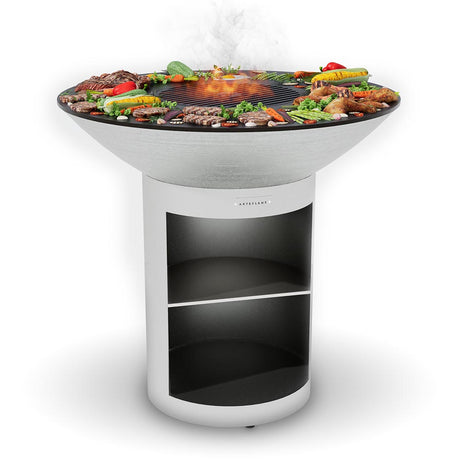
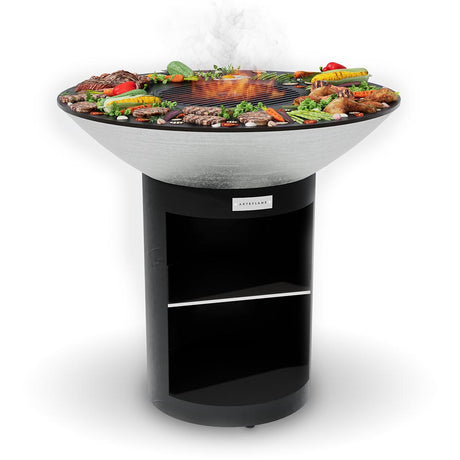
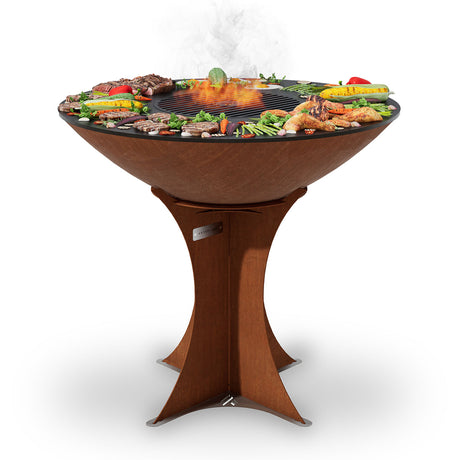
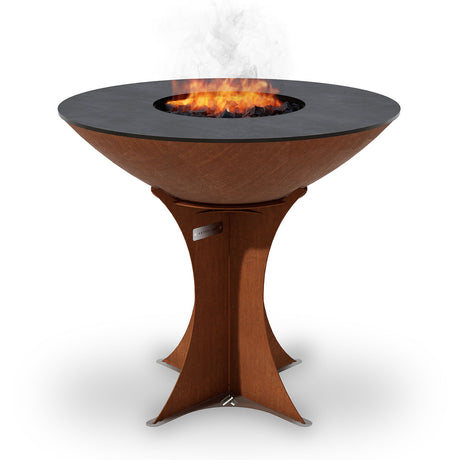
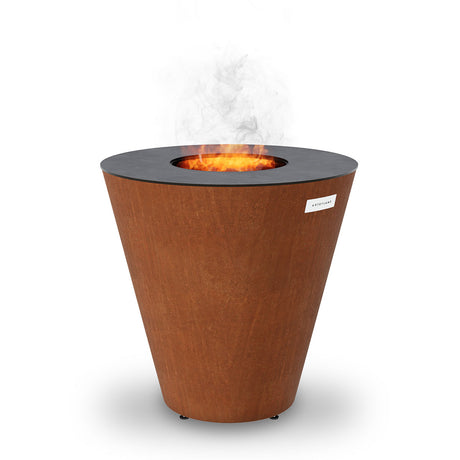
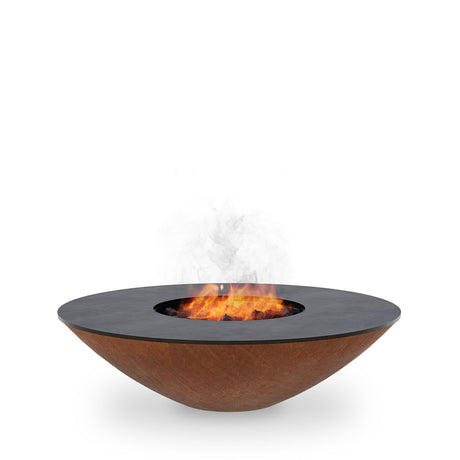
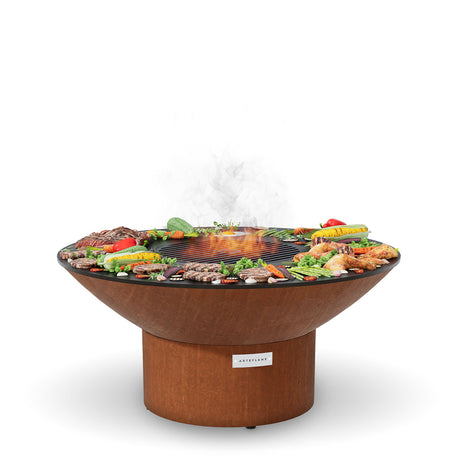
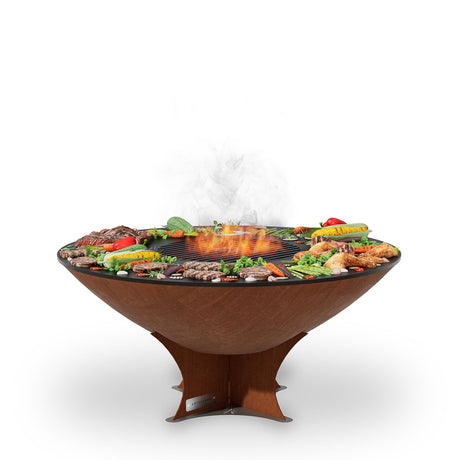
When deciding between a big charcoal grill and a gas setup, the choice often comes down to a trade-off between flavor potential and ease of use. Below is a breakdown of how high-end charcoal grills (like the Arteflame) stack up against premium gas grills.
| Feature | Gas Grills | Charcoal / Wood Grills |
|---|---|---|
| Maximum Temperature | 500°F - 700°F (Limited Searing) | 1,000°F+ (Steakhouse Sear) |
| Flavor Profile | Neutral, no smoke infusion | Rich, smoky, authentic wood-fired taste |
| Heat Source | Convection (Air drying) | Radiant & Conduction (Juicier results) |
| Versatility | Grates only (mostly) | Grates + Solid Plancha Griddle |
| Maintenance | Grease traps, burner cleaning | Ash removal, seasoning the cooktop |
Gas grills rely on convection heat, which circulates hot air around the food. While effective, this can dry out meat over longer cooks. Charcoal and wood grills utilize radiant heat and conduction (especially with a flat-top griddle surface), locking in moisture while searing the exterior instantly.
The defining factor of a perfect steak is the Maillard reaction—the chemical browning of proteins that creates that savory crust. To achieve this without overcooking the inside of the meat, you need extreme heat.
Most residential gas grills cap out around 500°F to 700°F. While this will eventually brown meat, it often results in a "gray band" of overcooked meat beneath the surface. In contrast, a wood or charcoal fire naturally burns significantly hotter.
Pro Tip: For the ultimate crust, sear your meat on a solid steel cooktop or directly over wood coals. The surface temperature of a carbon steel cooktop can vary from 400°F to over 800°F simultaneously, allowing you to sear a steak instantly on the center ring and finish it slowly on the cooler outer edges.
The primary argument for gas is speed: turn a knob, and you are cooking in 10 minutes. However, the "ritual" of charcoal has been modernized. With efficiently designed airflow systems and charcoal chimneys, a wood-fired grill can be ready to cook in 15 to 20 minutes—a negligible difference for a massive upgrade in flavor.
Gas creates water vapor as a byproduct of combustion, which can steam the meat rather than roasting it. Charcoal and wood produce aromatic compounds (syringol and guaiacol) that deposit a distinct smoky flavor onto the food that gas simply cannot mimic.
Pro Tip: Use seasoned hardwoods like oak, hickory, or pecan in your charcoal grill. These woods burn hotter than briquettes and release complex aromatics that season your food while it cooks, eliminating the need for heavy sauces.
Standard gas grills are generally "one-trick ponies" designed for grate grilling. Food often falls through, and flare-ups from dripping grease can char food with acrid soot rather than tasty smoke.
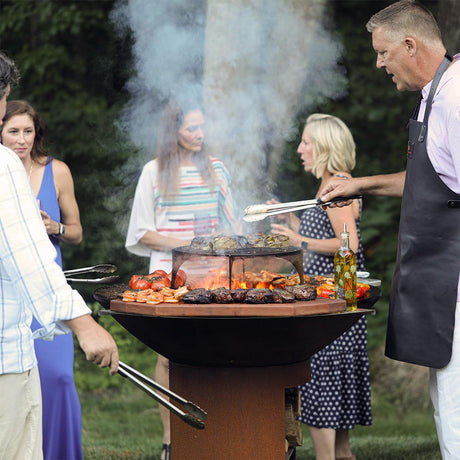
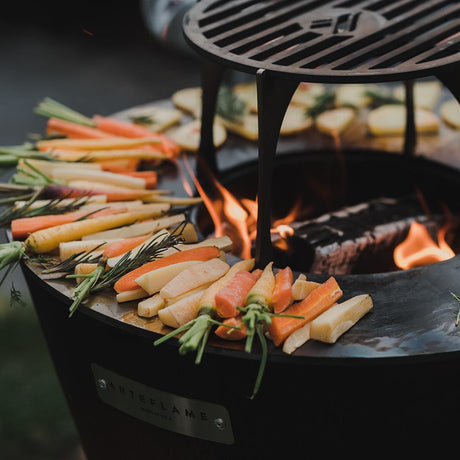
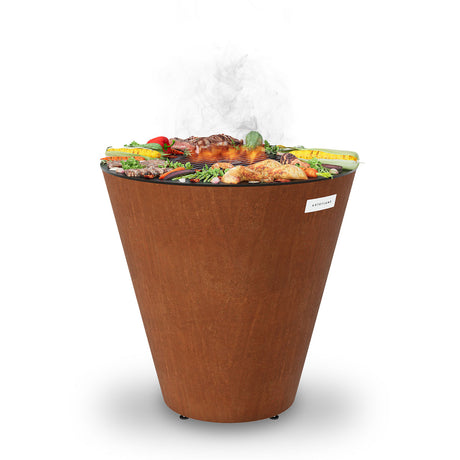
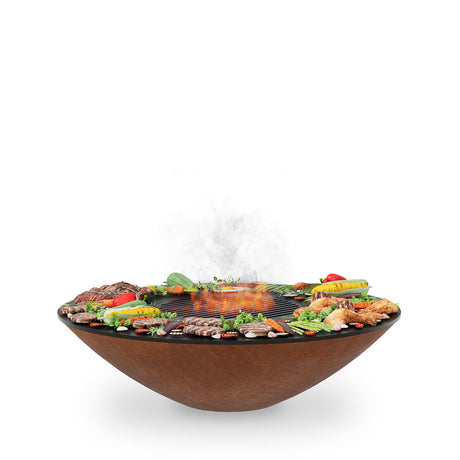
A large charcoal grill, particularly one with a plancha or flat-top design, eliminates these issues. You can grill a ribeye, sauté onions, fry an egg, and roast vegetables all at once without losing a single ingredient to the fire. The solid surface prevents flare-ups entirely, ensuring the meat is seared by heat, not burned by grease fires.
Yes. Charcoal and wood release aromatic compounds like guaiacol when burning, which infuses food with a smoky flavor. Gas is odorless and tasteless, providing only heat without the added depth of flavor.
Not necessarily. While gas grills require burner maintenance and grease trap cleaning to prevent fires, charcoal grills primarily require ash removal. Flat-top charcoal grills are even easier, requiring only a simple scrape and oil wipe-down after use.
Yes, you can mix wood chunks with charcoal lumps to increase heat and add flavor. However, ensure your grill is constructed of heavy-gauge steel, like Corten or Carbon steel, to withstand the higher temperatures wood fire generates.








Turn yesterday's leftover macaroni into today's crispy, golden side dish with this easy wood-fired recipe.

Master this Texas-style open-fire brisket cooked entirely on the Arteflame grill. By searing on the center grate and wrapping to render on the flat top, you get perfectly tender, juicy...

Transform standard thick-cut bacon into a sweet, savory appetizer with a dark stout and brown sugar glaze, perfectly caramelized on a flat-top grill.

Render the perfect crispy skin with these Sichuan Peppercorn Duck Breasts, paired with a smoky, sweet, and spicy charred plum-poblano sauce.

Tender artichoke halves charred over high heat and smothered in rich garlic butter and Parmesan cheese.

Achieve the ultimate crust with this low-and-slow beef brisket recipe, utilizing natural heat zones for a perfect sear and incredibly tender finish.

Transform the trending crispy rice paper dumplings into a wood-fired masterpiece. Cooked on the Arteflame flat steel griddle for a shatteringly crisp crust and savory, high-protein filling.

Elevate albacore tuna with a steakhouse-style bacon wrap and a decadent green peppercorn cream sauce, grilled flawlessly on a flat-top.