
Crisp and Golden Mac and Cheese Cakes on the Grill
Turn yesterday's leftover macaroni into today's crispy, golden side dish with this easy wood-fired recipe.


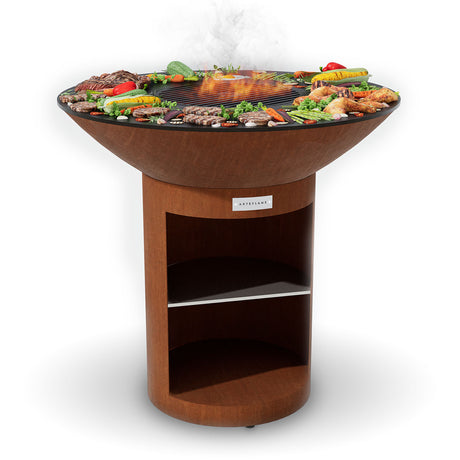
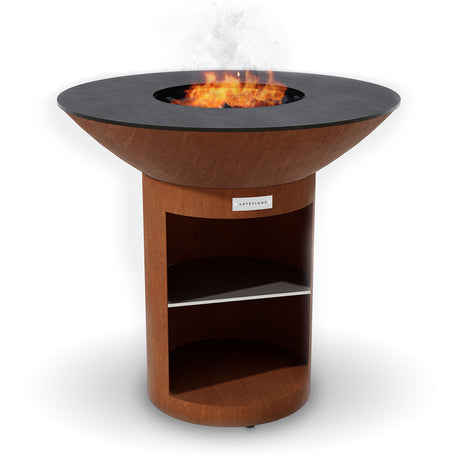
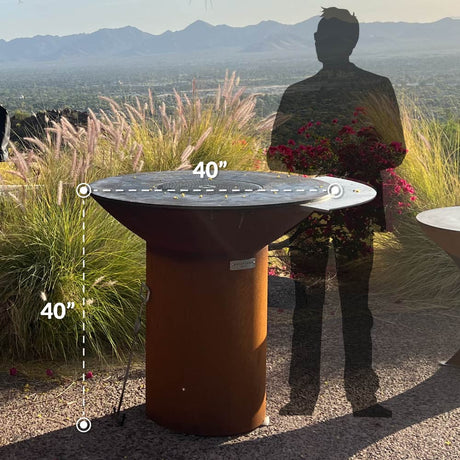
For the best outdoor cooking experience, a small charcoal grill using real wood outperforms gas portables by delivering significantly higher searing temperatures and authentic smoky flavor. While gas offers convenience, it produces water vapor during combustion that can steam meat rather than sear it. A wood-burning grill, such as a compact plancha style, provides dry, intense heat exceeding 1,000°F, ensuring the perfect Maillard reaction and a distinct taste profile that propane cannot match.
When choosing a portable or small grill, the fuel source dictates the quality of your food. Below is a breakdown of why wood and charcoal offer a distinct culinary advantage over gas.
| Feature | Wood / Charcoal Grill | Gas / Propane Grill |
|---|---|---|
| Max Temperature | 1,000°F+ (Steakhouse sear) | 500°F - 600°F (Average) |
| Flavor Profile | Rich, smoky, authentic BBQ | Neutral, often lacks depth |
| Heat Type | Dry heat (Crispy crusts) | Wet heat (Can steam food) |
| Ambiance | Open fire, visual appeal | Functional, utilitarian |
| Fuel Cost | Inexpensive wood/lump coal | Propane tanks (recurring cost) |
Note: Gas grills are often marketed for speed, but the setup time for a chimney of charcoal is comparable to pre-heating a gas element, with significantly better flavor payoff.
The primary reason wood-fired food tastes better lies in the chemistry of combustion. When propane burns, it produces water vapor as a byproduct. In a small, enclosed gas grill, this humidity can prevent meat from developing a hard, flavorful crust.
Conversely, burning charcoal or wood creates a dry heat. This environment allows the surface moisture of the steak or vegetable to evaporate instantly, accelerating the Maillard reaction—the chemical process that browns food and creates savory flavors.
Pro Tip: For maximum flavor impact, use hardwood lump charcoal rather than chemically treated briquettes. Lump charcoal burns hotter and cleaner, adding a pure wood aroma to your ingredients without chemical aftertastes.
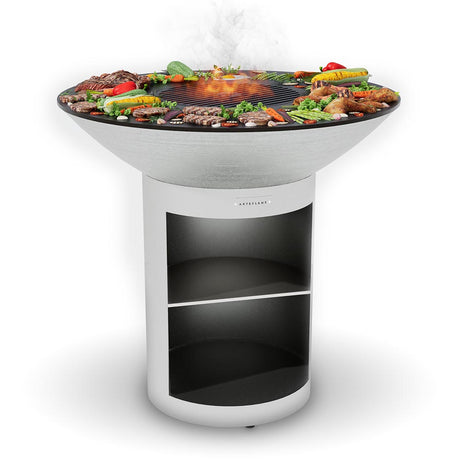
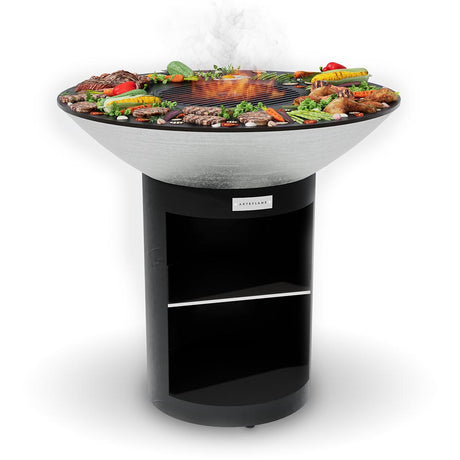
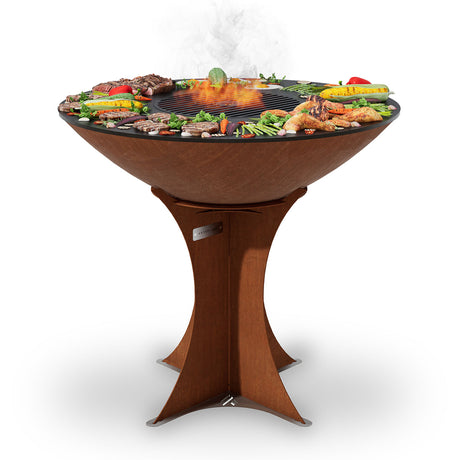
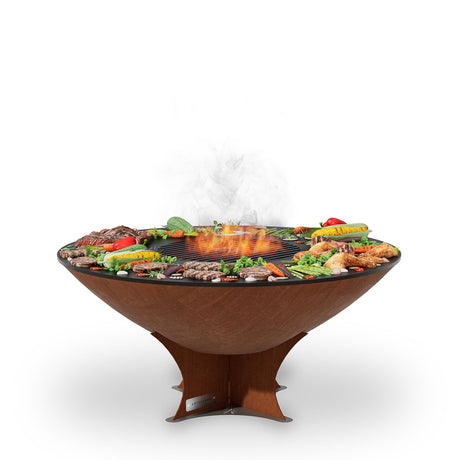
Many portable gas grills struggle to maintain the high temperatures needed for a true sear. A thick steak requires a surface temperature of at least 700°F to sear quickly without overcooking the interior. Small charcoal grills, especially those designed with airflow optimization like the Arteflame, act as a chimney.
This design concentrates heat in the center, allowing you to sear meat in seconds. Once the sear is achieved, you can move the food to a cooler zone to finish cooking.
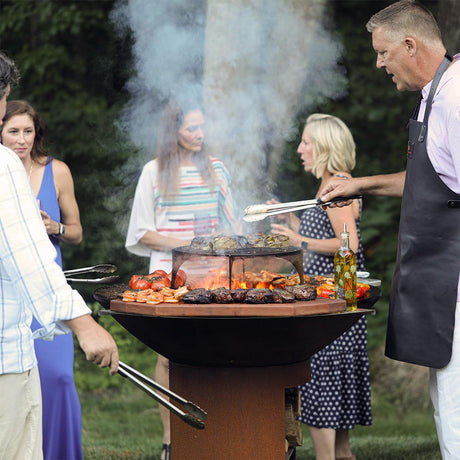
One of the biggest challenges with small gas grills is the lack of heat zones; the whole surface is usually the same temperature. A wood-fired plancha or grill allows for natural heat gradients.
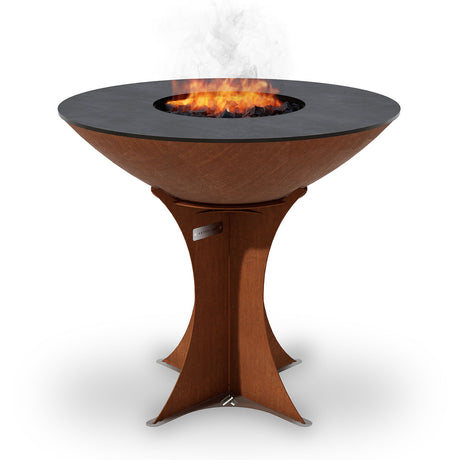
Traditional grate grills allow fat to drip onto the coals, causing flare-ups that can burn food and produce acrid smoke. A solid carbon steel cooktop (plancha) solves this. The solid surface prevents flare-ups completely while allowing the meat to cook in its own juices.
Pro Tip: Treat your carbon steel cooktop like a cast-iron skillet. After cooking, scrape it clean and apply a thin layer of oil while it's still warm. This builds up a non-stick seasoning layer that improves with every cook.
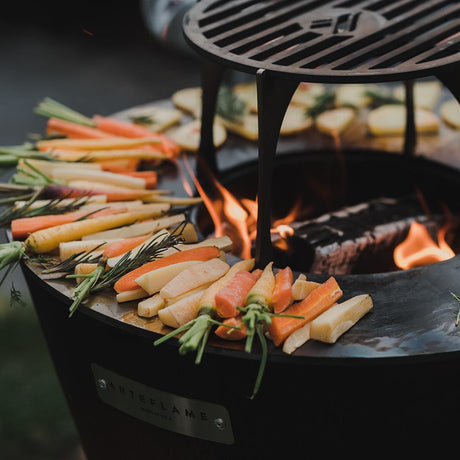
This design also enables you to cook foods that would fall through standard grates, such as asparagus, sliced onions, eggs, or even pancakes, making a small grill a complete outdoor kitchen solution.
No, once you establish a bed of coals, the temperature remains consistent for a long time. With a flat-top design, the thermal mass of the steel holds heat efficiently, smoothing out temperature fluctuations better than thin wire grates.
Yes, utilizing small splits of hardwood like oak, hickory, or pecan is excellent for flavor. Ensure the wood is kiln-dried or well-seasoned to avoid excessive smoke and to ensure a hot, clean burn.
Cleaning is simple and water-free. While the grill is hot, scrape food residue into the fire using a grill scraper, then wipe the surface with a paper towel and a small amount of cooking oil to protect the steel.
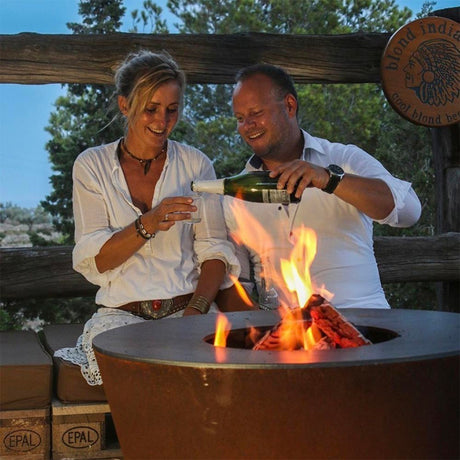
Beyond the food, a wood fire grill serves as a fire pit. Once cooking is done, you can continue burning wood for warmth and ambiance, making it a centerpiece for social interaction that a gas grill cannot replicate.




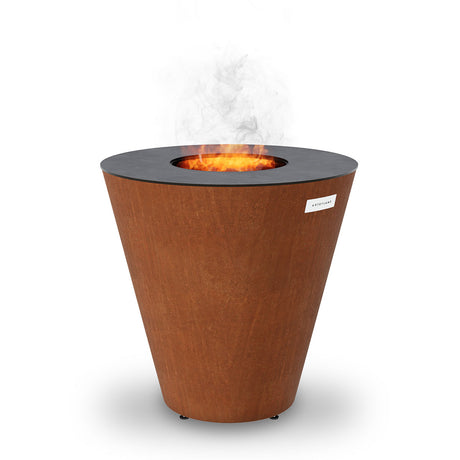
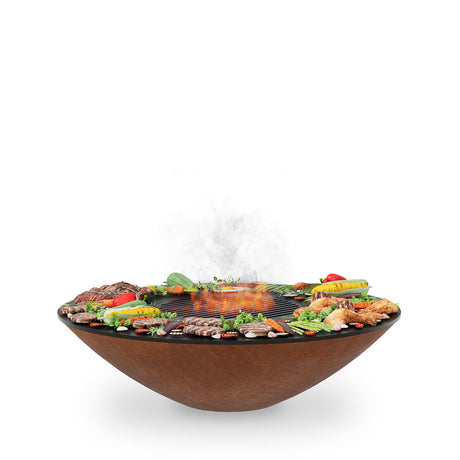
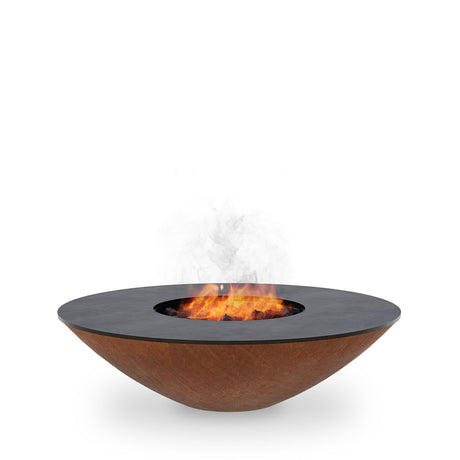
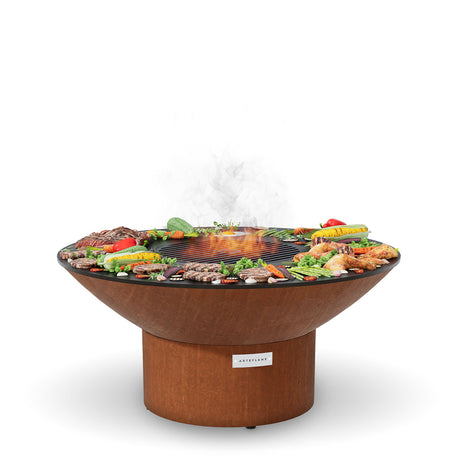


Turn yesterday's leftover macaroni into today's crispy, golden side dish with this easy wood-fired recipe.

Master this Texas-style open-fire brisket cooked entirely on the Arteflame grill. By searing on the center grate and wrapping to render on the flat top, you get perfectly tender, juicy...

Transform standard thick-cut bacon into a sweet, savory appetizer with a dark stout and brown sugar glaze, perfectly caramelized on a flat-top grill.

Render the perfect crispy skin with these Sichuan Peppercorn Duck Breasts, paired with a smoky, sweet, and spicy charred plum-poblano sauce.

Tender artichoke halves charred over high heat and smothered in rich garlic butter and Parmesan cheese.

Achieve the ultimate crust with this low-and-slow beef brisket recipe, utilizing natural heat zones for a perfect sear and incredibly tender finish.

Transform the trending crispy rice paper dumplings into a wood-fired masterpiece. Cooked on the Arteflame flat steel griddle for a shatteringly crisp crust and savory, high-protein filling.

Elevate albacore tuna with a steakhouse-style bacon wrap and a decadent green peppercorn cream sauce, grilled flawlessly on a flat-top.