
Best Grilled Vegetables: Charred & Crispy Guide | Arteflame
Learn the best veggies for grilling—plus times, temps, and pro tips—optimized for Arteflame heat zones for perfect char and flavor every time.


The best flat top grill prioritizes a carbon steel cooktop over cast iron for smoother searing and faster seasoning. While gas griddles are convenient, wood-fired flat top grills (like Arteflame) offer superior information gain by providing distinct heat zones—searing hot in the center and cooler at the edges—allowing you to cook an entire meal simultaneously without the mechanical failure points of gas burners.
When selecting the best flat top grill, the cooktop material is the single most critical factor. Most mass-market griddles use cast iron or thin rolled steel. However, expert grillers prefer carbon steel.
Pro Tip: Carbon steel is significantly smoother than cast iron. This smoothness allows proteins to develop a uniform Maillard reaction (the crust on a steak) because the meat makes complete contact with the heat source, unlike the porous surface of cast iron.
Carbon steel heats up faster and tolerates thermal shock better than cast iron, meaning it won't crack if you pour cold water on it to clean it while hot. It also seasons naturally over time, becoming non-stick and distinctively black with use.
To understand why the heating method matters as much as the material, compare these key performance metrics.
| Feature | Wood-Fired Flat Top (Arteflame) | Standard Propane Griddle |
|---|---|---|
| Heat Source | Wood/Charcoal (Dry, High Heat) | Propane Gas (Moist, Variable Heat) |
| Max Temperature | 1,000°F+ (Center Zone) | 500°F - 600°F |
| Heat Zones | Natural Gradients (Hot Center, Cool Edge) | Manual Knobs (Often Uneven) |
| Durability | Lifetime (No moving parts) | 5-10 Years (Burners rust/clog) |
| Flavor Profile | Smoky, Wood-Fired Infusion | Neutral / Gas |
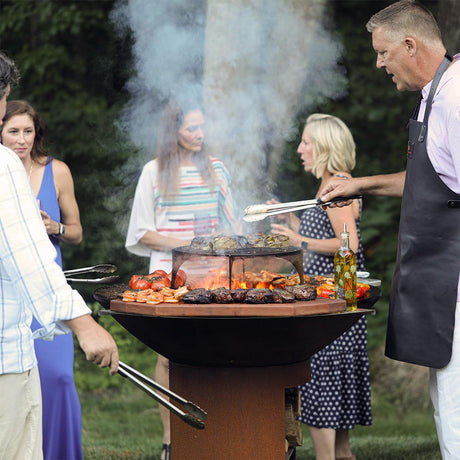
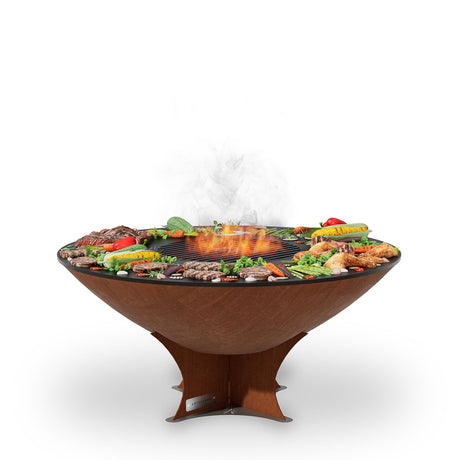
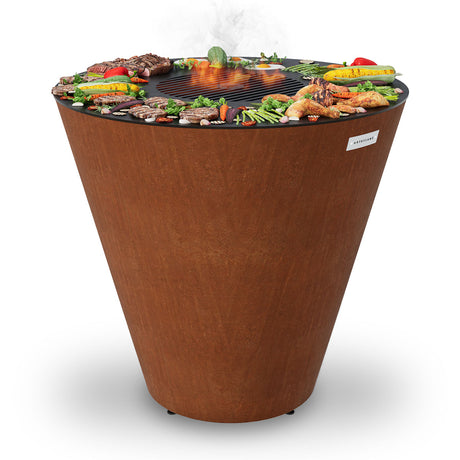
Traditional rectangular flat tops force the chef to face a wall or stand away from guests. The best flat top grill designs utilize a 360-degree circular cooktop. This transforms grilling from a solitary chore into a social event.
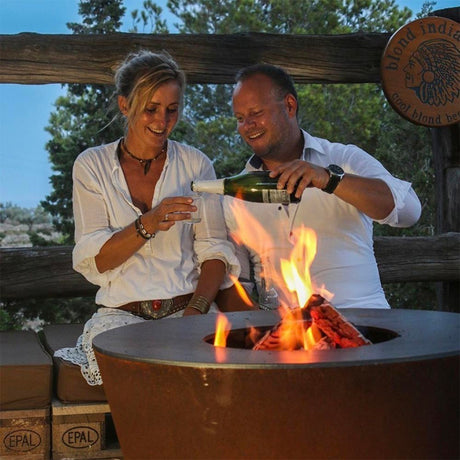
With a circular fire pit design, everyone can gather around the grill. The chef is part of the conversation, and guests can even cook their own food on the edges. This "hibachi-style" experience is impossible on standard rectangular gas griddles.
On a circular flat top, the heat originates from the center fire. This creates a predictable, consistent heat gradient.
Standard gas griddles struggle to maintain these distinct zones without constant knob adjustment and "cold spots" between burners.
Yes, and the science backs it up. Propane combustion releases water vapor as a byproduct, creating a moist heat environment that can steam meat rather than searing it hard. Wood and charcoal fires produce a dry, intense heat.
Pro Tip: Wood fire adds an ingredient you cannot buy: smoke. Even on a solid flat top, the smoke from the center fire rolls over the food as it cooks, imparting a subtle, authentic BBQ flavor that gas grills simply cannot replicate.
Furthermore, because the fire is open in the center of designs like the Arteflame, you have the option to install a grill grate over the flames. This gives you the best of both worlds: flame-kissed grilling marks and griddle-seared crusts on the same unit.
A flat top grill is generally better for versatility and flavor retention. It prevents juices from dripping into the fire (which causes flare-ups) and allows you to cook small items like eggs, vegetables, and rice that would fall through standard grates.
Maintenance is very low. After cooking, simply scrape the residue into the fire, wipe the surface with a cloth and a light coat of oil (like grapeseed or flaxseed oil) while it is still warm. This maintains the seasoning and prevents rust.
Yes, especially if it is designed for durability like the Arteflame. Carbon steel is incredibly tough; if surface rust appears after long periods of disuse, it can be scrubbed off with steel wool and re-seasoned in minutes to look brand new.
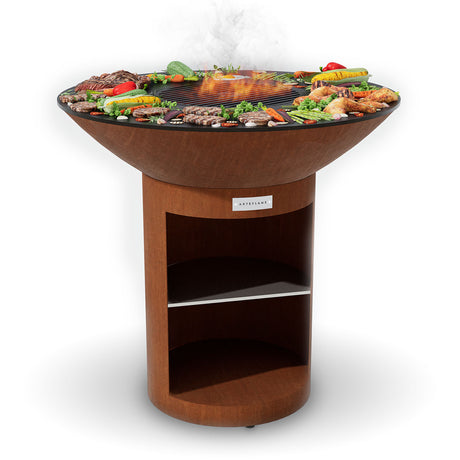
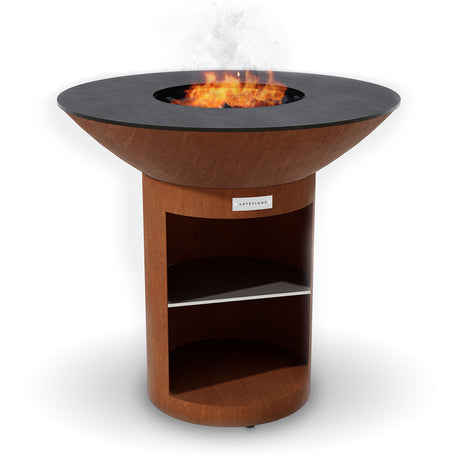
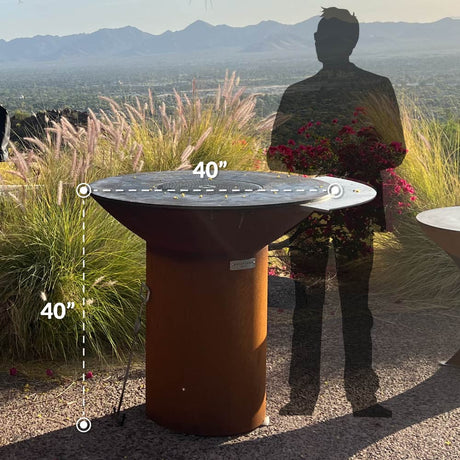
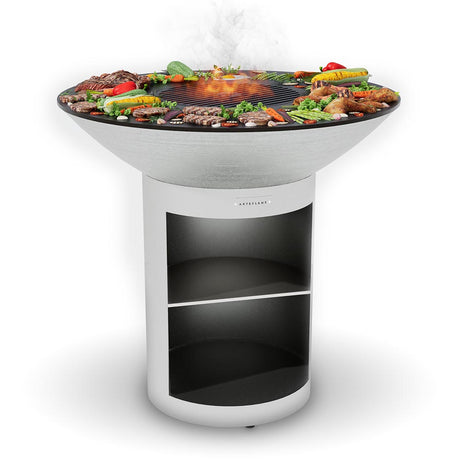
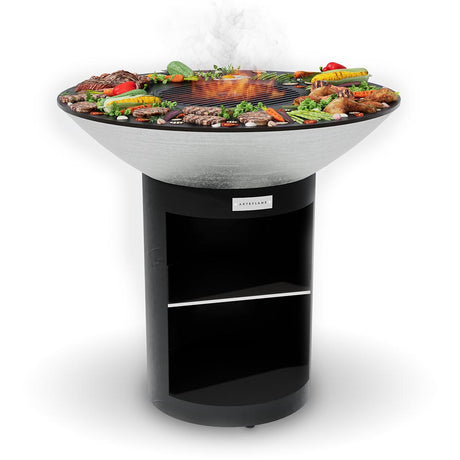


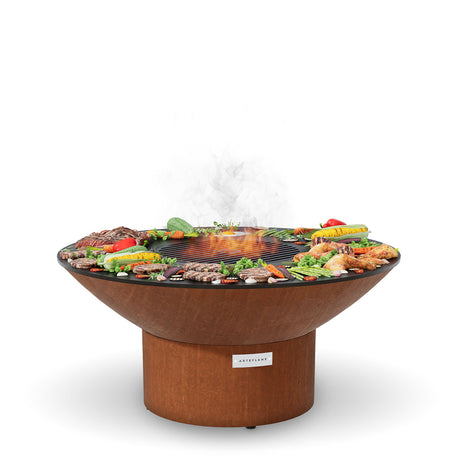
Arteflame Classic 40″ — Storage Base Flat-Top Grill & Fire Bowl (CORTEN Steel)
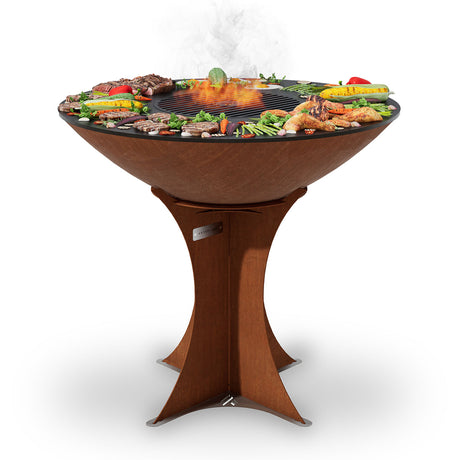
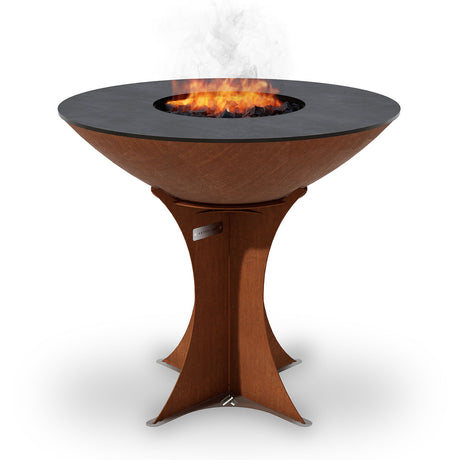


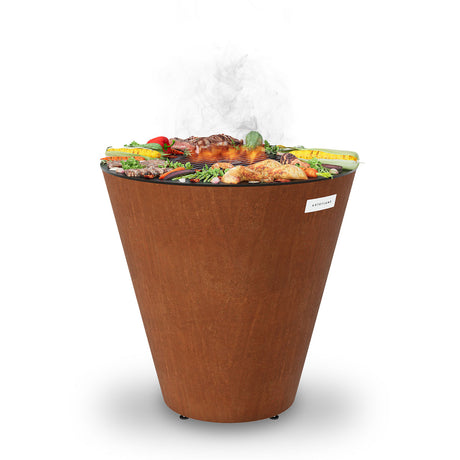
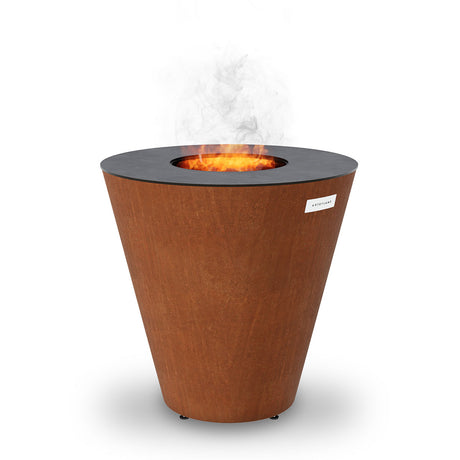
Arteflame ONE30 — 30″ One Series Flat-Top Charcoal Grill & Fire Bowl (Single-Piece CORTEN Steel)
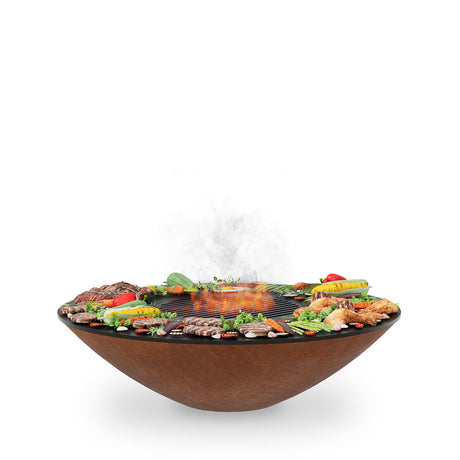
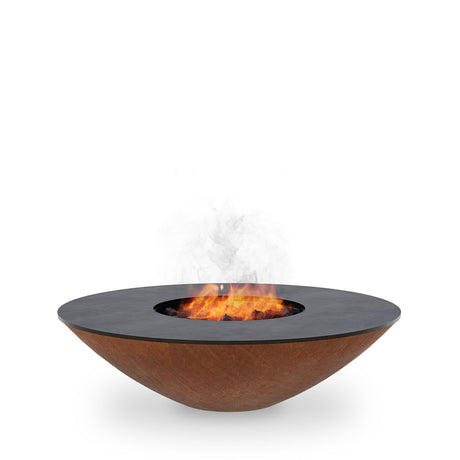



Arteflame One Series 40″ — XXL Flat-Top Charcoal Grill & Fire Bowl (Single-Piece CORTEN Body)


Learn the best veggies for grilling—plus times, temps, and pro tips—optimized for Arteflame heat zones for perfect char and flavor every time.

Transform classic apple pie into a handheld delight with these Wyoming Apple Cinnamon Grilled Dessert Wraps. perfectly crispy, caramelized, and cooked on the Arteflame grill for a smoky finish.

Experience the rustic taste of the West with this Wyoming Campfire Blueberry Cobbler recipe for the Arteflame grill. Featuring bubbling blueberries and a golden biscuit crust cooked in cast iron,...

Experience the rugged flavor of the American West with these Wyoming Wild Boar Chops. Seared to perfection on the Arteflame grill, this recipe uses a savory juniper and sage rub...

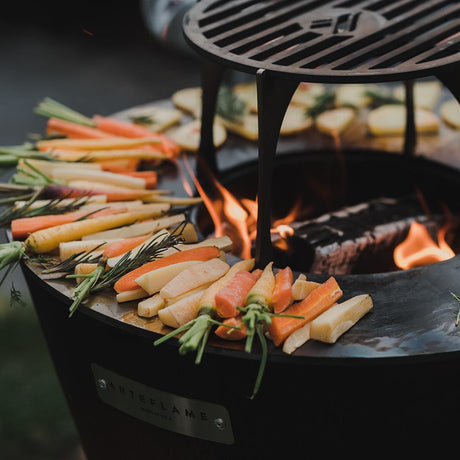
Elevate your BBQ with these Wyoming-style grilled carrots. Sweet honey, tangy balsamic, and a perfect char make this the ultimate side dish for your Arteflame grill. Easy, healthy, and packed...

Unleash the flavor of the American West with these tender Wyoming Teriyaki Bison Skewers. Featuring a homemade savory-sweet glaze and perfectly charred vegetables, this recipe maximizes the searing power of...

Unlock the savory flavors of the West with this Wyoming-style garlic parmesan grilled mushrooms recipe. Perfectly seared on the Arteflame flat top, these buttery, cheesy mushrooms make the ultimate side...

Unlock the bold flavors of the West with this Wyoming-style grilled jalapeño cheddar sausage recipe. Learn how to achieve the perfect sear and juicy interior using your Arteflame grill for...