
Crisp and Golden Mac and Cheese Cakes on the Grill
Turn yesterday's leftover macaroni into today's crispy, golden side dish with this easy wood-fired recipe.


While gas grills offer push-button convenience, they lack the ability to impart deep, complex flavors into food. A wood-fired griddle outperforms gas by utilizing natural wood smoke and high heat to create a distinct umami profile and superior searing capabilities. For outdoor chefs prioritizing taste, social atmosphere, and versatility over speed, a wood-fired plancha is the definitive choice.
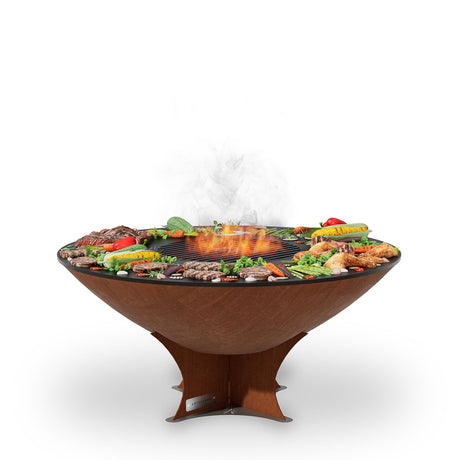
When deciding between a traditional gas grill and a wood-fired Arteflame griddle, the choice often comes down to flavor profile versus convenience. The table below breaks down the critical differences affecting your cooking results.
| Feature | Wood-Fired Griddle (Arteflame) | Gas Grill (Propane/Natural) |
|---|---|---|
| Flavor Profile | Rich, smoky, umami-enhanced | Neutral, often dry |
| Max Temperature | 1,000°F+ (Steakhouse Sear) | 500°F - 700°F (Average) |
| Heat Zones | Simultaneous high & low heat zones | Uniform heat (unless multiple burners used) |
| Moisture Retention | High (Wood releases steam) | Low (Gas heat is dry) |
| Social Experience | 360° interactive cooking | Linear, facing the wall |
The Verdict: Gas is faster to start, but wood delivers the restaurant-quality flavor and texture that serious grillers seek.
The primary reason food tastes better on an Arteflame is the fuel source itself. Gas is a fossil fuel that burns dry; it produces heat but adds no flavor. In fact, propane can sometimes leave a slight chemical aftertaste if not combusted perfectly.
Conversely, wood is an organic compound. When wood burns, it releases aromatic compounds and steam. This moisture prevents your meat from drying out, while the smoke infuses the food with natural hickory, oak, or maple notes. This process enhances the Maillard reaction—the chemical browning of proteins that creates the savory crust on a steak.
Pro Tip: For the best flavor profile, avoid softwoods like pine which produce acrid smoke. Stick to seasoned hardwoods like oak, cherry, or pecan. Oak provides a high heat output for searing, while fruitwoods add a subtle sweetness to vegetables and pork.
One of the biggest limitations of a standard gas grill is the struggle to manage different temperatures simultaneously. You usually have to constantly adjust knobs to sear a burger while keeping buns warm.
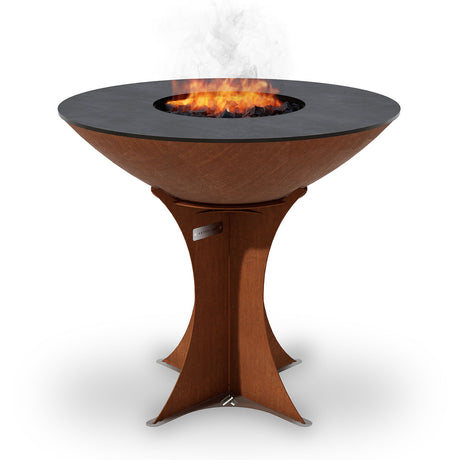
An Arteflame cooktop solves this through physics. The fire is built in the center, creating a predictable heat gradient:
This allows you to cook an entire meal—protein and sides—at the exact same time without waiting for the grill to cool down or heat up.
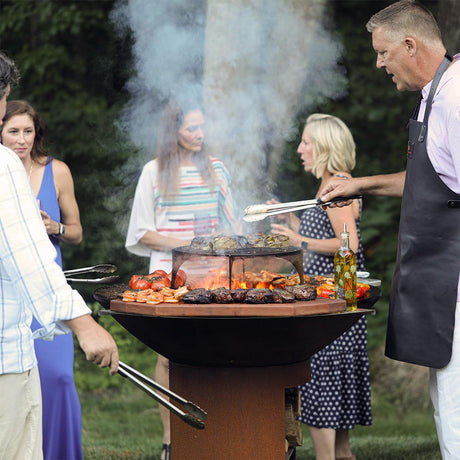
Traditional grilling is often a solitary activity. The chef stands against a wall or in the corner, back turned to the guests, managing the flames under a hood.
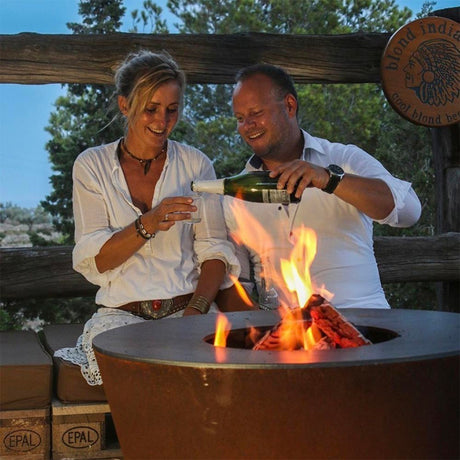
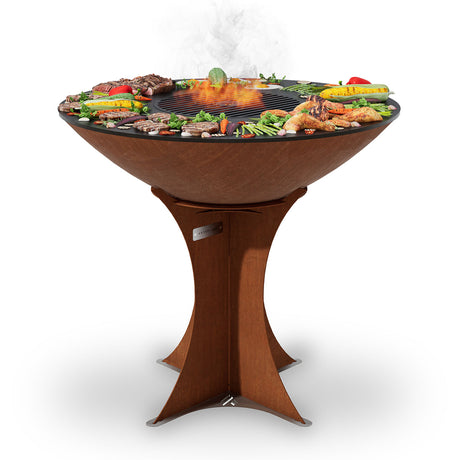
The Arteflame changes the dynamic of outdoor entertainment. Because it is a round, open-fire vessel, it functions as both a grill and a fire pit. Guests can gather around the fire, watch the food cook, and even participate in the grilling process. It turns meal prep into a communal event rather than a chore.
Pro Tip: To maintain a non-stick surface on your carbon steel cooktop, apply a thin layer of grapeseed or avocado oil while the grill is cooling down. This builds up the seasoning layer (patina) which protects the steel and improves flavor over time, similar to a cast-iron skillet.
Generally, it takes about 15 to 20 minutes for the wood to burn down to a bed of coals and for the cooktop to reach optimal searing temperatures. This is slightly longer than gas but essential for creating the heat zones.
Yes, you can use charcoal and lump coal in the Arteflame. However, real hardwood is recommended because it generates higher heat and provides the distinct smoky flavor that charcoal briquettes often lack.
No, it is very low maintenance. Unlike grill grates that require wire brushes, the flat plancha surface can be scraped clean with a spatula into the fire. Simply wipe it with oil after use to maintain the seasoning.
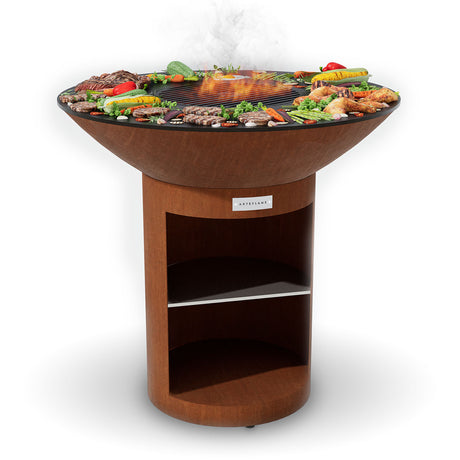
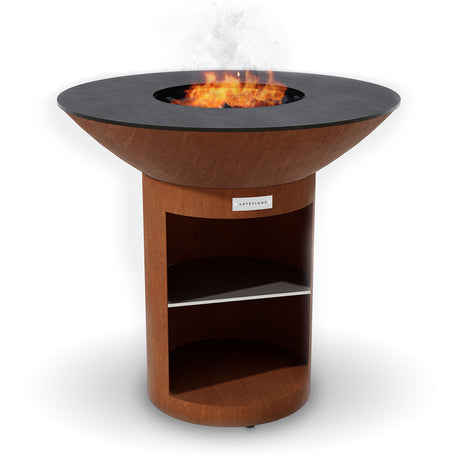
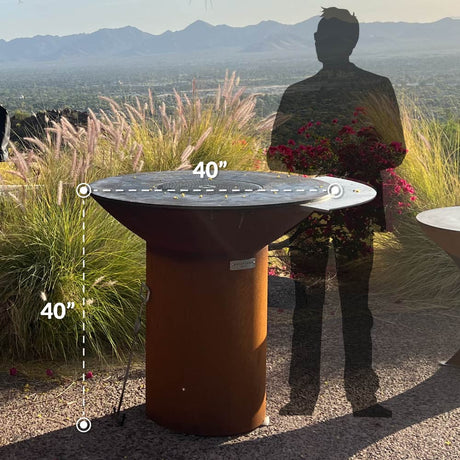
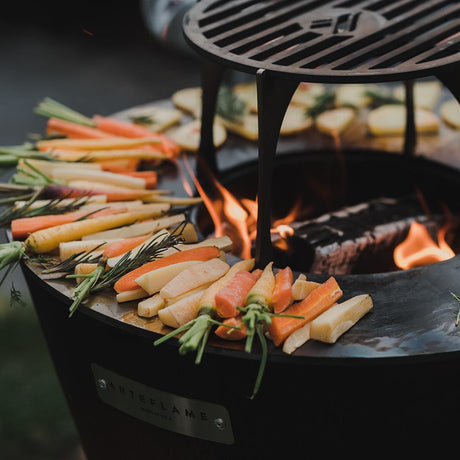
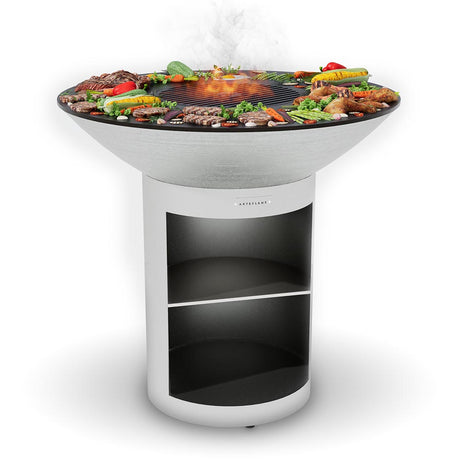
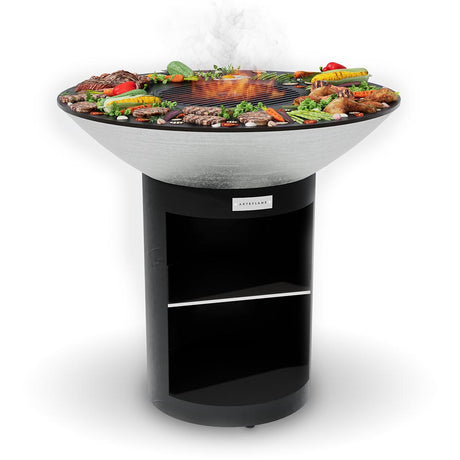




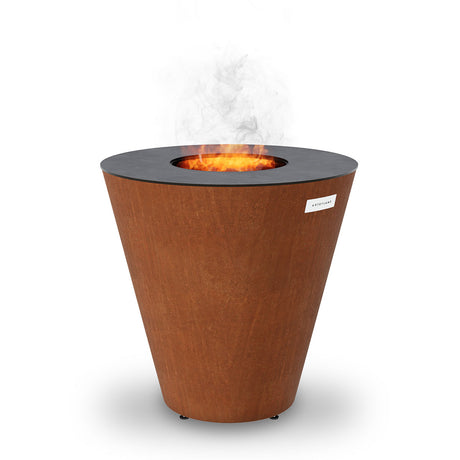
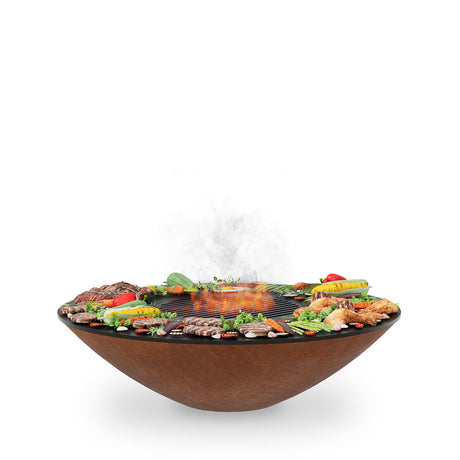
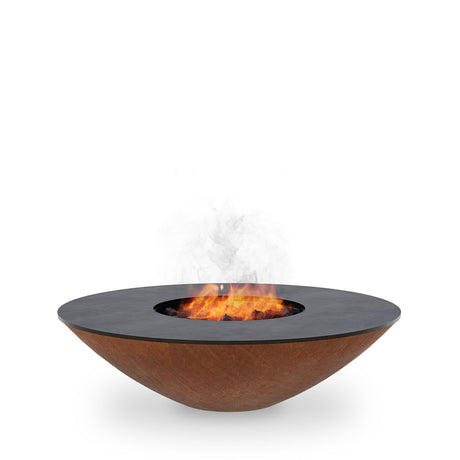
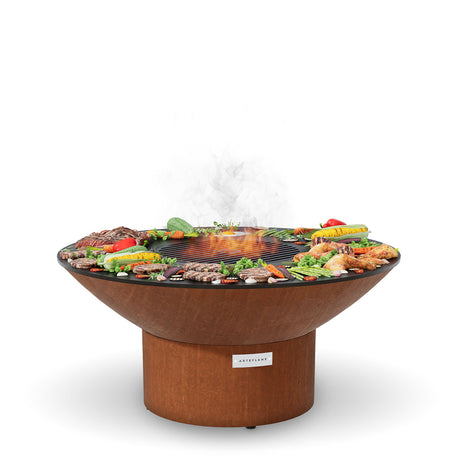


Turn yesterday's leftover macaroni into today's crispy, golden side dish with this easy wood-fired recipe.

Master this Texas-style open-fire brisket cooked entirely on the Arteflame grill. By searing on the center grate and wrapping to render on the flat top, you get perfectly tender, juicy...

Transform standard thick-cut bacon into a sweet, savory appetizer with a dark stout and brown sugar glaze, perfectly caramelized on a flat-top grill.

Render the perfect crispy skin with these Sichuan Peppercorn Duck Breasts, paired with a smoky, sweet, and spicy charred plum-poblano sauce.

Tender artichoke halves charred over high heat and smothered in rich garlic butter and Parmesan cheese.

Achieve the ultimate crust with this low-and-slow beef brisket recipe, utilizing natural heat zones for a perfect sear and incredibly tender finish.

Transform the trending crispy rice paper dumplings into a wood-fired masterpiece. Cooked on the Arteflame flat steel griddle for a shatteringly crisp crust and savory, high-protein filling.

Elevate albacore tuna with a steakhouse-style bacon wrap and a decadent green peppercorn cream sauce, grilled flawlessly on a flat-top.