
Crisp and Golden Mac and Cheese Cakes on the Grill
Turn yesterday's leftover macaroni into today's crispy, golden side dish with this easy wood-fired recipe.


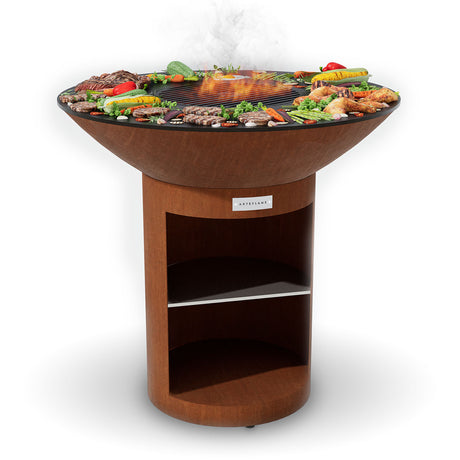
For outdoor chefs seeking the best sear without the hassle, carbon steel acts as the ultimate upgrade to cast iron. While cast iron grates are porous, brittle, and prone to rust, Arteflame’s solid carbon steel cooktop seasons naturally, cleans in seconds, and provides distinct heat zones for cooking entire meals simultaneously.
When comparing outdoor cooking surfaces, the material dictates your maintenance schedule and cooking quality. Traditional cast iron is excellent for heat retention but is notorious for being brittle and high-maintenance. It is porous, meaning it absorbs moisture and rusts quickly if the seasoning layer is compromised.
Carbon steel, specifically the type used in Arteflame grills, offers the same high heat retention as cast iron but with significantly higher tensile strength. It is smoother, tougher, and develops a non-stick patina much faster.
Pro Tip: Unlike cast iron grates that can crack if dropped or thermally shocked, solid carbon steel is virtually indestructible and can remain outdoors year-round without degrading.
| Feature | Arteflame (Carbon Steel) | Traditional Cast Iron |
|---|---|---|
| Maintenance | Low (Wipe & Oil) | High (Constant Re-seasoning) |
| Durability | High Tensile Strength (Won't Crack) | Brittle (Prone to Cracking) |
| Cleaning | Scrape into Fire | Wire Brush / Chemical Cleaners |
| Surface Area | 100% Usable (Solid Griddle) | Limited (Grate Gaps) |
| Rust Resistance | High (Once Seasoned) | Low (Rusts Quickly) |
One of the biggest pain points with cast iron grills, such as the Big Green Egg or Kamado Joe, is the cleaning process. Food gets stuck between grate bars, and the porous iron requires rigorous scrubbing which often strips away the seasoning.
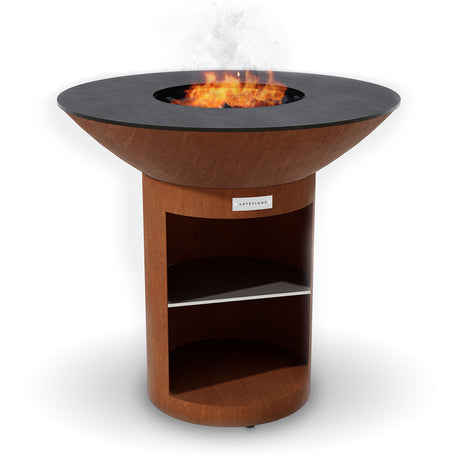
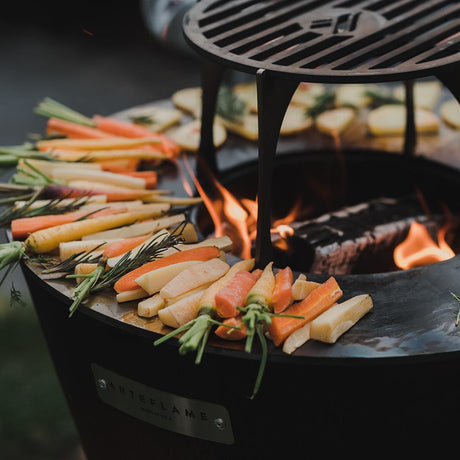
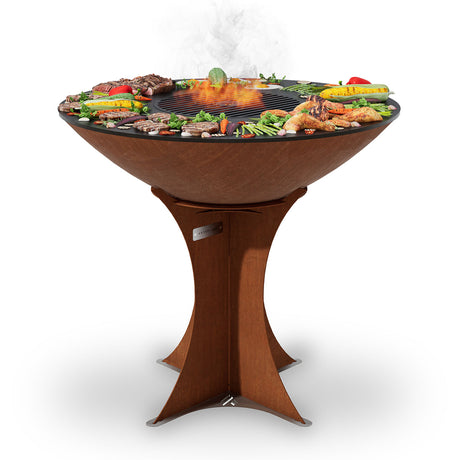
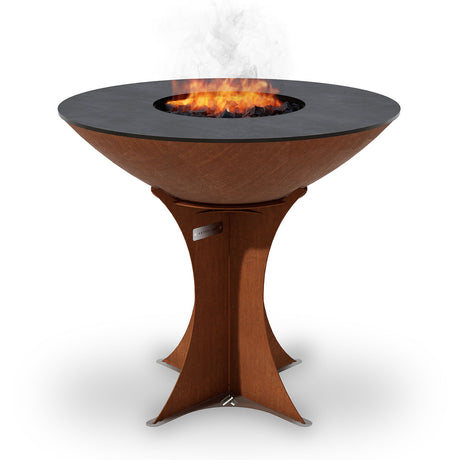
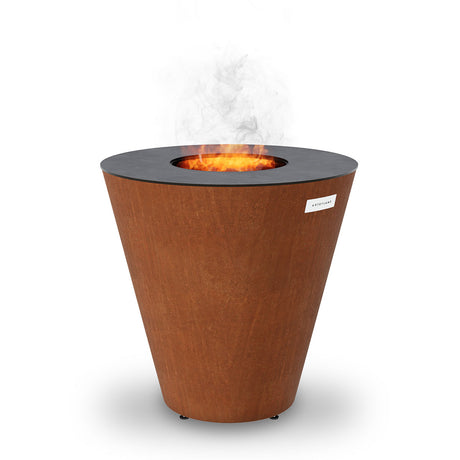
Arteflame eliminates this frustration. The solid cooktop is a single piece of heavy-gauge carbon steel. There are no grates for food to fall through, and the surface becomes smoother and more non-stick with every cook.
Cleaning a carbon steel cooktop takes seconds compared to the minutes (or hours) spent on wire grates.
Pro Tip: Never use soap on your carbon steel cooktop. The heat of the fire sterilizes the surface, while the oil layer protects it from the elements.
Switching from a charcoal-based cast iron setup to a wood-fired carbon steel plancha changes the flavor profile and cooking versatility entirely.
Multi-Zone Cooking: Traditional grills usually offer one temperature across the grate. The Arteflame design creates natural heat zones:
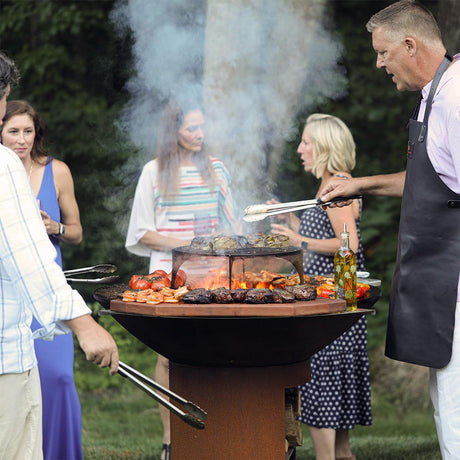
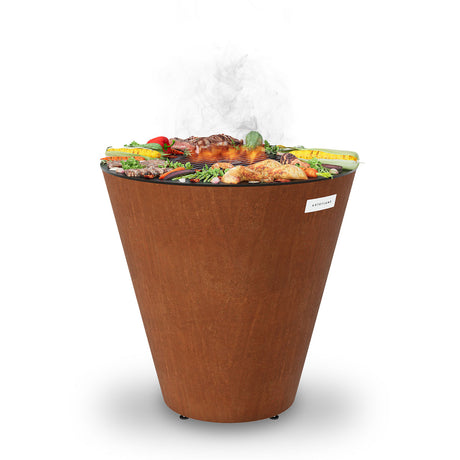
This allows you to cook a complete meal—protein, sides, and starch—all at the same time on a single surface, infusing everything with a subtle, smoky wood flavor that charcoal briquettes cannot match.
Carbon steel can rust if left unseasoned, but it is much more forgiving than cast iron. Once the cooktop is seasoned (blackened with oil and heat), it becomes virtually rust-proof and can be left uncovered year-round.
Yes, you can use charcoal, but wood is recommended for the best flavor and heat distribution. Wood creates a hotter fire which helps maintain the seasoning on the carbon steel cooktop better than charcoal alone.
No, it is significantly easier. Because it is a solid surface, you simply scrape food residue into the fire. There are no individual bars to scrub, and no grease trap to empty as everything burns away in the fire.

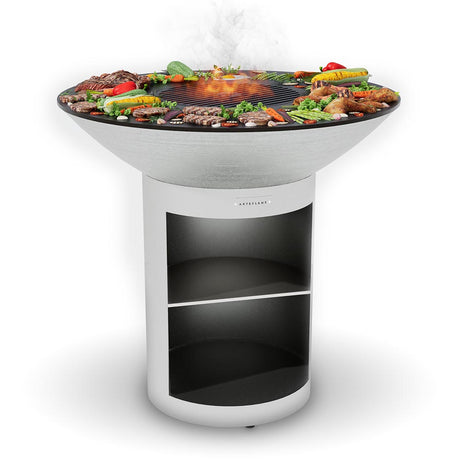




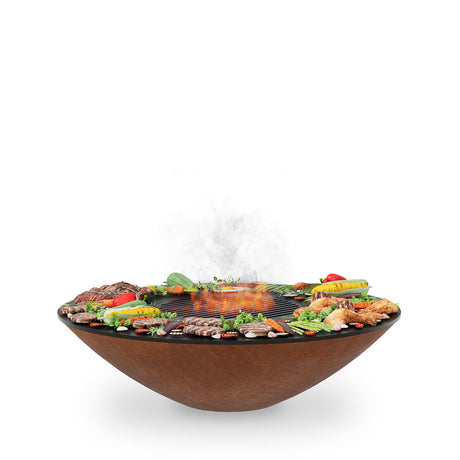
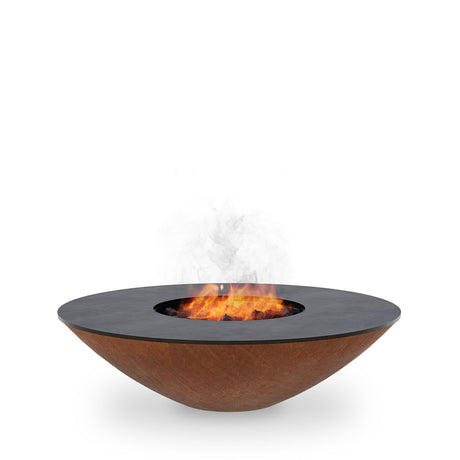
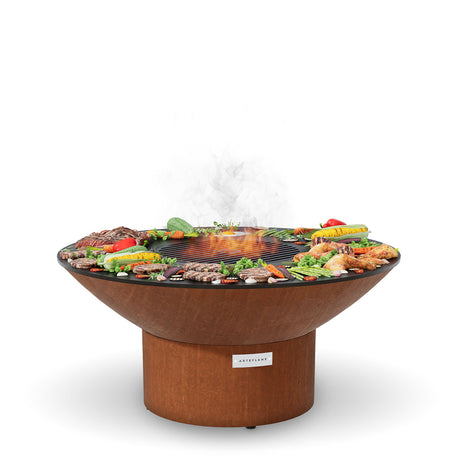
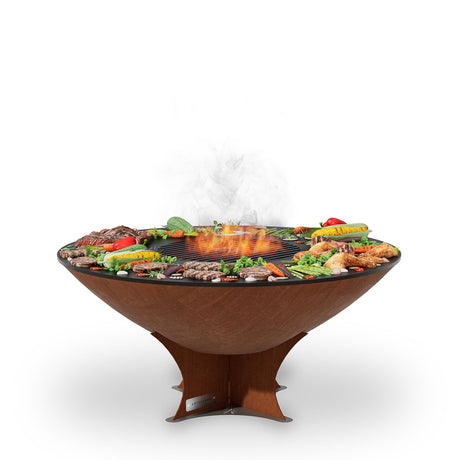


Turn yesterday's leftover macaroni into today's crispy, golden side dish with this easy wood-fired recipe.

Master this Texas-style open-fire brisket cooked entirely on the Arteflame grill. By searing on the center grate and wrapping to render on the flat top, you get perfectly tender, juicy...

Transform standard thick-cut bacon into a sweet, savory appetizer with a dark stout and brown sugar glaze, perfectly caramelized on a flat-top grill.

Render the perfect crispy skin with these Sichuan Peppercorn Duck Breasts, paired with a smoky, sweet, and spicy charred plum-poblano sauce.

Tender artichoke halves charred over high heat and smothered in rich garlic butter and Parmesan cheese.

Achieve the ultimate crust with this low-and-slow beef brisket recipe, utilizing natural heat zones for a perfect sear and incredibly tender finish.

Transform the trending crispy rice paper dumplings into a wood-fired masterpiece. Cooked on the Arteflame flat steel griddle for a shatteringly crisp crust and savory, high-protein filling.

Elevate albacore tuna with a steakhouse-style bacon wrap and a decadent green peppercorn cream sauce, grilled flawlessly on a flat-top.