
Crisp and Golden Mac and Cheese Cakes on the Grill
Turn yesterday's leftover macaroni into today's crispy, golden side dish with this easy wood-fired recipe.


The moment that dark, sticky molasses hits the hot steel of the grill, the air fills with an aroma that is distinctly Southern—sweet, smoky, and undeniably comforting. This Georgia Molasses-Mustard Glazed Pork Belly is a masterclass in texture: the heavy sear creates a caramelized "bark" that gives way to meat so tender it practically melts on your tongue. It reminds me of slow Sunday afternoons on the porch, where the food is hearty and the flavors are bold enough to stand up to the summer heat.
This dish is the ultimate crowd-pleaser because it balances extreme richness with sharp acidity. The pork belly itself is decadent, but the Georgia-style glaze—a punchy mix of dark molasses and bright yellow mustard—cuts right through the fat, ensuring every bite is addictive rather than heavy. Plus, cooking this on the Arteflame allows for an incredible, steakhouse-quality sear that you just cannot replicate in a standard pan.
If you cannot find dark molasses, dark maple syrup or local honey are excellent substitutes, though the flavor will be lighter. You can also swap the yellow mustard for grainy Dijon if you prefer a more rustic texture.
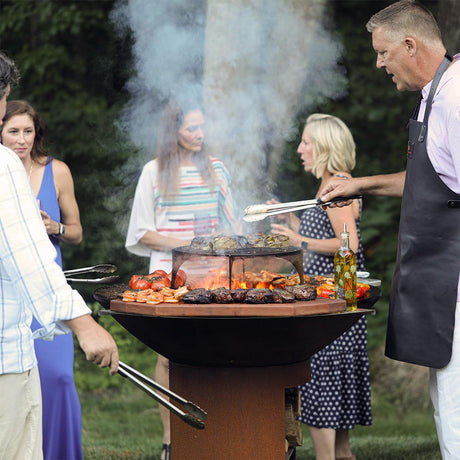
Cooking pork belly on an Arteflame requires managing the rendering fat. The flat cooktop is perfect for this because the fat doesn't drip directly onto the coals, preventing massive flare-ups, but you should still keep the meat moving. The key to this recipe is the "tackiness" of the glaze. Molasses has a high sugar content, which means it can go from caramelized to burnt very quickly. Always apply the glaze at the very end of the cooking process, using the cooler zones of the grill. For the best texture, ensure your knife is sharp when slicing the belly; dull knives will tear the warm meat. If you have leftovers, they crisp up beautifully in a cast-iron skillet the next morning for a breakfast hash.
This recipe is highly adaptable depending on your palate. While the Georgia style leans into the heavy molasses and yellow mustard profile, you can easily tweak the ingredients for a different experience. Here are a few ways to mix it up:
Because pork belly is so rich and fatty, it requires sides that provide acidity, crunch, or bitterness to cleanse the palate. This dish screams for Southern classics. A tangy, vinegar-based coleslaw is arguably the best pairing, as the acid cuts right through the molasses glaze. Grilled peaches (which you can do right alongside the pork on the Arteflame) are another spectacular option, highlighting the Georgia theme. For a starch, consider creamy cheese grits or a warm slice of cornbread with honey butter. Beverage-wise, a crisp, cold lager or pilsner works wonders to wash down the sticky glaze, though a robust Zinfandel or a smoky Bourbon neat also stands up well to the strong flavors.
The Georgia Molasses-Mustard Glazed Pork Belly is more than just a recipe; it is a celebration of texture and flavor contrast. The Arteflame grill plays a pivotal role here, allowing you to achieve that restaurant-quality char while keeping the inside succulent and juicy. The interplay between the deep, dark sweetness of the molasses and the sharp zing of the mustard creates a flavor profile that is uniquely Southern and universally loved. It is a dish that invites you to slow down, get your fingers a little sticky, and enjoy the art of outdoor cooking. Give this recipe a try at your next cookout, and watch it disappear from the platter in minutes.

Experience the Arteflame difference — 1,000°F searing, true wood-fired flavor, and a wide cooktop with multiple heat zones all in one beautiful grill. Cook everything at once, control every temperature with ease, and transform every outdoor gathering. Discover how Arteflame elevates the art of grilling.




Turn yesterday's leftover macaroni into today's crispy, golden side dish with this easy wood-fired recipe.

Master this Texas-style open-fire brisket cooked entirely on the Arteflame grill. By searing on the center grate and wrapping to render on the flat top, you get perfectly tender, juicy...

Transform standard thick-cut bacon into a sweet, savory appetizer with a dark stout and brown sugar glaze, perfectly caramelized on a flat-top grill.

Render the perfect crispy skin with these Sichuan Peppercorn Duck Breasts, paired with a smoky, sweet, and spicy charred plum-poblano sauce.

Tender artichoke halves charred over high heat and smothered in rich garlic butter and Parmesan cheese.

Achieve the ultimate crust with this low-and-slow beef brisket recipe, utilizing natural heat zones for a perfect sear and incredibly tender finish.

Transform the trending crispy rice paper dumplings into a wood-fired masterpiece. Cooked on the Arteflame flat steel griddle for a shatteringly crisp crust and savory, high-protein filling.

Elevate albacore tuna with a steakhouse-style bacon wrap and a decadent green peppercorn cream sauce, grilled flawlessly on a flat-top.
Inspired to Grill?
Love it? Tell us — rate this recipe in 2 seconds. Tap a star below.