
Best Grilled Vegetables: Charred & Crispy Guide | Arteflame
Learn the best veggies for grilling—plus times, temps, and pro tips—optimized for Arteflame heat zones for perfect char and flavor every time.


A griddle grill combo is the ultimate solution for outdoor cooks who refuse to compromise between searing steaks and sautéing delicate vegetables. While gas combos offer convenience, they often lack the heat required for a perfect crust. A solid-steel cooktop grill (like the Arteflame) solves this by utilizing wood fire to generate distinct heat zones—offering a central searing grill and an outer flat-top griddle simultaneously—delivering superior flavor infusion that propane simply cannot match.
Most buyers look for gas grill griddle combos for speed, but they often sacrifice flavor complexity and high-heat performance. Below is a breakdown of how a wood-fired flat-top compares to a standard propane combo unit.
| Feature | Standard Gas Griddle Combo | Arteflame (Wood-Fired Combo) |
|---|---|---|
| Fuel Source | Propane / Natural Gas | Hardwood / Charcoal |
| Max Temperature | 500°F - 600°F | 1,000°F+ (Center Grate) |
| Flavor Profile | Neutral / Gas Taste | Smoky / Wood-Fired Aroma |
| Cooking Zones | Controlled by Knobs | Natural Heat Gradient |
| Durability | Burners rust over time | Solid Carbon Steel (Heirloom Quality) |
One of the biggest complaints about standard gas griddles is the inability to get a hard sear on meats without overcooking the inside. A gas burner distributes heat evenly, which is great for pancakes but suboptimal for a thick ribeye.
A circular carbon steel cooktop changes the dynamic entirely. The fire in the center creates heat exceeding 1,000°F for direct grilling, while the solid steel ring acts as a variable-temperature griddle. This allows you to sear a burger patty in the center and immediately slide it to the outer ring to melt cheese without burning the meat.
Pro Tip: To achieve the perfect Maillard Reaction (the crust on your steak), your cooking surface needs to exceed 300°F rapidly. On a wood-fired combo, sear directly over the center coals for 60 seconds per side, then finish on the flat top to retain internal juices.
The primary advantage of owning a combo unit is menu versatility. You eliminate the need for a separate smoker, pizza oven, or indoor stove. By removing the grate slots found on traditional grills, the flat-top surface prevents food from falling into the fire, allowing you to cook items previously restricted to the kitchen.
Unlike cast iron, which can be brittle, carbon steel is incredibly tough and accepts seasoning quickly, becoming naturally non-stick after just a few uses.
Technically, they are the same in function, but "flat top" often refers to commercial units with heating elements built into the solid plate, whereas a griddle is often a plate placed over a heat source. In a wood-fired combo, the solid carbon steel surface acts as both, conducting heat from the center fire outward.
Yes, specifically for "smash burgers." A solid griddle surface allows the burger to cook in its own juices, retaining moisture and flavor that would otherwise drip away through the grates of a traditional gas grill.
Yes, carbon steel is designed for year-round outdoor use. As long as the cooktop is properly seasoned with oil (similar to a cast-iron skillet) and covered when not in use, it will resist rust and last for decades.
It depends on the design. Wood-fired combos are highly efficient because the thermal mass of the steel absorbs and retains heat for hours, allowing you to cook for large groups using a relatively small amount of wood or charcoal compared to the constant gas flow required for propane units.
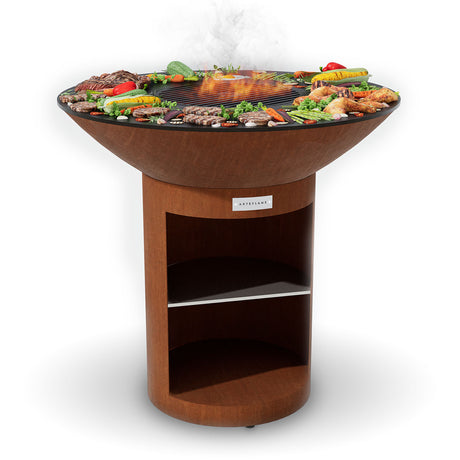
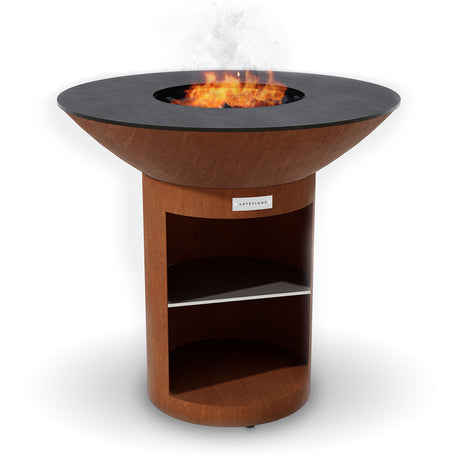
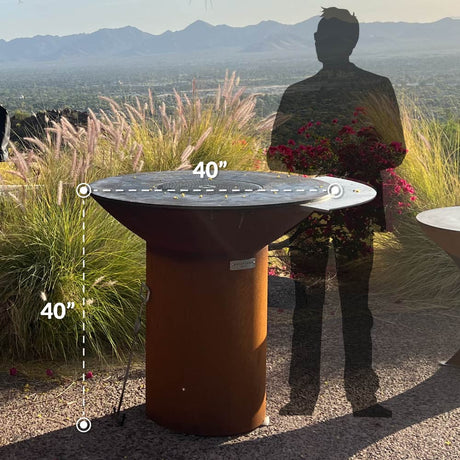
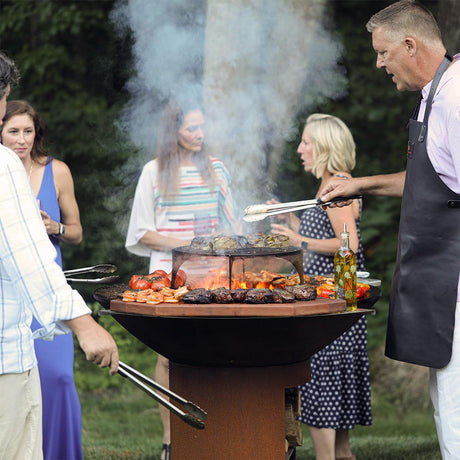
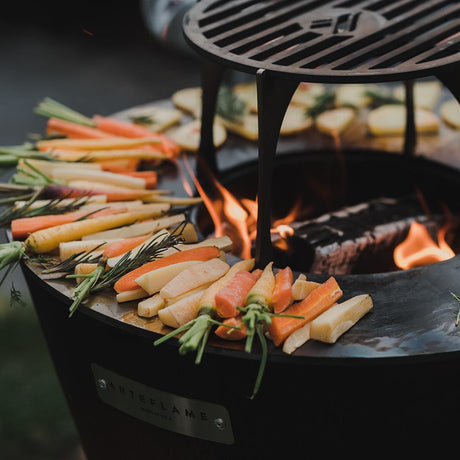
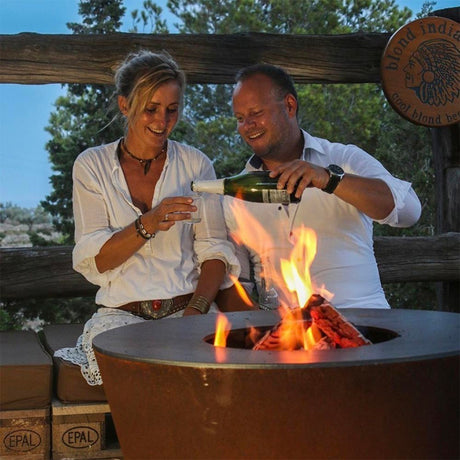
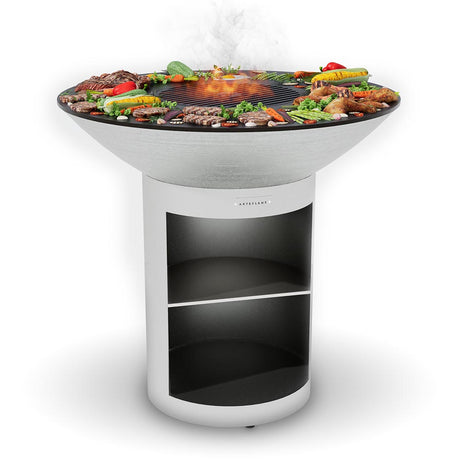
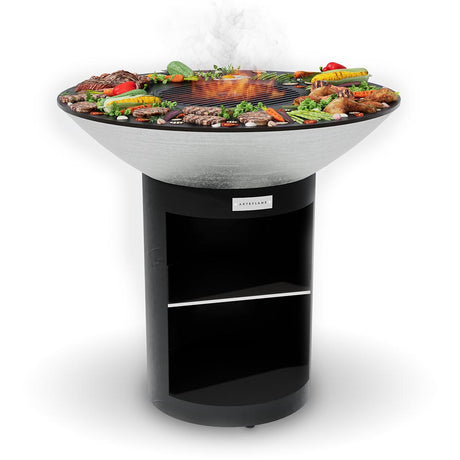


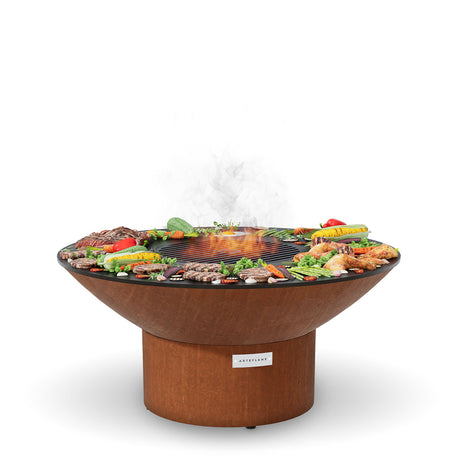
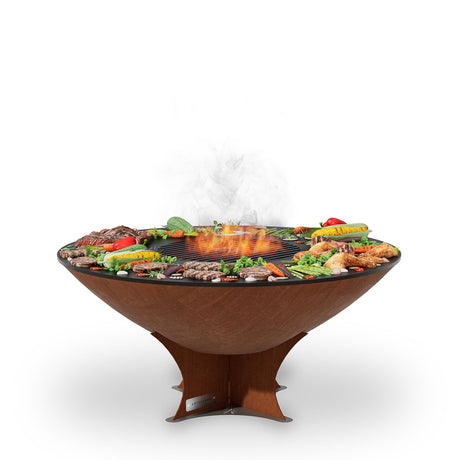
Arteflame Classic 40″ — Storage Base Flat-Top Grill & Fire Bowl (CORTEN Steel)
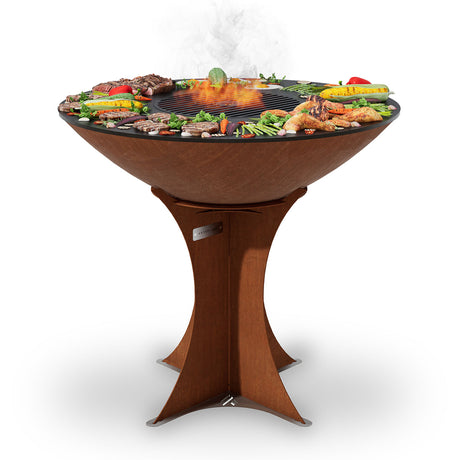
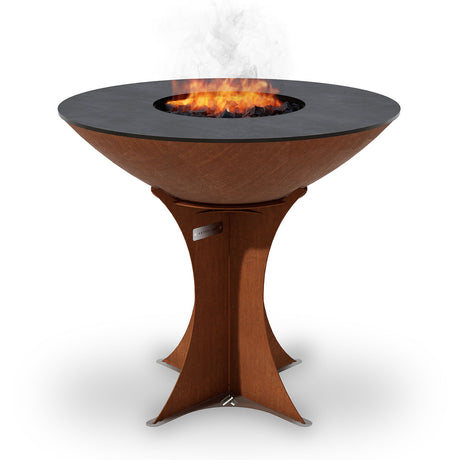


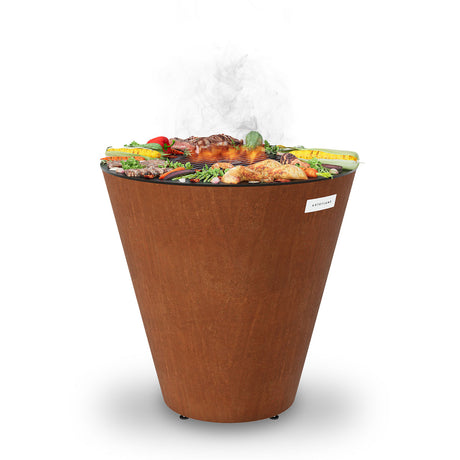
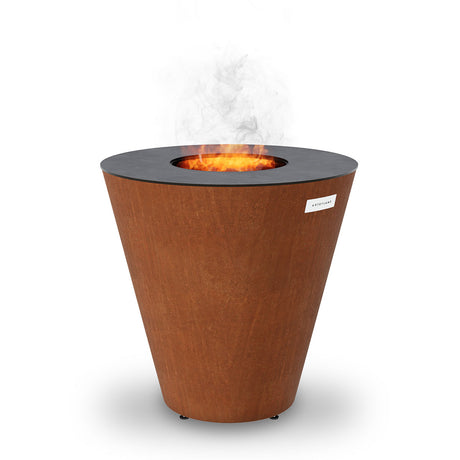
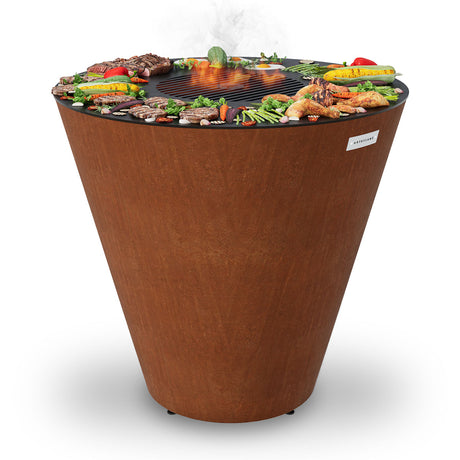
Arteflame ONE30 — 30″ One Series Flat-Top Charcoal Grill & Fire Bowl (Single-Piece CORTEN Steel)
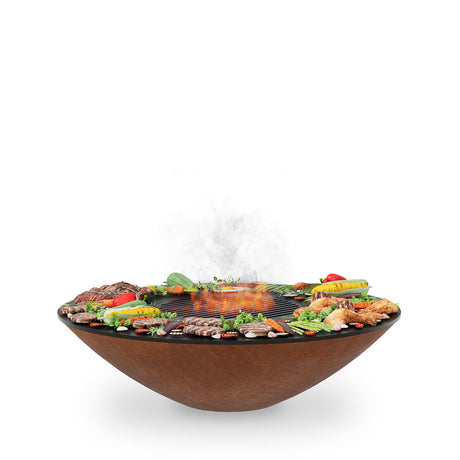
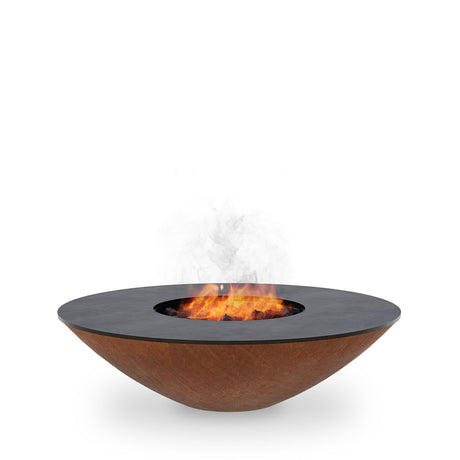



Arteflame One Series 40″ — XXL Flat-Top Charcoal Grill & Fire Bowl (Single-Piece CORTEN Body)


Learn the best veggies for grilling—plus times, temps, and pro tips—optimized for Arteflame heat zones for perfect char and flavor every time.

Transform classic apple pie into a handheld delight with these Wyoming Apple Cinnamon Grilled Dessert Wraps. perfectly crispy, caramelized, and cooked on the Arteflame grill for a smoky finish.

Experience the rustic taste of the West with this Wyoming Campfire Blueberry Cobbler recipe for the Arteflame grill. Featuring bubbling blueberries and a golden biscuit crust cooked in cast iron,...

Experience the rugged flavor of the American West with these Wyoming Wild Boar Chops. Seared to perfection on the Arteflame grill, this recipe uses a savory juniper and sage rub...

Elevate your BBQ with these Wyoming-style grilled carrots. Sweet honey, tangy balsamic, and a perfect char make this the ultimate side dish for your Arteflame grill. Easy, healthy, and packed...

Unleash the flavor of the American West with these tender Wyoming Teriyaki Bison Skewers. Featuring a homemade savory-sweet glaze and perfectly charred vegetables, this recipe maximizes the searing power of...

Unlock the savory flavors of the West with this Wyoming-style garlic parmesan grilled mushrooms recipe. Perfectly seared on the Arteflame flat top, these buttery, cheesy mushrooms make the ultimate side...

Unlock the bold flavors of the West with this Wyoming-style grilled jalapeño cheddar sausage recipe. Learn how to achieve the perfect sear and juicy interior using your Arteflame grill for...